Category: Korean Food Basics

This section explains the fundamentals of Korean food, including meal structure, cultural background, and everyday eating habits.

  • Why soup is served in korean meals : A Cultural Deep Dive

    Why soup is served in korean meals : A Cultural Deep Dive

    why soup is served in korean meals

    In Korea, soup is called guk

    Traditionally, the basic menu for setting a Korean table has centered around rice and soup. And then we prepare the day’s side dishes or a main dish. At the very least, during mealtime in Korea, there must be either soup or stew—one of the two. And to this, we add kimchi and various other side dishes. In other words, without broth on a Korean table, it feels quite empty. That’s why from my mother’s time, whenever preparing a family meal, she always made soup.

    Soup was considered so important that this saying even emerged and is still used: “There’s not even broth left.” In Korean, when we say there’s not even broth left, it means there’s nothing at all. It means I won’t extend any more goodwill to the other person, and there’s nothing left for me. As a result, it means I won’t maintain the relationship anymore—in short, it signifies a complete break with you.

    This shows how we can glimpse the status of soup even in our language habits. Even in modern society, Koreans always prepared soup for meals. In my father’s time, and in my time as I became a father, Korean tables always have soup. The elderly used to say, “Without soup, you can’t eat rice.”

    Korean cuisine has particularly well-developed soup culture, and there are many varieties. We make soups using seasonal ingredients, and there are several soups we specially prepare for holidays or special occasions. On birthdays we eat seaweed soup, on New Year’s we eat rice cake soup, and on Chuseok we eat taro soup. Also, after drinking with friends, we eat hangover soups like bean sprout soup, dried pollack soup, haejangguk, or sundae soup to detoxify our alcohol-laden bodies. If you add all the regular soups we normally eat, the varieties of soup are incredibly diverse.

    According to my nephew who lives alone in Seoul while working, he used to mainly eat out before, but now he says restaurant food doesn’t taste good, so he cooks soup and rice himself at home.

    It’s said that in the 18th-19th century, the Korean king alone ate 64 different types of soup. So you can see how developed soup culture was in Korea.

    Is soup culture really a unique characteristic of Korean food?

    It’s clear that we love brothy foods including soups. And it’s also undeniable that Korean cuisine has many brothy foods including soups and stews. But does that mean we can say soup culture is a unique characteristic of Korean food? I don’t think so.

    Because various forms of soups and similar foods exist worldwide. Even in Western cuisine alone, there are various soup dishes and brothy foods. What immediately comes to mind is the soup that Europeans enjoy eating. European soups come in many varieties—there’s thick soup, stew with meat and vegetables, porridge, and broth. There’s clear consommé, thick chowder, and purée made by boiling and mashing vegetables.

    Chinese and Japanese cuisine are similar. Boiling and steaming cooking methods are used as basic recipes not only in Korea but throughout Asian cooking. Chinese and Japanese people also eat many types of tang, like our soup. In Asia, the form of boiling food in water and adding various ingredients is similar.

    Why soup culture is somewhat unique as a characteristic of Korean food?

    In Korean history, there’s a term called “il-sik sam-chan” (一食三饌). This means preparing one bowl of white rice with three side dishes for a meal. Soup is not included in this count. Soup is basically assumed to be part of il-sik sam-chan. For example, if I prepare dinner for my child today, I’d make rice, bean sprout soup, braised anchovies, braised beans, and seasoned vegetables, and for the remaining one dish I might add stir-fried spicy pork. In other words, in Korea, soup is included with rice. Rice and soup are not separated in a meal but integrated as one.

    When you go to a restaurant while traveling in Korea, the basic table setting places soup to the right of the rice. This is because it’s cultural. An easy way to understand it is to think of soup as food with liquid that’s generally made by boiling in water.

    While the West and Japan think of soup as separate, Korean rice and soup should be seen as a fused relationship that becomes one.

    Another reason Koreans prefer soup is not actually because we can’t eat rice without soup, but because rice and soup give such a sense of unity in a meal. We don’t find the characteristics of Korean food culture in soup simply because Koreans like brothy foods or because there are many types of brothy foods.

    For example, when eating samgyeopsal or spicy food, we serve mildly seasoned soups like bean sprout soup or seaweed soup alongside to soothe the spiciness from the food.

    When did soup culture develop?

    Historically, it appears our people (Korea) have enjoyed various soup dishes since ancient times. In terms of linguistic interpretation, what we call “guk” in Korean—food made by putting various ingredients in water or other liquids and boiling them—was expressed in Chinese characters as “tang” (湯). But in very ancient times, they distinguished more precisely and the names were really different. This story goes back to around the 1300s.

    Since these were ancient foods that existed before Hangul was created, we don’t know what they were called in pure Korean, but they remain in Chinese characters.

    Looking at documents from the Goryeo and Joseon periods in Korean history, it seems our ancestors really loved soup. The 18th-century Joseon scholar Seongho Yi Ik left this writing: “Bibimbap never gets boring no matter how much you eat it, but for filling your stomach, gukbap (soup with rice) is the best.” Historically, the Korean people were famous for enjoying bibimbap, but they equally enjoyed gukbap—that is, soup and rice. Back then, food wasn’t as abundant as it is now.

    Why did soup culture develop?

    Looking at Korea, Asia, and various countries, unique food cultures have taken root. The formation of these food cultures is influenced by various factors. Particularly, the country’s historical, economic, geographical, and climatic characteristics must have intertwined comprehensively to create a unique soup culture.

    As with any country, soup basically emerged as a way to eat food deliciously. In other words, in the process of food development, foods like soup and stew emerged either independently or dependently with other dishes.

    Another reason is to eat more rice. This may sound strange to modern people, but from an old perspective, the characteristics of Korean food are contained in soup culture. Some argue that soup is a product of poverty. They claim that because the Korean peninsula has many mountains and narrow terrain, grains weren’t abundant, so soup developed in the process of adding water to limited ingredients and boiling them to increase the quantity.

    However, historically, Korea was not a chronically food-scarce poor country. Also, soup actually promoted grain consumption. Unless it’s a separate dish like Western soup, having soup makes you eat more rice. In that sense, soup was a food of abundance and an upper-class dining culture. So the biggest reason soup culture developed in Korea can perhaps be found in rice, our staple food.

    Korean food culture developed centered on rice. In the West, it developed centered on bread. We eat kimchi as a basic side dish along with meat and various side dishes, all centered on rice and soup. Most side dishes also seem like supplementary foods to help us eat delicious rice-cooked meals in larger quantities. Also, borrowing my wife’s words about meals, side dishes play various roles in supplementing missing nutrients. These side dishes are also prepared differently according to the seasons.

    From a regional perspective, Korea’s ondol culture of always boiling water in cauldrons, along with climatic and environmental factors—cold and dry winters, hot and humid summers—probably also played a role. By eating hot broth, we warm our bodies, and even in summer, we can feel coolness by sweating sufficiently, so soup is consumed as an efficient food to endure the sweltering heat.

    Korean soup culture was formed not simply at the level of eating delicious food, but by Korean life and natural conditions all melting and mixing together. The reason soup emerged wasn’t just one reason but varied according to history, natural environment, and culture. Even now in Korea, soup is the most basic food that comes to the table.

    What do we mainly eat this winter?

    welcome my Tastykoreanfood youtube – link

    In cold winter, we mainly prepare soups that warm the body. The methods also differ from household to household. We try not to use sugar in these as much as possible.

    In cold winter, there are various options: bean sprout soup (soup made by boiling bean sprouts with a bit of salt), seaweed soup (soup made by stir-frying seaweed in sesame oil, adding various seasonings, and boiling thoroughly), soybean paste soup, kimchi soup, beef soup, radish soup, and more. The soup I prefer is definitely radish soup, which I learned from my mother-in-law and make often. The preparation time is short, and when you eat it, you feel warmth in your chest and stomach. Because it doesn’t have many ingredients, the taste is also clean. No sugar is used

    Today Lunch is pollack soup, Sugar free
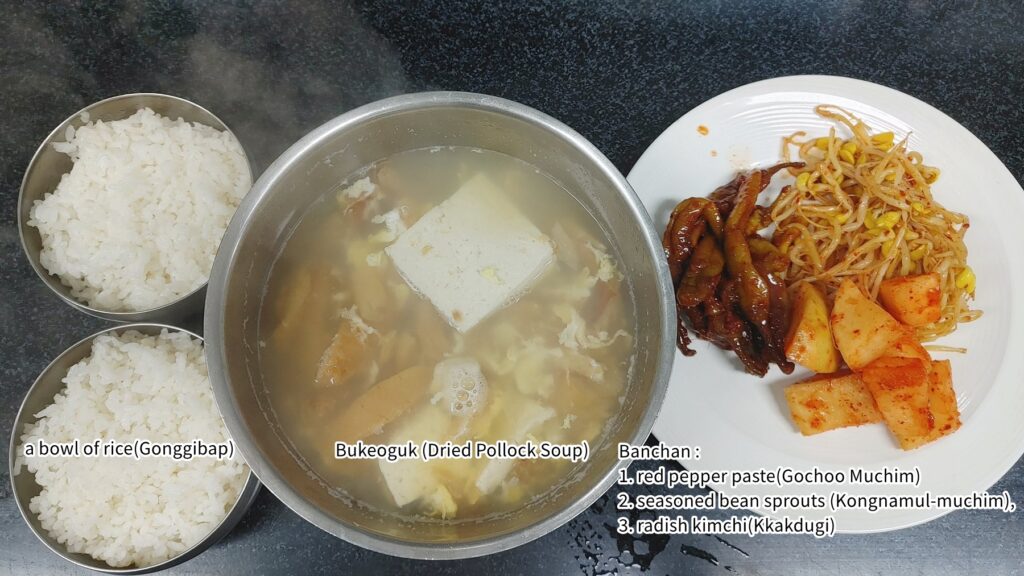
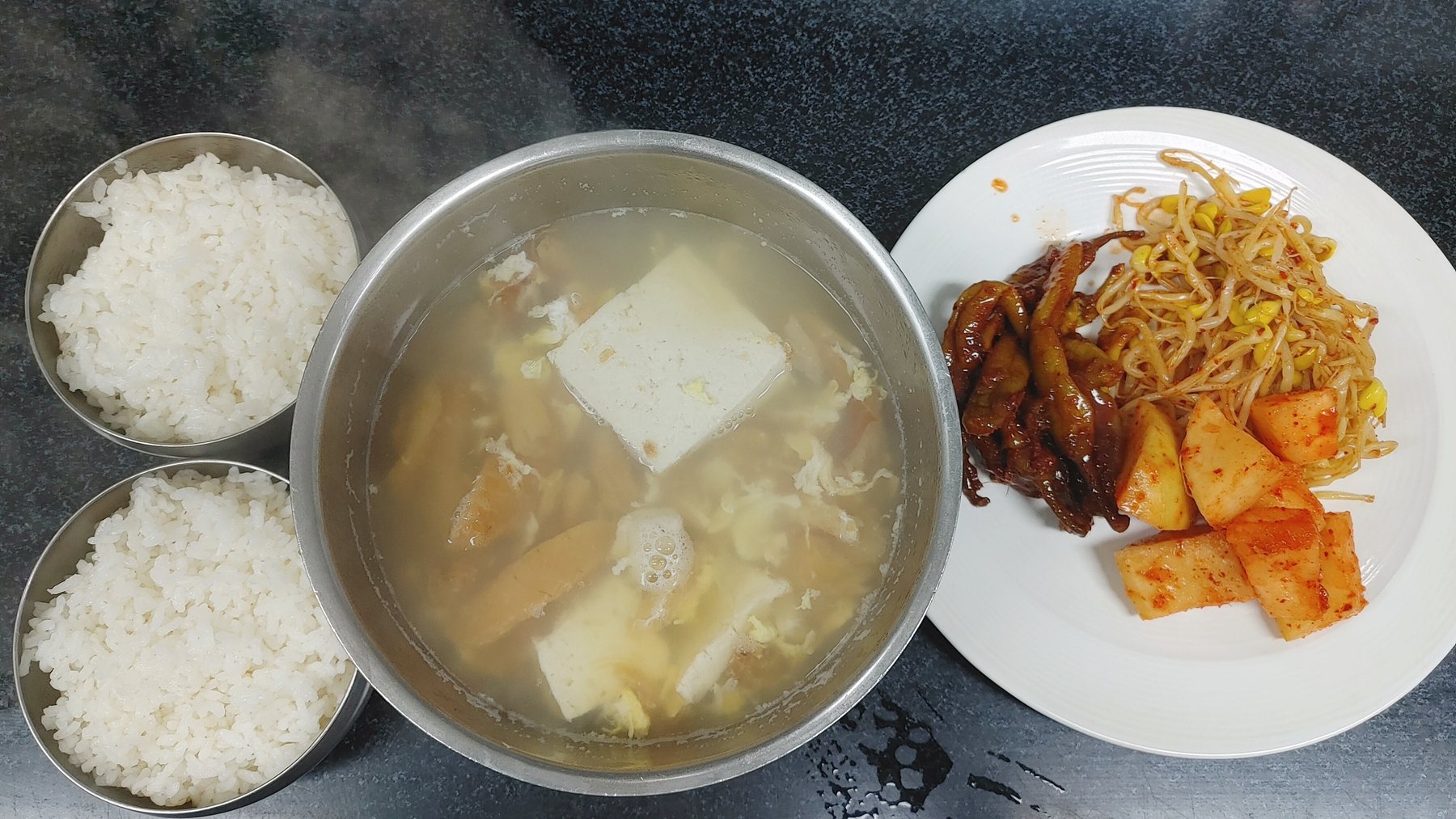
    Bukeoguk (Dried Pollock Soup) 001-20260128
    Bukeoguk (Dried Pollock Soup) 001-20260128

    Korea traditionnal hangover soup , Pollack Soup, We call  Buk-eo Guk

    This is the classic hangover soup I had for lunch today: pollack soup(. I added a bowl of rice, and the three side dishes are as follows: seasoned red pepper paste, seasoned bean sprouts, and cubed radish kimchi (radish kimchi) from the left, clockwise. It costs about $9.

    To understand how rice and soup function together, see What Is Korean Food, what is mitbanchan
  • Why Rice Is Central to Korean Meals? | Culture, History, and Identity

    Why Rice Is Central to Korean Meals? | Culture, History, and Identity

    What Does Rice Mean in Korean Culture?

    In Korean culture, rice is more than just food—it is life itself.

    The Chinese character for rice, 米 (mi), can be visually broken down into eight–ten–eight (八十八). Traditionally, this symbolizes that at least 88 careful human efforts are required to produce a single grain of rice. From planting to harvesting, rice represents patience, labor, and devotion.

    In Korea, the word food (食) is often synonymous with rice (밥). Rice was believed to be possible only when the energy of heaven, the fertility of the land, and the dedication of farmers came together as one. This belief shaped Korean attitudes toward food, farming, and respect for nature.


    Why Was Rice So Important in Traditional Korean Society?

    Korea was historically an agricultural society, often described as living under a form of “rice determinism.”

    When rice harvests failed, people’s lives became difficult. When harvests were abundant, society prospered. Kings in the past worried constantly about rice farming, because the success of rice meant the survival of the nation.

    Even today, rice is closely tied to food security and national identity in Korea. Although modern diets have diversified, rice still represents stability, self-sufficiency, and cultural pride.


    Has Rice Lost Its Importance in Modern Korea?

    As bread, pasta, and snacks became widely available, rice consumption in Korea has declined. Korean diets today include noodles, Western-style baked goods, and convenience foods.

    However, rice has not disappeared.

    Just as bread remains central in the United States or pasta in Italy, rice continues to be the foundation of Korean meals. Even when the main dish changes, rice often remains at the center of the table.

    There is growing discussion in Korea about modernizing rice-based cuisine—creating fusion rice dishes that fit contemporary lifestyles while preserving nutritional value.


    Where Did Rice Originate, and Why Did It Dominate Asia?

    Rice cultivation began over 8,000 years ago, primarily in Asia. Along with salt, rice became a cornerstone of civilization—shaping currency systems, social structures, and traditions.

    The importance of rice is deeply embedded in East Asian languages.

    • Over 249 Chinese characters include the rice radical (米)
    • 284 characters include the grain radical (禾)
      Even words for time (second, 秒) and seasons (season, 季) contain the grain symbol.

    Among many grains—barley, millet, beans, sorghum—rice has always been considered the most important.

    Today, although rice is grown in over 100 countries, Asia accounts for nearly 90% of global rice cultivation.


    Why Did East Asia Choose Rice While the West Chose Wheat?

    The answer lies in climate, soil, and geography.

    Rice thrives in hot, humid environments with abundant water. Wheat, on the other hand, grows well in dry, less fertile regions and is more resistant to harsh conditions.

    Rice produces three times more calories per unit area than wheat, making it ideal for densely populated regions like Korea, China, and Japan.

    Western regions, with drier climates and pastoral traditions, relied more on wheat and livestock, supplementing grain-based diets with dairy and meat.


    Why Was Korea Especially Suited for Rice Farming?

    Korea’s four distinct seasons, fertile soil, and plentiful water created ideal conditions for rice cultivation.

    Rice is planted in spring, transplanted to flooded fields, and harvested in autumn—only once per year, making the crop highly valuable.

    Rice farming requires constant water management and labor. Because irrigation systems were too large for individuals to manage alone, community cooperation became essential. This led to cultural traditions like dure and pumasi—mutual aid systems where neighbors helped one another during planting and harvesting seasons.


    How Did Rice Farming Shape Korean Social Values?

    Rice farming demanded collaboration, patience, and shared responsibility. As a result, Korean society developed a strong sense of collectivism and community-oriented values.

    In contrast, wheat farming required less cooperation and allowed for more independent agricultural practices, reinforcing individualism in Western cultures.

    Thus, rice did not just shape Korean meals—it shaped Korean social structure, work ethics, and communal identity.


    How Is Rice Consumed Differently from Wheat?

    Rice is typically consumed with minimal processing—harvested, polished, steamed, and eaten as rice.

    Wheat must be ground into flour and transformed into bread or pasta, requiring extensive tools and large-scale production systems.

    These differences influenced not only food preparation but also industrial development, transportation systems, and even the path toward the Industrial Revolution.


    How Has Rice Evolved in Modern Korea?

    Since the 1980s, advances in fertilizers and farming technology have significantly improved rice quality.

    Korea now distributes over 100 rice varieties, with around 20 premium varieties officially monitored for quality. Popular types include:

    • Chucheong rice
    • Odae rice
    • Dongjin rice
    • Samgwang rice
    • Koshihikari (originally developed in Japan)

    Rice breeding continues today, adapting to changing climate conditions and consumer preferences.


    Why Is Rice Still the Staple of the Korean Table?

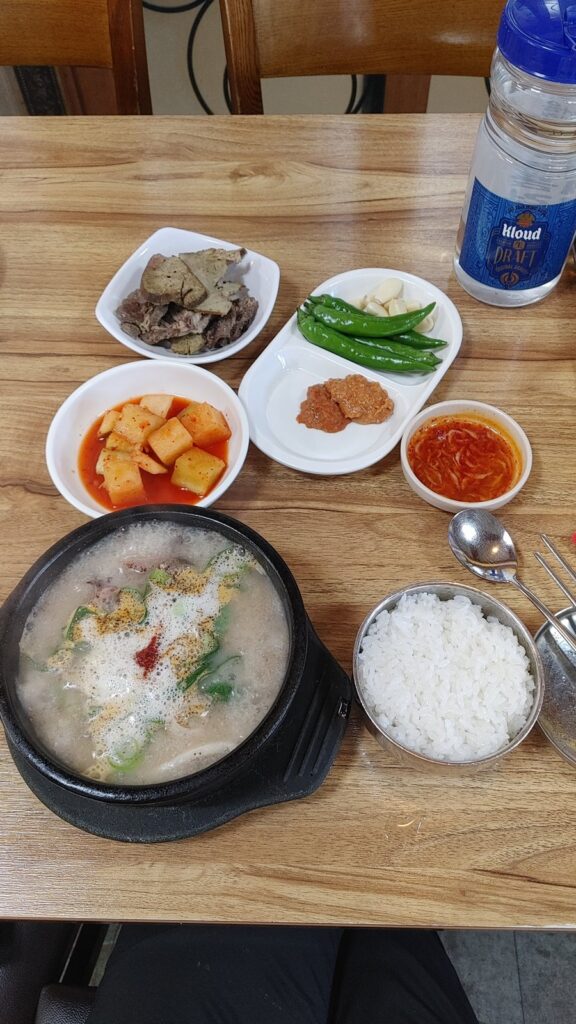
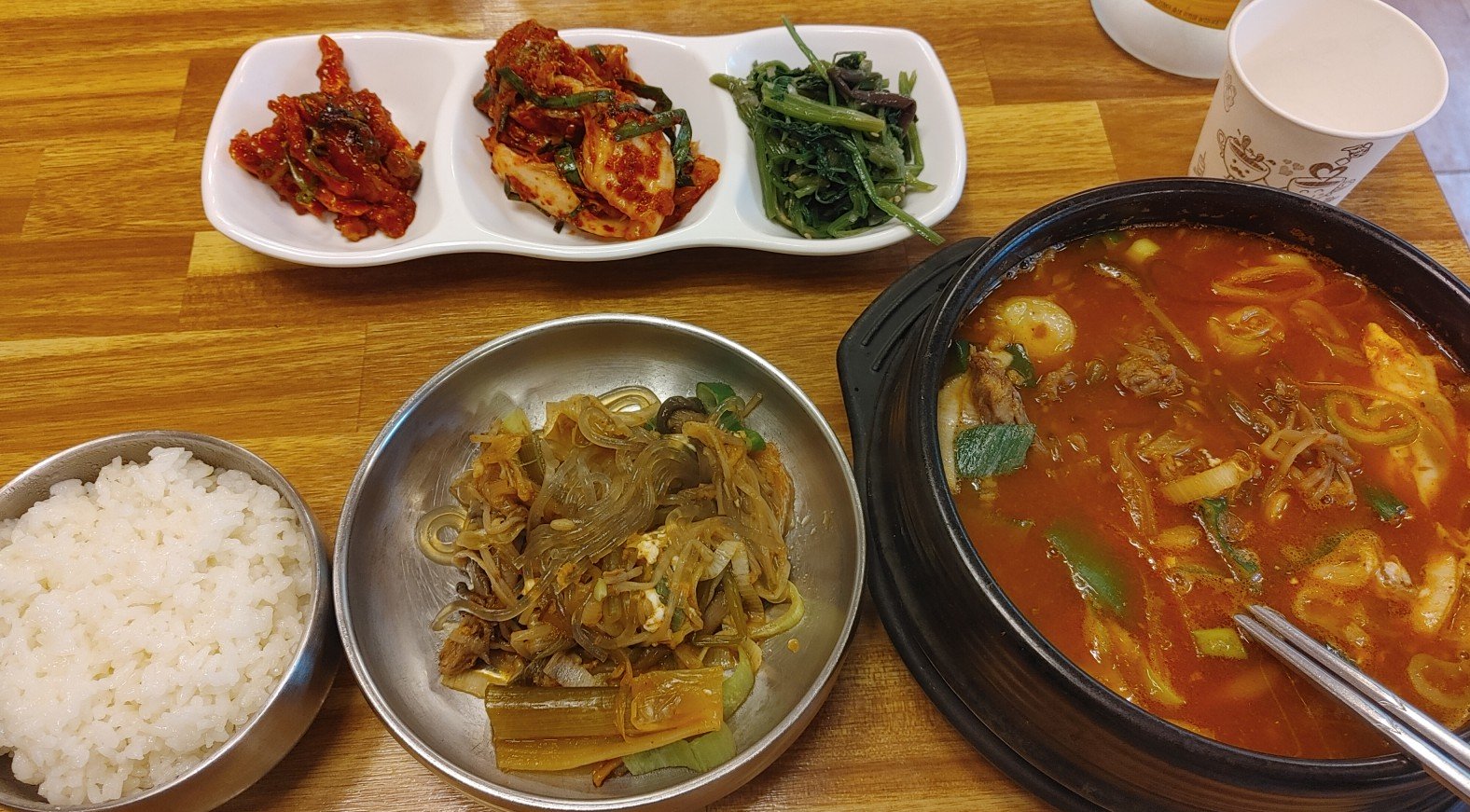
    Sundaeguk (sundae soup) purchased at a restaurant. When dining at a Korean restaurant, rice and side dishes are usually served, depending on the menu ordered. The center earthenware pot contains sundaeguk (sundae soup), while the rest, aside from rice, are side dishes.

    Despite modern dietary changes, rice remains central because:

    • It matches Korea’s natural environment
    • It provides efficient energy
    • It pairs perfectly with fermented foods, soups, and vegetables
    • It supports balanced nutrition

    Korea’s climate—with hot, humid summers and cold winters—continues to favor rice-based meals served warm and comforting.


    Everyday Life: Rice on a Modern Korean Table

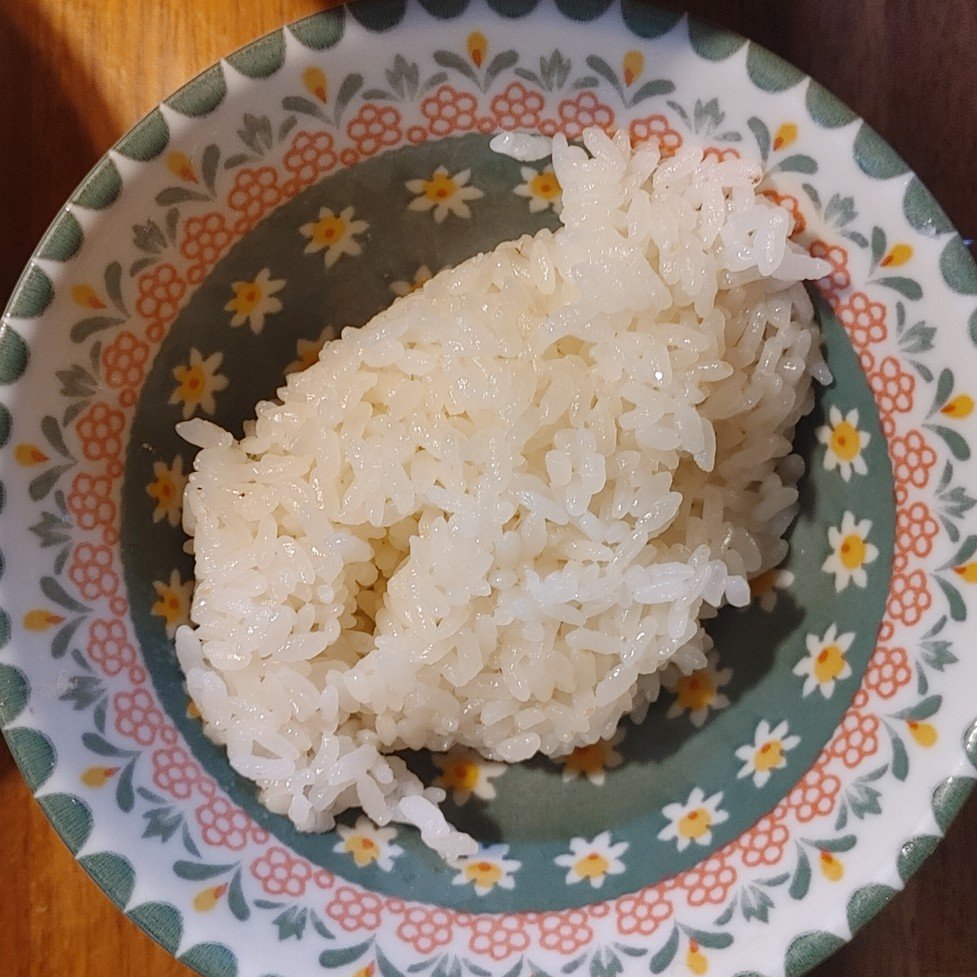
    Today, a typical Korean home still keeps warm rice ready in an electric rice cooker.

    After work, parents decide what side dishes to prepare—perhaps grilled pork, seasonal vegetables, or simple soup. Even with limited ingredients, rice remains the reliable center of the meal.


    Final Thought: Why Rice Still Matters in Korea

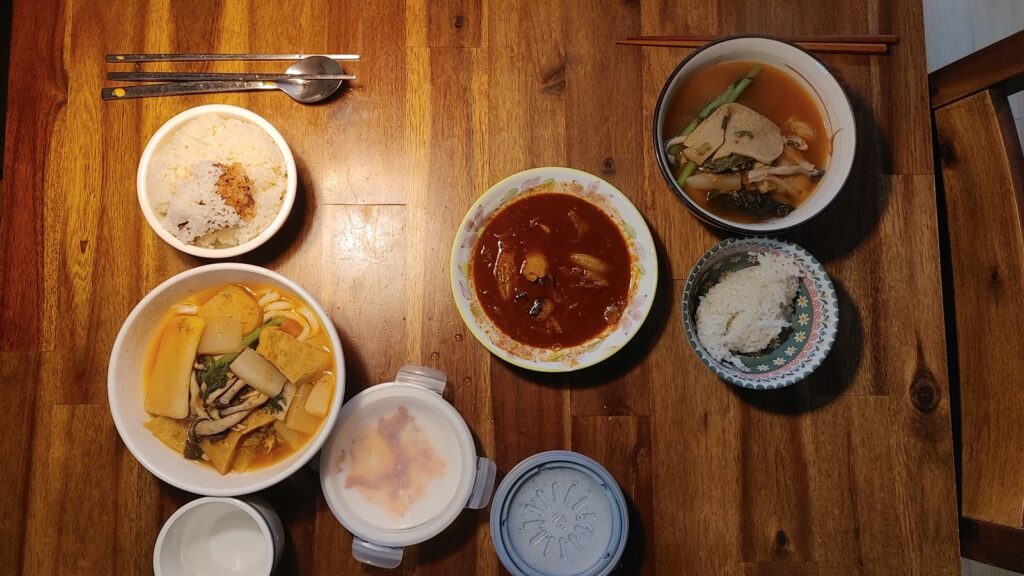
    After a tiring day at work, I returned home and prepared dinner for just the two of us. I prepared white rice as a base, then added kimchi to a simple fish cake soup to enhance the flavors of both kimchi and fish cake. For a cleaner flavor, add plenty of radish to the kimchi fish cake soup and simmer it over low heat for about 30 minutes. This will result in a cleaner, sweeter fish cake kimchi soup.

    Rice is not just a carbohydrate in Korea. It is history, labor, climate, culture, and family life combined.

    Understanding Korean food means understanding rice—not only how it is eaten, but why it exists at the heart of every meal.

    What Is Korean Food?

    To truly understand why rice matters so much, it helps to first understand what Korean food is and how it developed around grains, fermentation, and balance.

    What Is Banchan?

    Rice becomes nutritionally complete when eaten alongside banchan, the small side dishes that define everyday Korean meals.

  • What Is Mitbanchan? Prepared Korean Side Dishes Explained

    What Is Mitbanchan? Prepared Korean Side Dishes Explained

    Why Prepared Side Dishes Matter in Everyday Korean Life

    Prepared Side Dishes in Everyday Korean Homes

    In Korea, mitbanchan refers to side dishes that are prepared in advance and kept ready for daily meals.

    When Koreans sit down to eat, there are usually a few dishes already prepared—even before deciding what the main dish will be.
    These prepared side dishes are what we call mitbanchan.

    Every household has its own version.
    In my home, kimchi is always the foundation of our mitbanchan.

    Simply put, if a dish is already prepared and served repeatedly without cooking again, it is considered mitbanchan.


    Why Mitbanchan Matters in Korean Family Life

    When my mother was raising children, one of her daily concerns was always the same:
    “What side dishes should I prepare today?”

    Often, she would decide on mitbanchan first, and then choose just one main dish for the day.

    This approach makes daily meals realistic and sustainable.
    Instead of cooking everything from scratch for every meal, Korean families rely on mitbanchan to keep meals balanced and complete.


    Mitbanchan at the Table: A Simple Example

    For example, when eating samgyetang (ginseng chicken soup), the side dishes served alongside—such as:

    • Cubed radish kimchi (kkakdugi)
    • Napa cabbage kimchi
    • Green chili peppers and onions
    • Soybean paste (doenjang)

    are all considered mitbanchan.

    The variety and selection depend on each household, and children often develop preferences based on their mother’s cooking style.


    Common Types of Mitbanchan

    Soy-Braised Black Beans (Kongjaban)

    Kongjaban is made by pressure-cooking black beans and simmering them in soy sauce.

    After cooking the beans, the water is discarded, and the beans are gently braised using soy sauce and grain syrup.
    The flavor is mildly sweet and savory, making it popular with both children and adults.


    Braised Meat (Jangjorim)

    Jangjorim can be made with beef or pork and is surprisingly simple.

    The meat is pressure-cooked until tender, then shredded and simmered again in a soy-based sauce.
    Pressure cooking shortens the cooking time and allows the seasoning to penetrate deeply.

    Using Korean soy sauce is essential to achieve authentic flavor.
    This is one reason why homemade or Korean-brand sauces still matter so much in Korean cooking.


    Seasoned Soybean Sprouts (Kongnamul Muchim)

    Soybean sprouts are grown by sprouting soybeans in dark conditions, which results in long roots.

    After boiling the sprouts briefly, they are seasoned with:

    • Soy sauce
    • Salt
    • Minced garlic
    • Sesame oil
    • Sesame seeds

    This dish is one of the easiest and most common mitbanchan in Korean homes.


    Modern Variations: Perilla Seed Broccoli

    More recently, dishes like broccoli seasoned with perilla seed powder have become popular.

    The broccoli is blanched and mixed with:

    • Perilla seed powder
    • Soy sauce
    • A small amount of salt
    • Minced garlic

    This reflects how mitbanchan continues to evolve with changing tastes.


    Kimchi and Seaweed as Everyday Mitbanchan

    Kimchi itself is one of the most important mitbanchan.
    Many Korean households store kimchi in a dedicated kimchi refrigerator and eat it throughout the year.

    Dried seaweed (gim) is another globally popular mitbanchan.
    It is often eaten plain or wrapped around rice and lightly dipped in soy sauce—similar to sushi, but simpler.


    How Mitbanchan Supports Weekly Home Cooking

    Mitbanchan is best understood as food prepared ahead of time, using seasonal vegetables, grains, and meat.

    Today, with modern refrigerators, many families prepare a week’s worth of mitbanchan on the weekend.
    These dishes are then rotated throughout the week, starting with the ones that spoil more quickly.

    Whether they last the full week or not is another question.


    A Question for You

    What side dishes would you prepare today?
    What does dinner look like in your home?

    In Korea, these everyday questions are exactly why mitbanchan exists.

    I’m at work now. It’s almost time to leave. What should I eat for dinner after work for my child?

    From REPUBLIC OF KOREA

  • Why Korean Food Tastes Different: Fermentation, Seasons, and Home Cooking

    Fermentation, Seasons, and the Taste of Home

    Korean food tastes different—not in one dramatic way, but in many subtle ways.
    As a Korean, I can say that this difference does not come from a single ingredient or recipe.
    It comes from how food has been made, stored, and eaten at home for generations.

    To understand Korean flavor, it helps to start in the kitchen of my mother’s generation.


    The Foundation of Korean Flavor: A Simple Home Pantry

    In my mother’s kitchen, there were no shelves filled with bottled sauces.

    Liquid seasonings were limited to:

    • Soy sauce
    • Sesame oil
    • Perilla oil
    • Grain syrup (mulyeot)
    • Fish sauce
    • Cooking oil

    For soups and stews, there were always:

    • Gochujang (red chili paste)
    • Doenjang (soybean paste)
    • Dried anchovies for broth

    Every household kept homemade gochujang, doenjang, and soy sauce at all times.
    Red chili flakes were used when extra heat was needed.

    Seasoning was simple:

    • Salt
    • Sugar (used sparingly)
    • Grain syrup
    • Fish sauce

    Sweet food was rare. Sugar was not widely used the way it is today.


    Fermentation Takes Time—and Creates Difference

    In my mother’s generation, fermented sauces were made at home.

    • Preparation: 1–2 months
    • Fermentation: at least 1 year
    • Consumption: often after a full year or more

    This meant that every household’s sauces tasted different.

    In coastal areas, families often made their own fish sauce as well.
    So when you ate at a friend’s house, even a simple doenjang stew tasted different from home to home.

    This is one of the deepest reasons Korean food flavors vary so much.


    Everyday Korean Meals: Rice, Soup, Side Dishes, Kimchi

    A typical home meal consisted of:

    • Rice (white rice or mixed grains)
    • Soup (seasonal)
    • Side dishes
    • Kimchi

    Rice might be plain or mixed with barley, black beans, or other grains.
    Soups changed with the seasons—doenjang soup, vegetable soup, or light broths.

    Side dishes depended heavily on seasonal vegetables, making their range almost limitless.

    Despite the variety, most dishes began with the same base:
    homemade soy sauce and doenjang.


    Climate Shapes Taste More Than People Realize

    Korea has four very distinct seasons, and the climate plays a major role in flavor.

    A common joke is that people from Africa say Korean summers feel hotter—not because of temperature, but because of humidity.
    Likewise, visitors from cold countries often say Korean winters feel colder due to damp air.

    This extreme seasonal contrast forced Korean cuisine to adapt:

    • Fermentation for winter
    • Lighter foods for summer
    • Warm, comforting soups in cold months

    Flavor developed as a response to survival, not indulgence.


    Restaurant Food vs Home Food in Korea

    Most visitors to Korea experience Korean food through:

    • Street restaurants
    • BBQ places
    • Bibimbap shops

    These meals include many side dishes, but their flavors are often standardized.

    At home, food serves a different purpose.

    When I felt unwell, my mother didn’t take me to a restaurant.
    She made chicken soup simmered with medicinal herbs in a pressure cooker.

    This is the key difference between restaurant food and home food in Korea.


    Understanding Korean Meals Through a Western Comparison

    If we compare Korean meals to hamburgers:

    • Bread → Rice
    • Patty → Main dish
    • Vegetables & sauces → Side dishes
    • Condiments → Fermented Korean sauces

    The difference is that in Korean meals, everything is served at once, and side dishes change constantly based on season and availability.


    Where to Taste the Real Differences: Hansik and Set Meals

    If you want to experience the subtle differences in Korean food flavor, hansik (traditional Korean set meals) are the best choice.

    High-quality hansik restaurants often:

    • Use seasonal vegetables
    • Prepare side dishes daily
    • Sometimes use house-made sauces

    Many commercial doenjang stews taste similar today due to factory-produced pastes.
    This is why many Koreans say, “I miss my mother’s doenjang stew.”


    Why Korean Food Is Often Said to Have “Less Umami”

    Meat has become more common, but traditionally it was expensive.

    Even today, high-quality Korean beef (hanwoo) is costly.
    A modest beef meal for four can easily exceed $300 USD.

    Because meat was limited, Korean cuisine developed complex flavors through time, technique, and fermentation, not through heavy animal fat.

    True umami in Korean food requires:

    • Time
    • Care
    • Cost

    Mass-produced food often replaces this with stronger, simpler flavors.


    Modern Flavor Confusion vs Traditional Balance

    Traditional Korean cooking respected separation:

    • Hot and cold
    • Light and deep
    • Main ingredient and seasoning

    Today, many dishes mix too many sauces at once, creating confused flavors.

    While some cuisines balance sweet, sour, salty, and spicy in one bite,
    traditional Korean food aimed for restraint and clarity, with sweetness historically kept minimal.


    Finding the Right Entry Point

    To experience Korean food properly, you don’t need luxury.

    Good starting points include:

    • Doenjang stew
    • Bibimbap
    • Chicken soup (baeksuk)
    • Simple set meals (baekban)

    Every Korean restaurant is different, and that difference is intentional.


    Final Thoughts: Taste Is a Personal Journey

    Korean food tastes different because it grew from:

    • Fermentation
    • Seasonal survival
    • Home cooking
    • Cultural restraint

    Every country has its own flavor identity, and Korean food is no exception.

    The best choice is yours—to explore, compare, and find the flavors that feel right to you.

    I find Google visitor reviews helpful when choosing a restaurant. However, because personal tastes vary, it might be a good idea to consult the Korean food Wikipedia to find your preferred dish or flavor before choosing a restaurant.

  • What Is Banchan? Understanding Korean Meals and Side Dishes

    What Is Banchan? Understanding Korean Meals and Side Dishes

    WHAT IS BANCHAN
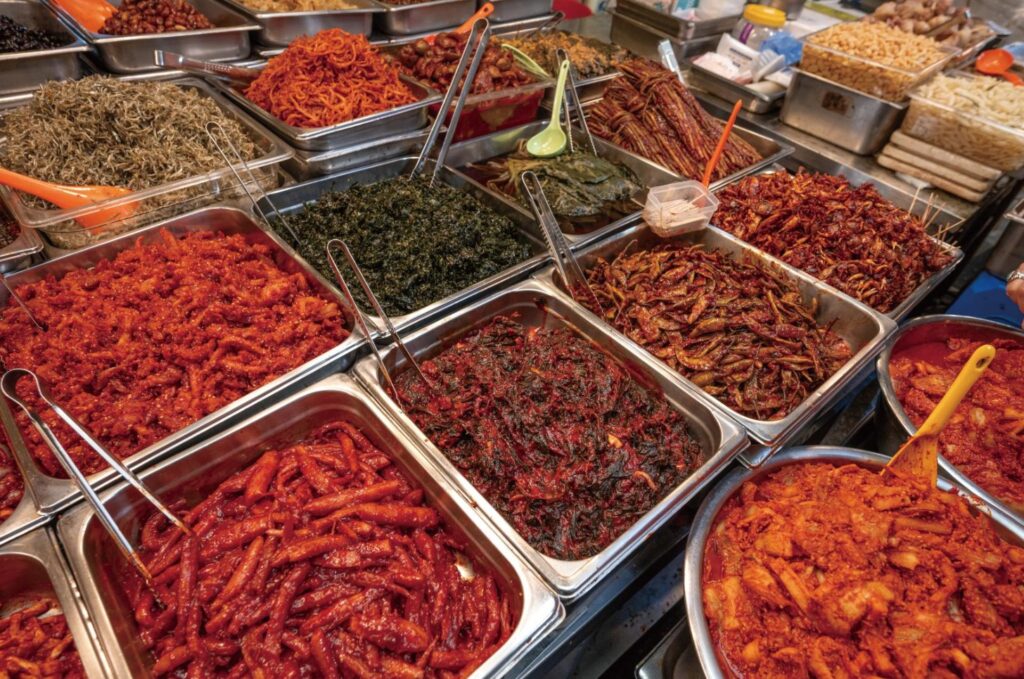
    Korean side dishes sold at the market / REFER TO 한국민속대백과사전

    What Is Banchan?

    Understanding Korean Side Dishes and Table Structure

    In traditional Korean dining, rice is the staple food, and all accompanying dishes are considered banchan, or side dishes.
    Unlike Western meals, where side dishes are served alongside or after a main dish, Korean side dishes are placed on the table all at once, forming a complete meal from the beginning.


    The Traditional Korean Table Setting (Bansang)

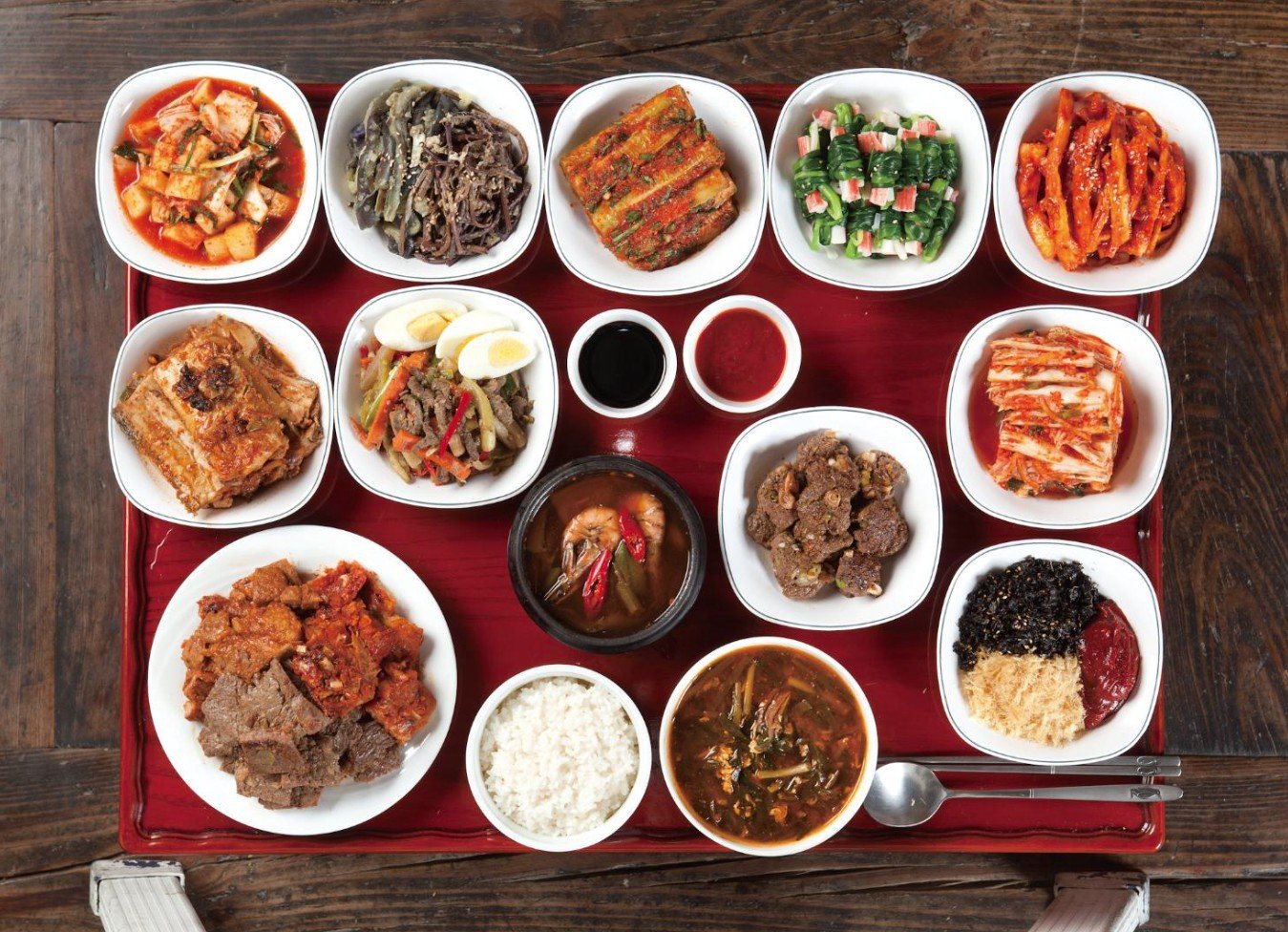
    A traditional Korean table setting, known as bansang, is organized around rice and soup.
    Side dishes are placed in small bowls, often with lids, called jaengcheop.

    The table is traditionally classified by the number of side dishes, excluding essential items such as:

    • Rice
    • Soup
    • Kimchi
    • Fermented sauces (jang)
    • Stews or hot dishes

    Based on the number of side dishes, Korean meals are described as:

    • 3-cheop table
    • 5-cheop table
    • 7-cheop table
    • 9-cheop table

    As the number of side dishes increases, the variety of kimchi, sauces, and fermented foods also expands.
    When preparing banchan, ingredients and cooking methods are carefully chosen so that no two dishes overlap in flavor or technique, and seasonal ingredients are always preferred.


    Banchan in Everyday Korean Homes

    Even today in Korea, most home meals follow this structure.

    If we compare it to the United States, it is similar to serving the main dish and all side dishes at the same time, rather than in courses.

    In Korea, almost everything on the table besides rice is considered banchan.
    However, the types of banchan served often change depending on the main dish of the day.

    One thing is constant: kimchi is always present.
    Beyond that, the variety depends on each household and the cooking skills of the person preparing the meal.

    For example, in my home, when we eat doenjang soup, the table usually includes:

    • Kimchi
    • Dried seaweed (gim)
    • Stir-fried fish cake
    • Spicy stir-fried pork
    • Soup served alongside rice

    Soups are also seasonal.
    In winter, we eat hot soups such as dried pollock soup, soybean sprout soup, or doenjang soup.
    If soup is not prepared, it is simply omitted—Korean meals are flexible, not rigid.


    What Does Banchan Mean in Daily Life?

    Banchan refers to any food eaten together with rice during a meal.

    Common expressions in Korean include:

    • Lunchbox side dishes
    • Spicy side dishes
    • Salty side dishes
    • Side-dish shops (banchan stores)

    People often say things like:

    • “There aren’t many side dishes today.”
    • “My favorite side dish is tofu made by my mom.”
    • “She has a great hand for cooking—every side dish she makes tastes good.”

    In Korean households, the number and quality of banchan often express care, celebration, or affection.


    What Are Dry Side Dishes (Mareun Banchan)?

    Dry side dishes are banchan prepared by stir-frying or simmering ingredients until there is little to no moisture.

    Examples include:

    • Stir-fried anchovies
    • Dried squid
    • Seasoned seaweed

    These dishes last longer and are easy to store, making them ideal for lunchboxes and everyday meals.
    Many Koreans prepare dry side dishes in large batches to save time during the week.


    What Is Banchangeori? (Side Dish Ingredients)

    Banchangeori refers to ingredients used to make side dishes.

    Common expressions include:

    • “We’re running out of side dish ingredients.”
    • “There’s nothing to make side dishes with.”
    • “I’m going to the market to buy ingredients.”

    Because food prices fluctuate, choosing seasonal ingredients is both economical and nutritious.


    What Are Mitbanchan? (Prepared Side Dishes)

    Mitbanchan are side dishes made in advance and stored for multiple meals.

    They are:

    • Easy to serve
    • Long-lasting
    • Essential for busy mornings

    Many Koreans rely on mitbanchan to quickly prepare breakfast or dinner without cooking from scratch.


    What Are Rice Side Dishes?

    Rice side dishes refer to any banchan eaten specifically to complement rice.

    In Korean meals, having three to five side dishes is considered standard, even for a simple home meal.
    This is why Koreans sometimes jokingly say, “There aren’t many side dishes today,” even when several dishes are on the table.

    Common expressions include:

    • “Delicious rice side dishes”
    • “There’s nothing to eat with rice”

    For many Koreans, the enjoyment of a meal depends on whether there is a side dish that pairs well with rice.


    Conclusion: Why Banchan Matters in Korean Food Culture

    Banchan is more than just side dishes.
    It represents balance, care, seasonality, and everyday life in Korean food culture.

    Rather than focusing on a single main dish, Korean meals are designed as a shared table, where rice and multiple side dishes come together to create harmony in flavor and nutrition.

    If you’re looking to try Korean side dishes, coming to Korea might be the best option. Many of these side dishes are made primarily with vegetables.

    You might ask, “What about the toxins in vegetables?” For hundreds of years, Koreans have used recipes designed to detoxify these vegetables, ensuring a safe and healthy nutrient intake.

    Don’t worry

    When eating in Korea, you’ll encounter a variety of side dishes. Especially when you’re eating your favorite side dish, if you say, “Auntie, please give me more side dishes,” they’ll give you more. It’s free, of course.

  • What Is Korean Food? Culture, Ingredients, and Philosophy Explained

    What Is Korean Food? Culture, Ingredients, and Philosophy Explained

    What Is Korean Food?

    Korean food is deeply connected to Korea’s dietary habits, geography, soil conditions, and long-standing Confucian culture.

    Rather than being defined by a few famous dishes, Korean food developed as a complete food system shaped by environment, history, and philosophy.


    How Geography Shaped Korean Food

    Traditionally, the Korean Peninsula is mountainous, which made large-scale livestock farming difficult.
    Unlike countries such as the United States, Korea historically did not produce large amounts of beef, pork, or poultry.

    As a result, grains and vegetables became the foundation of Korean meals, while meat was used more sparingly as a complementary ingredient rather than the centerpiece of a dish.


    Clear Separation Between Staple Foods and Side Dishes

    One defining feature of Korean cuisine is the clear distinction between staple foods (main foods) and side dishes.

    • Staple foods are primarily grain-based, such as rice, porridge, noodles, rice cakes, and dumplings.
    • Side dishes are designed to balance nutrition, flavor, and texture using seasonal ingredients.

    Because Korea experiences four distinct seasons, ingredients and cooking methods naturally change throughout the year.
    In summer, Koreans prefer lighter, cooler foods, while in winter, warm soups and stews are commonly enjoyed.


    Why Seasons Matter in Korean Cuisine

    Korean food relies heavily on fermented ingredients, especially soybean-based products such as doenjang (soybean paste).About US

    Historically, winter food shortages made long-term preservation essential. Fermented foods like doenjang were developed as practical solutions, but they also proved to be nutritionally rich and scientifically sound.

    These fermented seasonings provided protein, minerals, and flavor during times when fresh food was scarce.


    Balance Between Plant-Based and Animal-Based Foods

    Modern Korean cuisine emphasizes balance rather than excess.

    Meals typically combine:

    • Plant-based ingredients such as vegetables, grains, and legumes
    • Moderate amounts of animal-based foods like meat or seafood

    When meat is the main ingredient, vegetables and mushrooms are added to support nutritional balance.
    When vegetables are the main ingredient, sesame seeds or sesame oil are used to complement nutrients and flavor.


    Food as Medicine: The Philosophy of “Yaksik Dongwon”

    Korean food is strongly influenced by the traditional belief of “Yaksik Dongwon (醫食同源)”, which means food and medicine share the same origin.

    This philosophy views everyday food as a way to support health and prevent illness.
    As a result, medicinal herbs have historically been used not only in medicine but also in foods, teas, and traditional alcoholic drinks.

    Examples include:

    • Yakgwa (traditional honey cookies)
    • Yaksik (sweet rice with nuts and fruits)
    • Yakju (herbal rice wine)

    Yin-Yang and the Five Colors in Korean Food

    Korean cuisine follows the principles of Yin-Yang and the Five Elements, expressed through the Five Colors (Obangsaek):

    • White
    • Black
    • Blue/Green
    • Red
    • Yellow

    Many traditional dishes are designed to include all five colors, symbolizing nutritional balance and harmony.
    Dishes such as gujeolpan, sinsunro, and japchae reflect this philosophy, often enhanced with garnishes like sesame seeds, pine nuts, chili threads, and egg strips.


    Food as Medicine: The Philosophy of Yaksik Dongwon

    Confucian values strongly shaped Korean cooking methods and dining etiquette.

    Traditionally:

    • Food was arranged carefully based on the diner’s seating position
    • Elders began eating first
    • Loud eating or excessive talking during meals was discouraged

    In many households, families waited for the head of the household to return before starting meals, emphasizing respect and family unity.

    While many of these customs have softened over time, their influence is still visible in modern Korean dining culture.


    Holiday Foods and Seasonal Traditions

    Korean food culture includes special dishes associated with holidays and seasonal rituals.

    Examples include:

    • Tteokguk (rice cake soup) eaten on Lunar New Year to wish for a safe and healthy year
    • Patjuk (red bean porridge) eaten during the winter solstice to ward off bad luck
    • Chuseok foods, prepared using newly harvested ingredients to honor ancestors
    • Ogokbap (five-grain rice) eaten on the first full moon to wish for good health

    These foods often carry symbolic meanings rooted in tradition and belief.


    Regional Korean Foods and Local Ingredients

    Although Korea is geographically small, its diverse terrain and climate gave rise to many regional cuisines.

    Local foods developed based on:

    • Crops that grew well in specific areas
    • Temperature differences
    • Local preservation methods

    This led to a wide variety of regional dishes and cooking styles across the country.


    Why Rice Is the Foundation of Korean Meals

    Just as bread is central in Western diets, rice is the foundation of Korean meals.

    Korea’s environment is well-suited to rice farming, and over time, Koreans developed a wide range of grain-based foods using rice and mixed grains.

    To support these grain-based meals, fermented seasonings (jang) and traditional sweeteners like yeot and jocheong were developed.
    Before refined sugar became common, malt syrup and grain-based sweeteners were the primary sources of sweetness.


    Traditional Malt (Yeotgireum) and Fermented Sweetness

    Yeotgireum is made by sprouting barley and drying it, producing enzymes that break starch into sugar.
    It plays a key role in making traditional foods such as sikhye, jocheong, yeot, and makgeolli.

    Unfortunately, many modern commercial products no longer use traditional malt.
    If you ever visit Korea, tasting jocheong offers a deeper understanding of traditional Korean sweetness.


    Cooking Methods and Nutritional Preservation

    Korean cuisine uses many boiling and steaming methods, which help minimize nutrient loss.
    Combined with fermentation, these methods support digestion and long-term health.

    Korean food includes:

    • Over 350 types of staple foods (rice, porridge, noodles, dumplings, rice cakes)
    • Over 1,500 types of side dishes (soups, stews, grilled dishes, stir-fries, pickles)

    Korean Food as a Complete System

    Korean food is not simply a collection of dishes.
    It is a holistic food system shaped by geography, seasons, philosophy, and culture.

    At its core, Korean cuisine seeks balance—between grains and vegetables, plant and animal foods, flavor and nutrition, and tradition and daily life.