A Warm Meal to Start the Day in Cold Winter
The winter weather that has persisted since last year has been quite cold. With temperatures dropping below -10°C in winter and rising above 30°C in summer, the foods we eat vary significantly by season. Today, I’m having lunch with a friend and colleague.
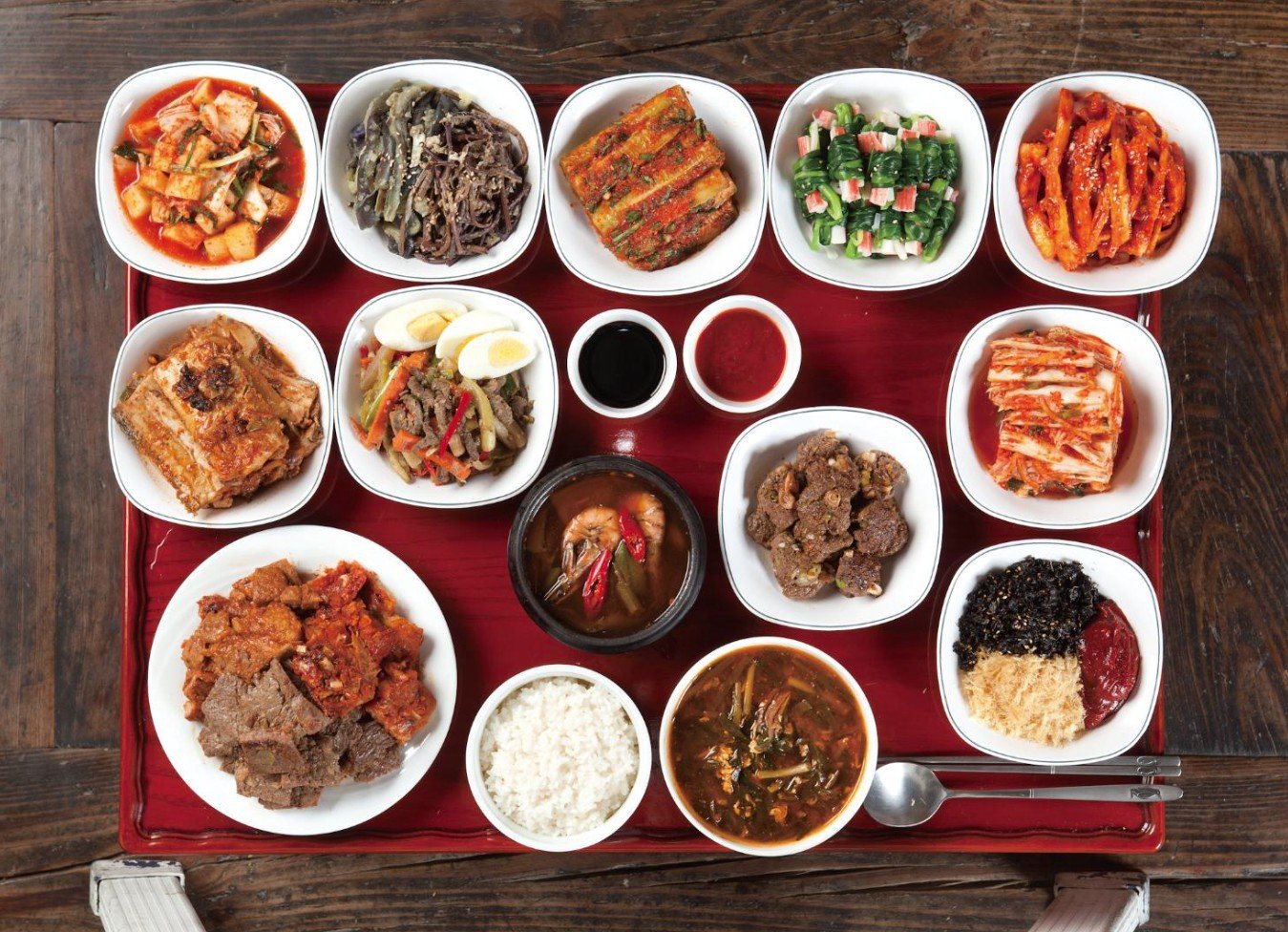
Today’s menu is hanjeongsik. We’re going back to the same place we visited yesterday.
The Charm of Hanjeongsik – Daily Changing Side Dishes and Menus
Most hanjeongsik restaurants prepare different side dishes each day. Of course, the main dishes are also configured differently. This is a major advantage of choosing hanjeongsik. For Korean office workers, there’s no need to worry about the menu or side dishes, and you don’t have to worry about what your boss thinks either.
GMO-Free Side Dishes – A Healthy Table Made with Korean Produce
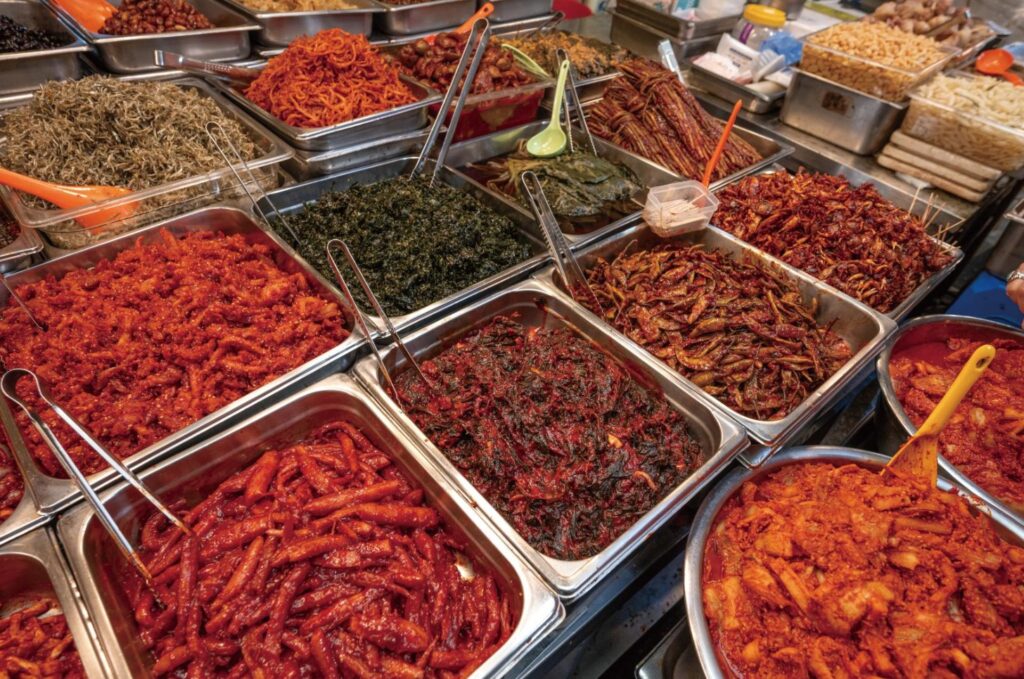
Today’s hanjeongsik featured GMO-FREE side dishes. Most of the side dishes are made primarily from namul (seasoned vegetables). This is because Korean-grown agricultural products and vegetables are relatively affordable in Korea’s climate.
Today’s Hanjeongsik Composition
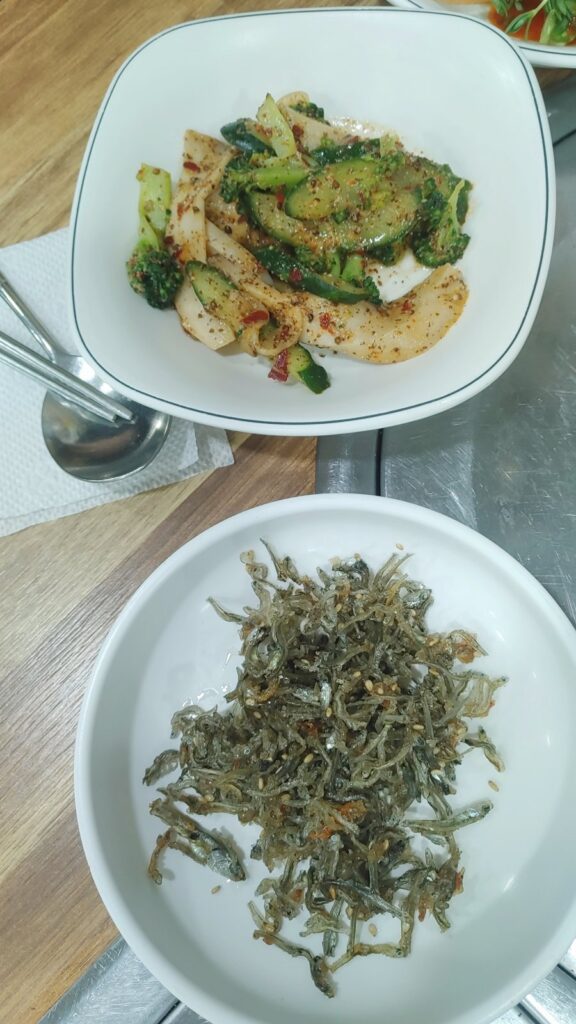
Myeolchi-bokkeum
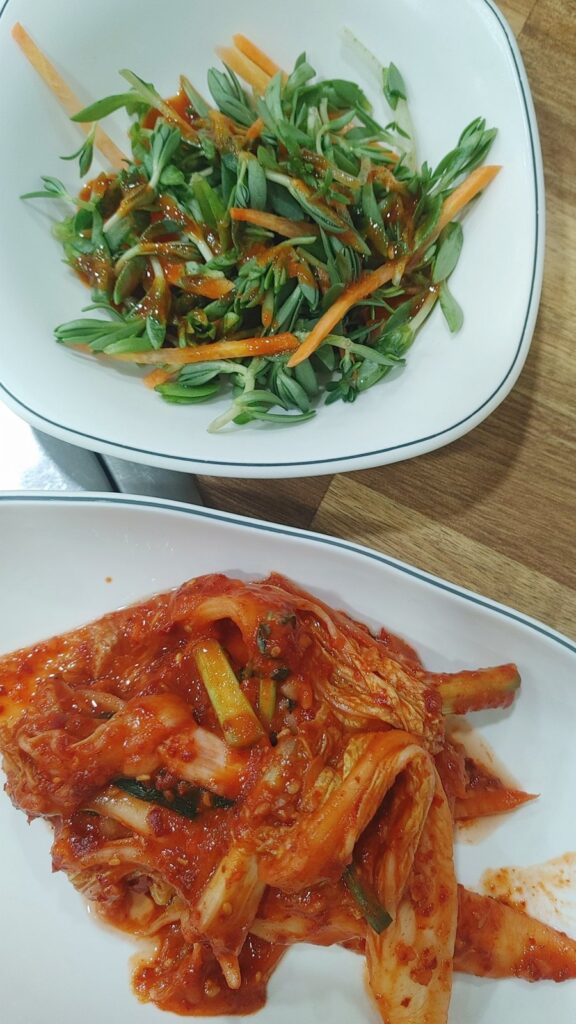
Kimchi
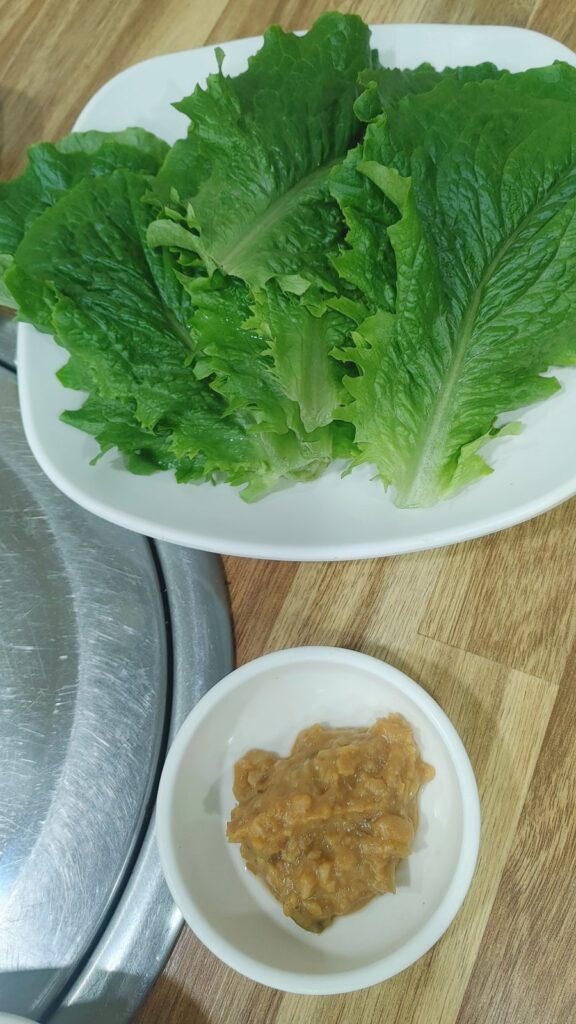
Ssamjang
🏷️ Menu List for tastyKoreanfood.com
| 한글 메뉴명 | 한글 발음 (Romanization) | (English Name) |
| 계란후라이 | Gyeran-hurai | Fried Egg |
| 멸치볶음 | Myeolchi-bokkeum | Stir-fried Anchovies |
| 오이무침 | Oi-muchim | Spicy Cucumber Salad |
| 돌나물무침 | Dolnamul-muchim | Seasoned Sedum (Stonecrop) |
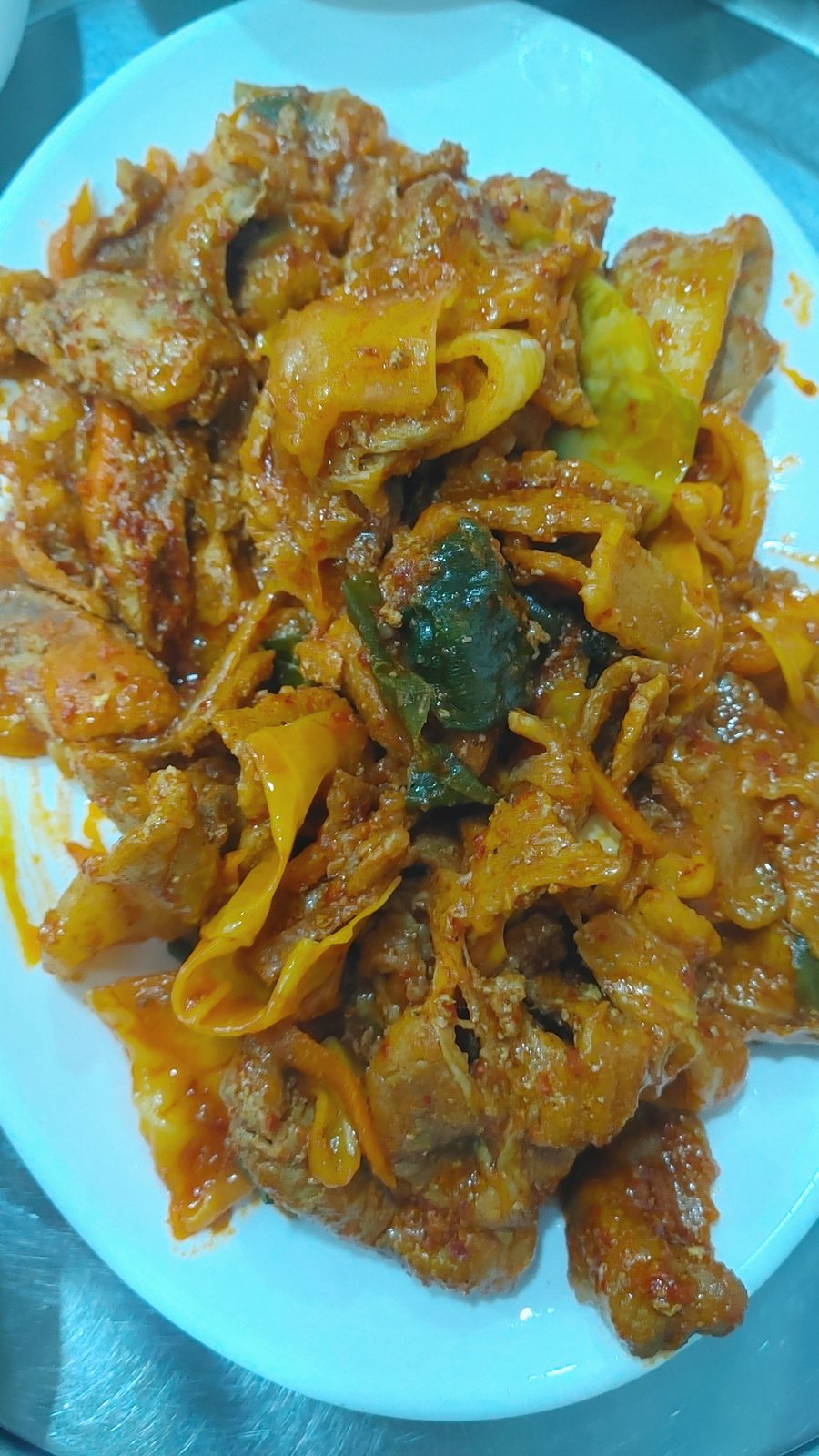
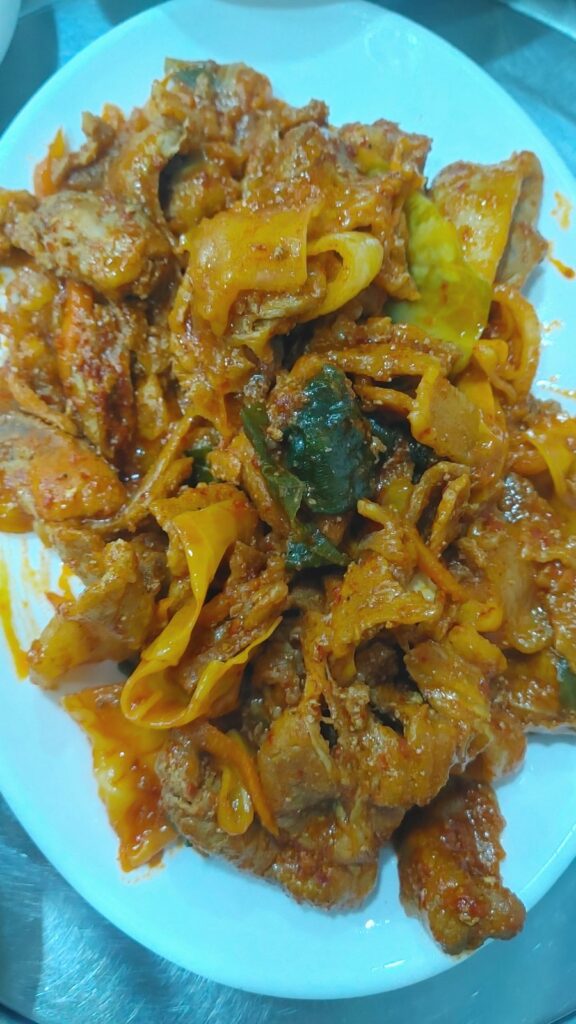
| 제육볶음 | Jeyuk-bokkeum | Spicy Stir-fried Pork |
| 김치 | Kimchi | Kimchi |
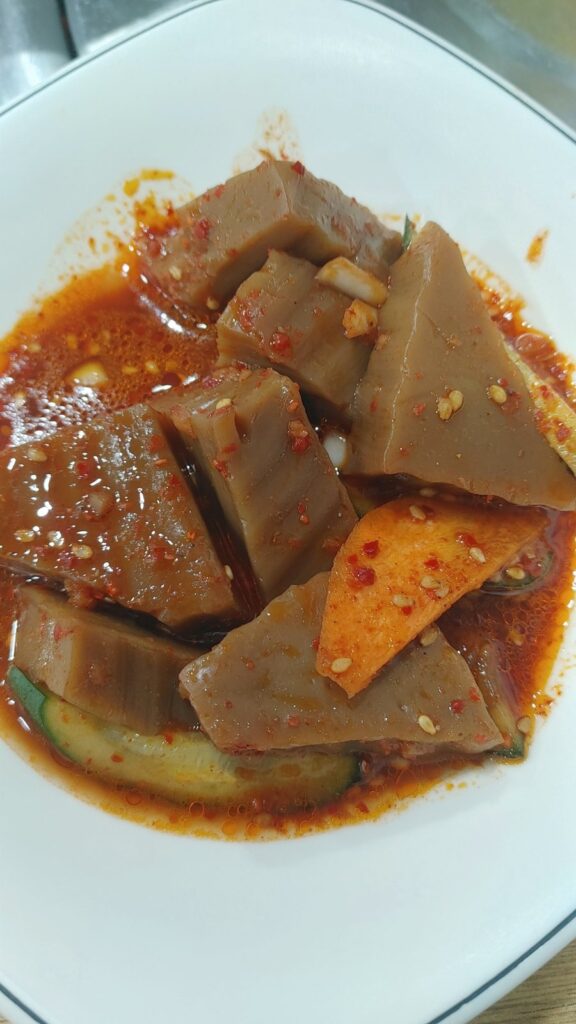
| 도토리묵 무침 | Dotori-muk-muchim | Acorn Jelly Salad |
| 상추 | Sangchu | Lettuce |
| 쌈장 | Ssamjang | Ssamjang (Seasoned Soybean Paste) |
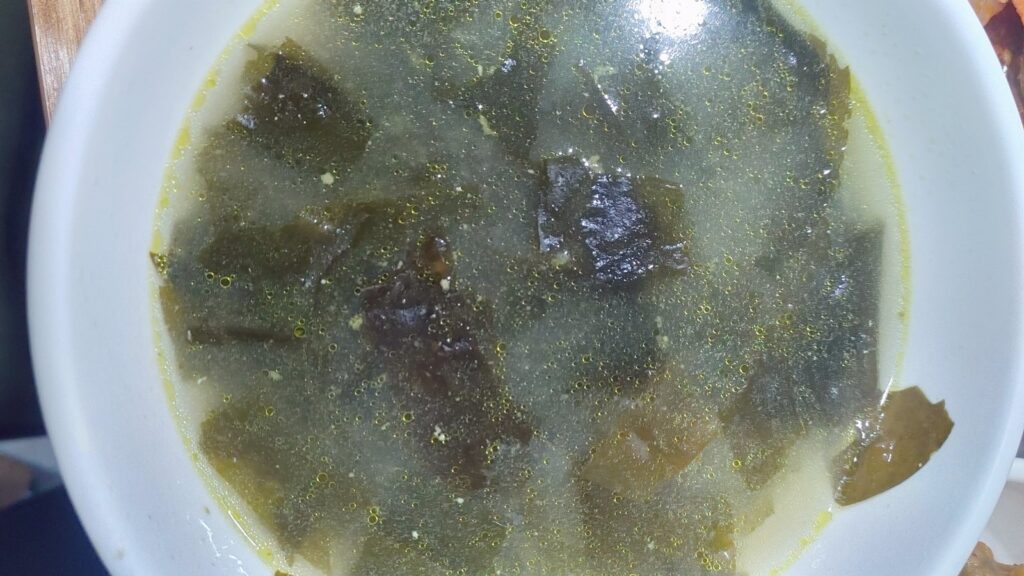
| 미역국 | Miyeok-guk | Seaweed Soup |
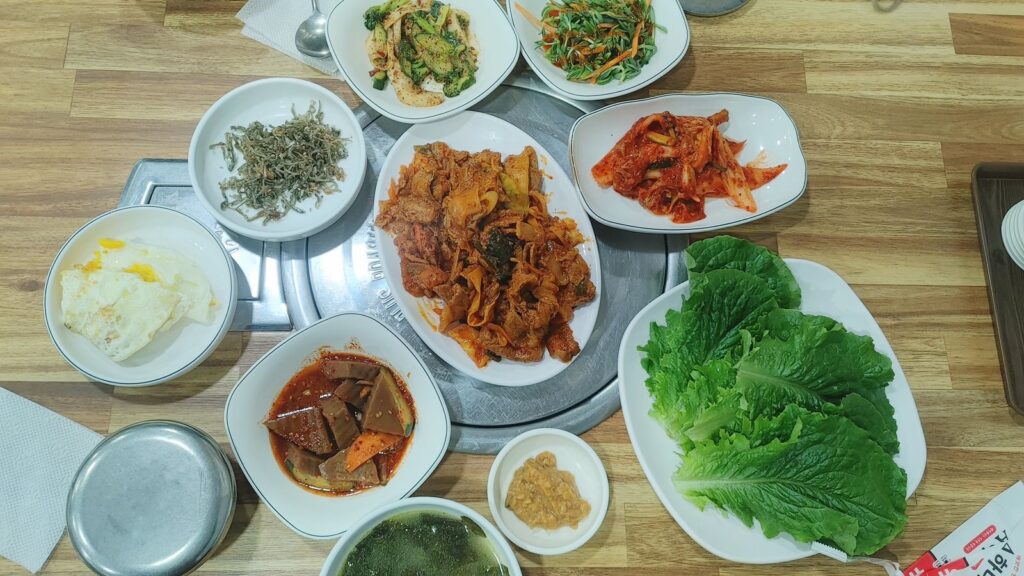
The main dish was jeyuk bokkeum (spicy stir-fried pork), accompanied by fresh vegetables for wrapping (ssam) and doenjang (fermented soybean paste). The soup was comforting miyeok-guk (seaweed soup), along with acorn jelly (dotori-muk), kimchi, freshly made kimchi, stir-fried mushrooms, fried egg, and anchovies. There was one side dish whose name I can’t quite remember… oh yes, dolnamul—young shoots of a succulent plant seasoned with red pepper powder and various seasonings.
In total, there were 8 side dishes, miyeok-guk, and jeyuk bokkeum, making 10 items altogether. Looking at the composition of the side dishes and meal, most are made with Korean ingredients.
Miyeok-guk – Korea’s Traditional Health Food for New Mothers
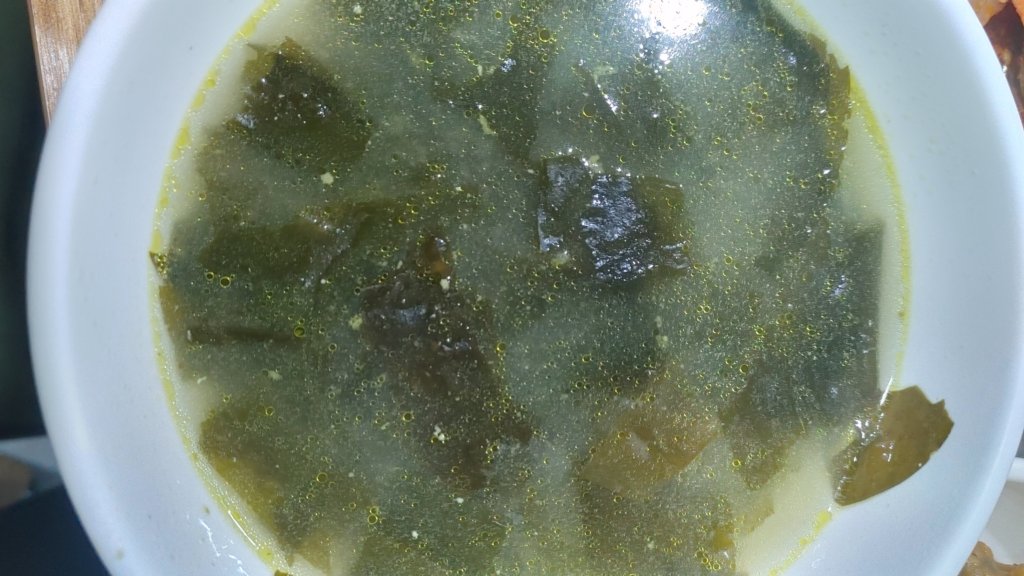
Miyeok-guk has always appeared in the diet of new mothers after childbirth.
To introduce miyeok-guk: it’s a soup made primarily with miyeok (seaweed). Miyeok is an annual brown algae mainly consumed in Korea and Japan. In Korea, new mothers who have just given birth always seek it out. Eating miyeok-guk is said to promote breast milk production for the baby, and because seaweed has alkaline properties, it’s believed to be excellent for detoxifying the body.
When my wife gave birth to our first and second children, she ate miyeok for almost a month. This custom of eating miyeok-guk dates back to ancient times. When a baby was born, the maternal family would visit their daughter with the best quality miyeok they could prepare.
Wild Seaweed (Dol-miyeok) vs Farmed Seaweed – What’s the Difference?
In Korea, the most preferred and highest quality seaweed is dol-miyeok (stone seaweed), which refers to naturally harvested seaweed collected from rocks.
There’s also farmed miyeok, which is cultivated directly in the ocean. Compared to dol-miyeok, farmed seaweed has a thinner texture. However, dol-miyeok requires longer cooking time, but offers a richer, more flavorful taste.
The Essence of Korean Food I Prefer – ‘Minimally Processed Food’
I’m not from a generation that grew up eating donkatsu (Japanese-style pork cutlet). I’m approaching 50 years old now. So I don’t prefer donkatsu, and I frequently encountered what I call ‘rough foods’ that my mother made for me.
‘Rough food’ refers to dishes made from pure, unprocessed ingredients as they are. Nowadays, there’s what’s called ultra-processed food—finely textured foods that are widely distributed. But when I was young, I encountered many foods made with minimally processed ingredients like these. Even now, when choosing a restaurant with family or work colleagues, I tend to prefer rough, minimally processed foods whenever possible.
Why I Don’t Spend My Own Money on Donkatsu?
Everyone has their own constitution. My body reacts to fried foods. I experience poor digestion or stomach discomfort after eating them. That’s why I avoid fried foods as much as possible. I’m 52 years old now, after all.
However, I do prefer foods cooked with pork fat or beef fat. According to data released by the FDA in 2026, animal fats are healthier than factory-produced seed oils made from plant seeds. Furthermore, they stated that consuming fermented butter or pure butter is healthier. So these days, although it’s not traditional Korean food, I eat fermented pure butter on my table for health reasons. (When I was young, I used to eat margarine.)
Lunch Culture in Yeouido Financial District – Fast and Efficient
At 11:30 AM, restaurants start getting crowded with customers coming for lunch.
Yeouido, where I work, is full of office workers. Yeouido is Korea’s financial district, home to securities firms, banks, and financial industry professionals. Think of it as Korea’s Wall Street.
Because most people commute early in the morning, lunch time for financial district workers starts as early as 11:00 AM for reservations, with crowds flooding restaurants from 11:30 AM onwards. Therefore, going early, eating quickly, and leaving is considered a virtue.
What I mean is, when I eat with colleagues at a restaurant, I usually don’t exceed 15 minutes. The restaurants crowded here also do their main business during the lunch rush, so diners generally don’t sit for extended periods. In other words, meal times range from 15 to 25 minutes at most.
Slightly more expensive restaurants offer separate rooms for dining. It seems to be the mindset of office workers to finish their meal quickly and rest a bit.
Of course, if you visit a restaurant, you don’t have to finish your meal in 15 minutes. You can eat at a more leisurely pace. It’s just that Korea has this ‘ppalli-ppalli’ (quickly-quickly) mentality.
Conclusion – Memories and Traditions in Korean Dining
At Korean baekban (home-style meal) or hanjeongsik restaurants, the side dishes change almost daily. And most of these side dishes are the same ones my father and mother made for me when I was young, carried down to this day. So when I see these side dishes and foods, they bring back old memories.
• GMO 검역 정보 → 식품의약품안전처
• 미역의 영양 성분 → 국가표준식품성분표 DB
• FDA 2026 발표 자료 → www.fda.gov (seed oils vs animal fats)
• Korean food culture→ 한식진흥원
What Is Banchan?
Why Rice Is the Foundation of Korean Meals
Why Soup Is Served in Most Korean Meals
Soup is always placed next to rice, showing why soup is served in most Korean meals, even at lunch.