What Is Banchan?
Understanding Korean Side Dishes and Table Structure
In traditional Korean dining, rice is the staple food, and all accompanying dishes are considered banchan, or side dishes.
Unlike Western meals, where side dishes are served alongside or after a main dish, Korean side dishes are placed on the table all at once, forming a complete meal from the beginning.
The Traditional Korean Table Setting (Bansang)
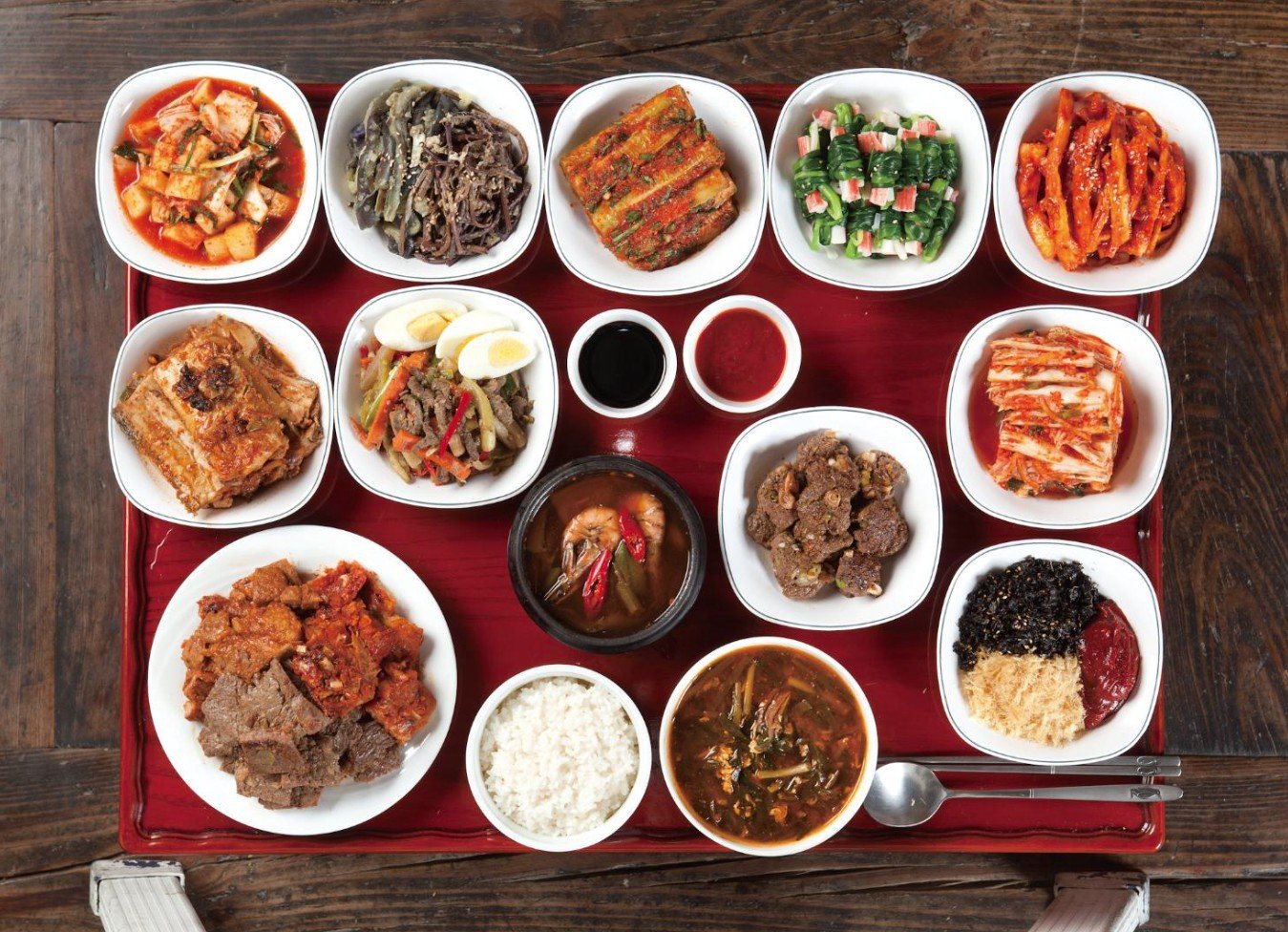
A traditional Korean table setting, known as bansang, is organized around rice and soup.
Side dishes are placed in small bowls, often with lids, called jaengcheop.
The table is traditionally classified by the number of side dishes, excluding essential items such as:
- Rice
- Soup
- Kimchi
- Fermented sauces (jang)
- Stews or hot dishes
Based on the number of side dishes, Korean meals are described as:
- 3-cheop table
- 5-cheop table
- 7-cheop table
- 9-cheop table
As the number of side dishes increases, the variety of kimchi, sauces, and fermented foods also expands.
When preparing banchan, ingredients and cooking methods are carefully chosen so that no two dishes overlap in flavor or technique, and seasonal ingredients are always preferred.
Banchan in Everyday Korean Homes
Even today in Korea, most home meals follow this structure.
If we compare it to the United States, it is similar to serving the main dish and all side dishes at the same time, rather than in courses.
In Korea, almost everything on the table besides rice is considered banchan.
However, the types of banchan served often change depending on the main dish of the day.
One thing is constant: kimchi is always present.
Beyond that, the variety depends on each household and the cooking skills of the person preparing the meal.
For example, in my home, when we eat doenjang soup, the table usually includes:
- Kimchi
- Dried seaweed (gim)
- Stir-fried fish cake
- Spicy stir-fried pork
- Soup served alongside rice
Soups are also seasonal.
In winter, we eat hot soups such as dried pollock soup, soybean sprout soup, or doenjang soup.
If soup is not prepared, it is simply omitted—Korean meals are flexible, not rigid.
What Does Banchan Mean in Daily Life?
Banchan refers to any food eaten together with rice during a meal.
Common expressions in Korean include:
- Lunchbox side dishes
- Spicy side dishes
- Salty side dishes
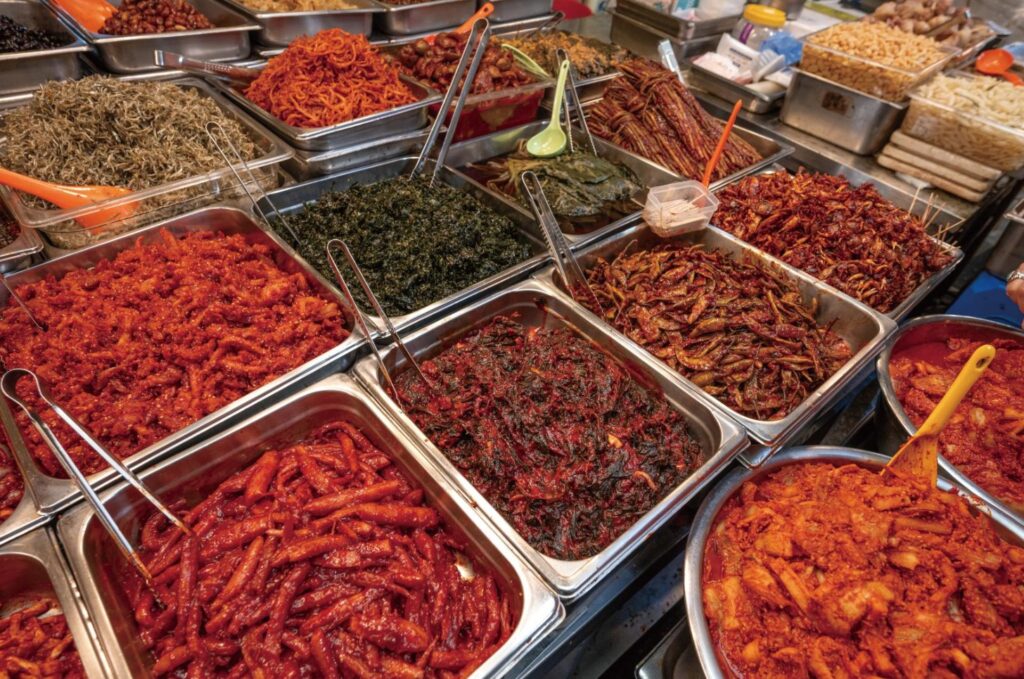
- Side-dish shops (banchan stores)
People often say things like:
- “There aren’t many side dishes today.”
- “My favorite side dish is tofu made by my mom.”
- “She has a great hand for cooking—every side dish she makes tastes good.”
In Korean households, the number and quality of banchan often express care, celebration, or affection.
What Are Dry Side Dishes (Mareun Banchan)?
Dry side dishes are banchan prepared by stir-frying or simmering ingredients until there is little to no moisture.
Examples include:
- Stir-fried anchovies
- Dried squid
- Seasoned seaweed
These dishes last longer and are easy to store, making them ideal for lunchboxes and everyday meals.
Many Koreans prepare dry side dishes in large batches to save time during the week.
What Is Banchangeori? (Side Dish Ingredients)
Banchangeori refers to ingredients used to make side dishes.
Common expressions include:
- “We’re running out of side dish ingredients.”
- “There’s nothing to make side dishes with.”
- “I’m going to the market to buy ingredients.”
Because food prices fluctuate, choosing seasonal ingredients is both economical and nutritious.
What Are Mitbanchan? (Prepared Side Dishes)
Mitbanchan are side dishes made in advance and stored for multiple meals.
They are:
- Easy to serve
- Long-lasting
- Essential for busy mornings
Many Koreans rely on mitbanchan to quickly prepare breakfast or dinner without cooking from scratch.
What Are Rice Side Dishes?
Rice side dishes refer to any banchan eaten specifically to complement rice.
In Korean meals, having three to five side dishes is considered standard, even for a simple home meal.
This is why Koreans sometimes jokingly say, “There aren’t many side dishes today,” even when several dishes are on the table.
Common expressions include:
- “Delicious rice side dishes”
- “There’s nothing to eat with rice”
For many Koreans, the enjoyment of a meal depends on whether there is a side dish that pairs well with rice.
Conclusion: Why Banchan Matters in Korean Food Culture
Banchan is more than just side dishes.
It represents balance, care, seasonality, and everyday life in Korean food culture.
Rather than focusing on a single main dish, Korean meals are designed as a shared table, where rice and multiple side dishes come together to create harmony in flavor and nutrition.
If you’re looking to try Korean side dishes, coming to Korea might be the best option. Many of these side dishes are made primarily with vegetables.
You might ask, “What about the toxins in vegetables?” For hundreds of years, Koreans have used recipes designed to detoxify these vegetables, ensuring a safe and healthy nutrient intake.
Don’t worry
When eating in Korea, you’ll encounter a variety of side dishes. Especially when you’re eating your favorite side dish, if you say, “Auntie, please give me more side dishes,” they’ll give you more. It’s free, of course.