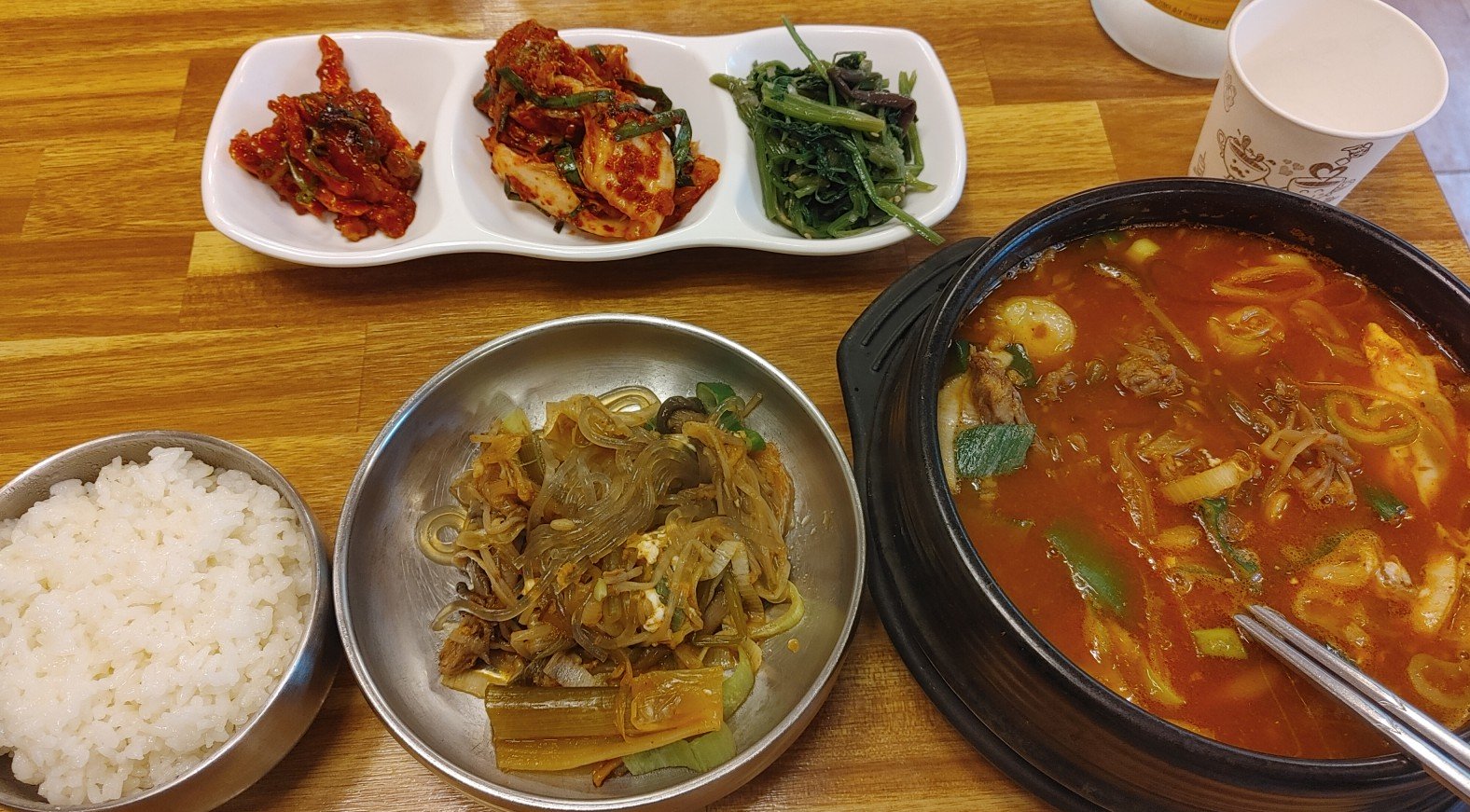
What Is Korean Food?
Korean food is deeply connected to Korea’s dietary habits, geography, soil conditions, and long-standing Confucian culture.
Rather than being defined by a few famous dishes, Korean food developed as a complete food system shaped by environment, history, and philosophy.
How Geography Shaped Korean Food
Traditionally, the Korean Peninsula is mountainous, which made large-scale livestock farming difficult.
Unlike countries such as the United States, Korea historically did not produce large amounts of beef, pork, or poultry.
As a result, grains and vegetables became the foundation of Korean meals, while meat was used more sparingly as a complementary ingredient rather than the centerpiece of a dish.
Clear Separation Between Staple Foods and Side Dishes
One defining feature of Korean cuisine is the clear distinction between staple foods (main foods) and side dishes.
- Staple foods are primarily grain-based, such as rice, porridge, noodles, rice cakes, and dumplings.
- Side dishes are designed to balance nutrition, flavor, and texture using seasonal ingredients.
Because Korea experiences four distinct seasons, ingredients and cooking methods naturally change throughout the year.
In summer, Koreans prefer lighter, cooler foods, while in winter, warm soups and stews are commonly enjoyed.
Why Seasons Matter in Korean Cuisine
Korean food relies heavily on fermented ingredients, especially soybean-based products such as doenjang (soybean paste).About US
Historically, winter food shortages made long-term preservation essential. Fermented foods like doenjang were developed as practical solutions, but they also proved to be nutritionally rich and scientifically sound.
These fermented seasonings provided protein, minerals, and flavor during times when fresh food was scarce.
Balance Between Plant-Based and Animal-Based Foods
Modern Korean cuisine emphasizes balance rather than excess.
Meals typically combine:
- Plant-based ingredients such as vegetables, grains, and legumes
- Moderate amounts of animal-based foods like meat or seafood
When meat is the main ingredient, vegetables and mushrooms are added to support nutritional balance.
When vegetables are the main ingredient, sesame seeds or sesame oil are used to complement nutrients and flavor.
Food as Medicine: The Philosophy of “Yaksik Dongwon”
Korean food is strongly influenced by the traditional belief of “Yaksik Dongwon (醫食同源)”, which means food and medicine share the same origin.
This philosophy views everyday food as a way to support health and prevent illness.
As a result, medicinal herbs have historically been used not only in medicine but also in foods, teas, and traditional alcoholic drinks.
Examples include:
- Yakgwa (traditional honey cookies)
- Yaksik (sweet rice with nuts and fruits)
- Yakju (herbal rice wine)
Yin-Yang and the Five Colors in Korean Food
Korean cuisine follows the principles of Yin-Yang and the Five Elements, expressed through the Five Colors (Obangsaek):
- White
- Black
- Blue/Green
- Red
- Yellow
Many traditional dishes are designed to include all five colors, symbolizing nutritional balance and harmony.
Dishes such as gujeolpan, sinsunro, and japchae reflect this philosophy, often enhanced with garnishes like sesame seeds, pine nuts, chili threads, and egg strips.
Food as Medicine: The Philosophy of Yaksik Dongwon
Confucian values strongly shaped Korean cooking methods and dining etiquette.
Traditionally:
- Food was arranged carefully based on the diner’s seating position
- Elders began eating first
- Loud eating or excessive talking during meals was discouraged
In many households, families waited for the head of the household to return before starting meals, emphasizing respect and family unity.
While many of these customs have softened over time, their influence is still visible in modern Korean dining culture.
Holiday Foods and Seasonal Traditions
Korean food culture includes special dishes associated with holidays and seasonal rituals.
Examples include:
- Tteokguk (rice cake soup) eaten on Lunar New Year to wish for a safe and healthy year
- Patjuk (red bean porridge) eaten during the winter solstice to ward off bad luck
- Chuseok foods, prepared using newly harvested ingredients to honor ancestors
- Ogokbap (five-grain rice) eaten on the first full moon to wish for good health
These foods often carry symbolic meanings rooted in tradition and belief.
Regional Korean Foods and Local Ingredients
Although Korea is geographically small, its diverse terrain and climate gave rise to many regional cuisines.
Local foods developed based on:
- Crops that grew well in specific areas
- Temperature differences
- Local preservation methods
This led to a wide variety of regional dishes and cooking styles across the country.
Why Rice Is the Foundation of Korean Meals
Just as bread is central in Western diets, rice is the foundation of Korean meals.
Korea’s environment is well-suited to rice farming, and over time, Koreans developed a wide range of grain-based foods using rice and mixed grains.
To support these grain-based meals, fermented seasonings (jang) and traditional sweeteners like yeot and jocheong were developed.
Before refined sugar became common, malt syrup and grain-based sweeteners were the primary sources of sweetness.
Traditional Malt (Yeotgireum) and Fermented Sweetness
Yeotgireum is made by sprouting barley and drying it, producing enzymes that break starch into sugar.
It plays a key role in making traditional foods such as sikhye, jocheong, yeot, and makgeolli.
Unfortunately, many modern commercial products no longer use traditional malt.
If you ever visit Korea, tasting jocheong offers a deeper understanding of traditional Korean sweetness.
Cooking Methods and Nutritional Preservation
Korean cuisine uses many boiling and steaming methods, which help minimize nutrient loss.
Combined with fermentation, these methods support digestion and long-term health.
Korean food includes:
- Over 350 types of staple foods (rice, porridge, noodles, dumplings, rice cakes)
- Over 1,500 types of side dishes (soups, stews, grilled dishes, stir-fries, pickles)
Korean Food as a Complete System
Korean food is not simply a collection of dishes.
It is a holistic food system shaped by geography, seasons, philosophy, and culture.
At its core, Korean cuisine seeks balance—between grains and vegetables, plant and animal foods, flavor and nutrition, and tradition and daily life.