Tag: korean food

  • What is Korean  Hanjeongsik? Complete Guide to Korea’s Traditional Full-Course Meal

    What is Korean Hanjeongsik? Complete Guide to Korea’s Traditional Full-Course Meal

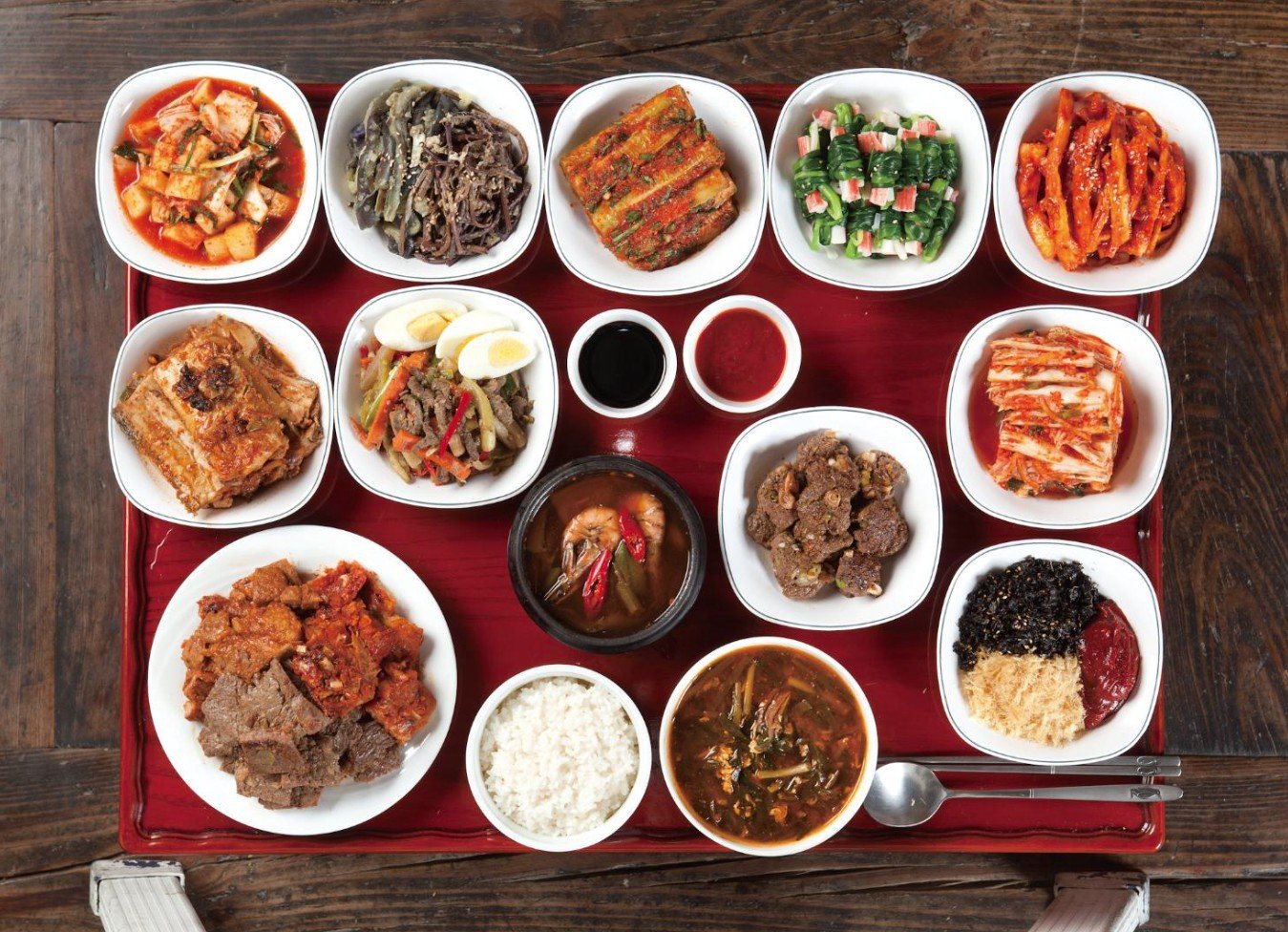
    Are you looking for authentic Korean cuisine in Korea? From a Korean perspective, hanjeongsik represents the closest thing to a truly traditional Korean meal. When meeting friends for a special occasion or craving the flavors of childhood meals amidst modern dining options, Koreans turn to restaurants with “jeongsik” in their name. In Korea, the word “jeongsik” evokes images of various side dishes and a main course served together in harmony.

    Hanjeongsik is more than just a meal—it’s a culinary experience that connects modern Koreans with their traditional food heritage. This dining style emphasizes natural ingredients, balanced nutrition, and the philosophy of letting ingredients shine in their purest form.

    Understanding Hanjeongsik: Korea’s Traditional Full-Course Meal

    In Korean, “han” (한) means Korean, and “jeongsik” (정식) means a set meal or full-course meal(Korean version) . Together, hanjeongsik refers to a traditional Korean set meal featuring multiple dishes served together. Most side dishes (banchan) are prepared Korean-style, using traditional cooking methods and ingredients.

    Unlike modern Korean fusion dishes, authentic hanjeongsik typically excludes ingredients that were imported after the 2010s, such as chicken (Western-style fried chicken), tteokbokki made with newer ingredients, or pasta. However, the menu and banchan composition vary by restaurant, allowing chefs to showcase their unique interpretation of tradition.

    What Makes Hanjeongsik Special

    The biggest difference between hanjeongsik and other Korean meal options is the number of side dishes and the reduced use of sugar in seasoning. Hanjeongsik restaurants prioritize:

    • Natural ingredients: Fresh vegetables, quality meats, and Korean-made sauces
    • Ingredient-focused flavors: Dishes showcase the natural taste of ingredients rather than heavy seasoning
    • Minimal refined sugar: When sweetness is needed, restaurants use oligosaccharides, honey, or grain syrup (jocheong) instead of white sugar
    • Balance and variety: Multiple dishes provide nutritional balance and diverse flavors

    The result is food where you can truly taste the natural flavors of each ingredient. If you detect sweetness, it’s likely from natural sweeteners like honey or grain syrup rather than refined sugar.

    The Evolution of Modern Hanjeongsik

    Today’s hanjeongsik represents a modern interpretation of traditional Korean royal court cuisine (bansang charim). The meal structure has evolved to match contemporary dining preferences while maintaining its traditional essence.

    Typical Hanjeongsik Course Structure

    Modern hanjeongsik is served in courses, similar to Western fine dining:

    1. Appetizer (jeonchae): Porridge (juk) or salad
    2. Main course (juyo yori): Braised short ribs (galbijjim), grilled fish, or specialty dishes
    3. Meal (siksa): Rice, soup, and various banchan
    4. Dessert (husik): Traditional tea and seasonal fruits

    The exact composition varies by price point—higher-priced options feature more elaborate main courses and a greater variety of banchan.

    What’s on the Table?

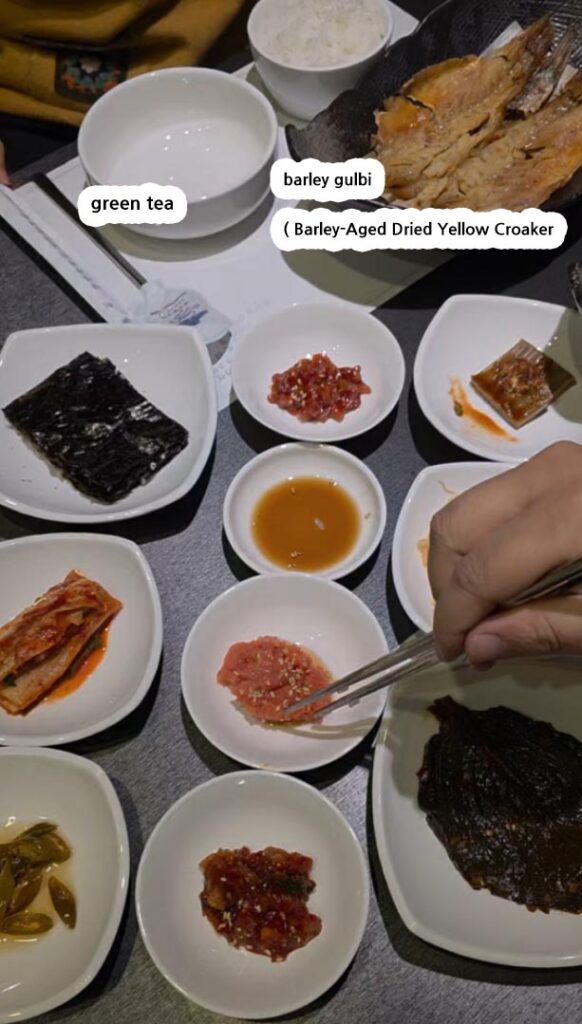
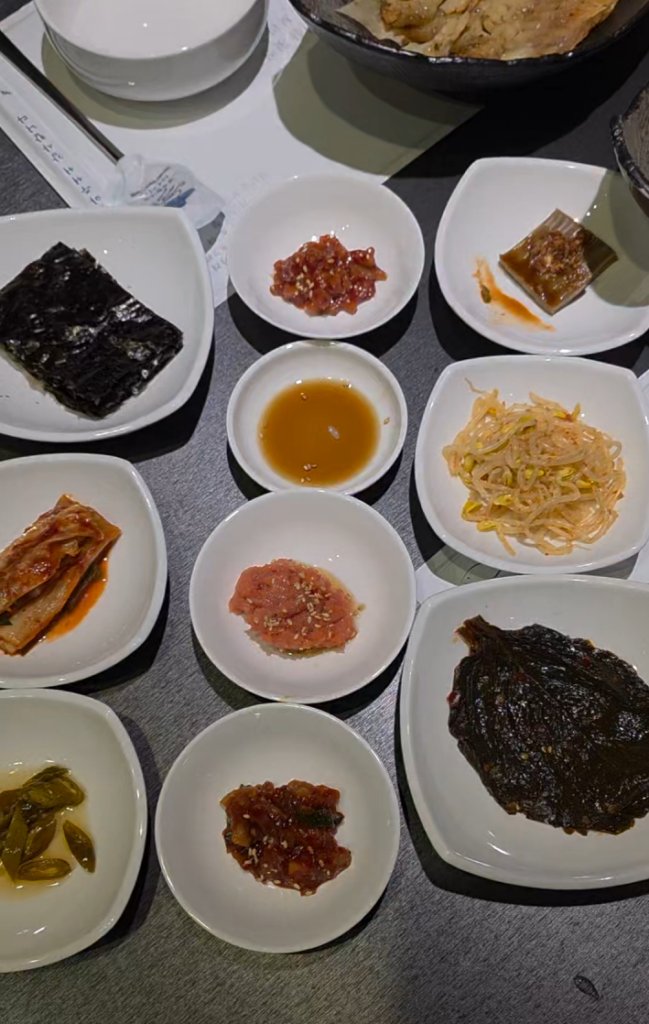
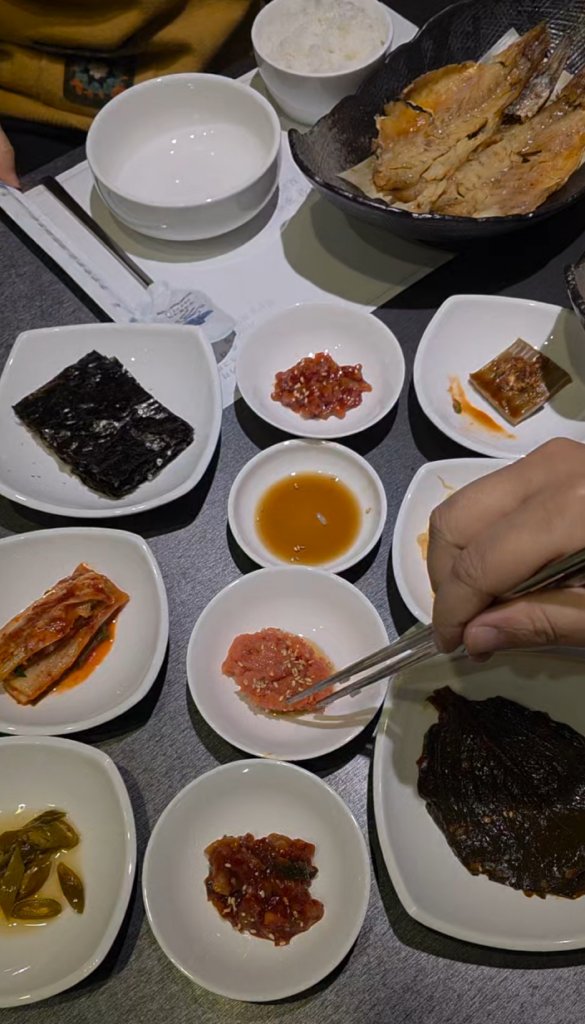
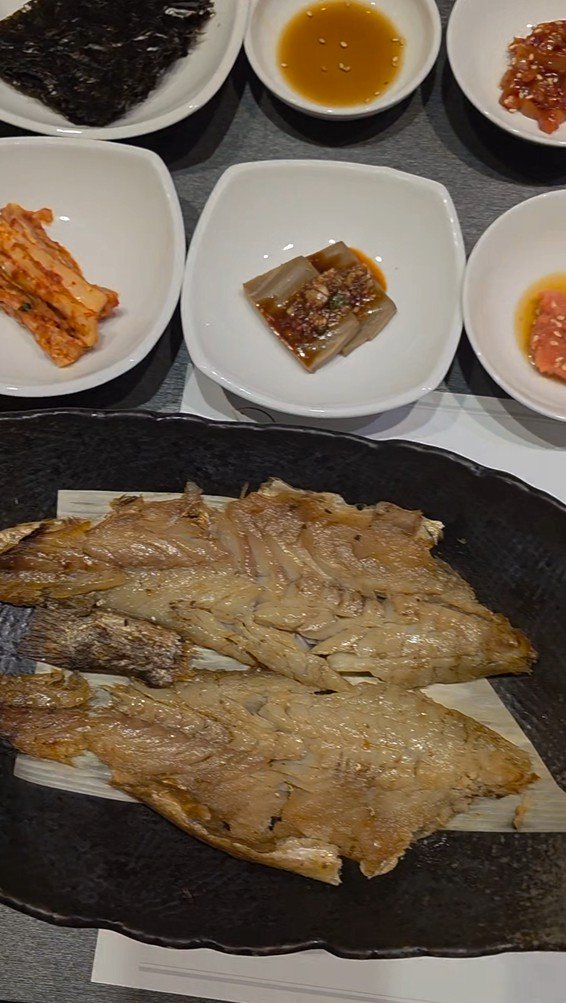
    I had a set meal of barley gulbi at a friends’ gathering today.
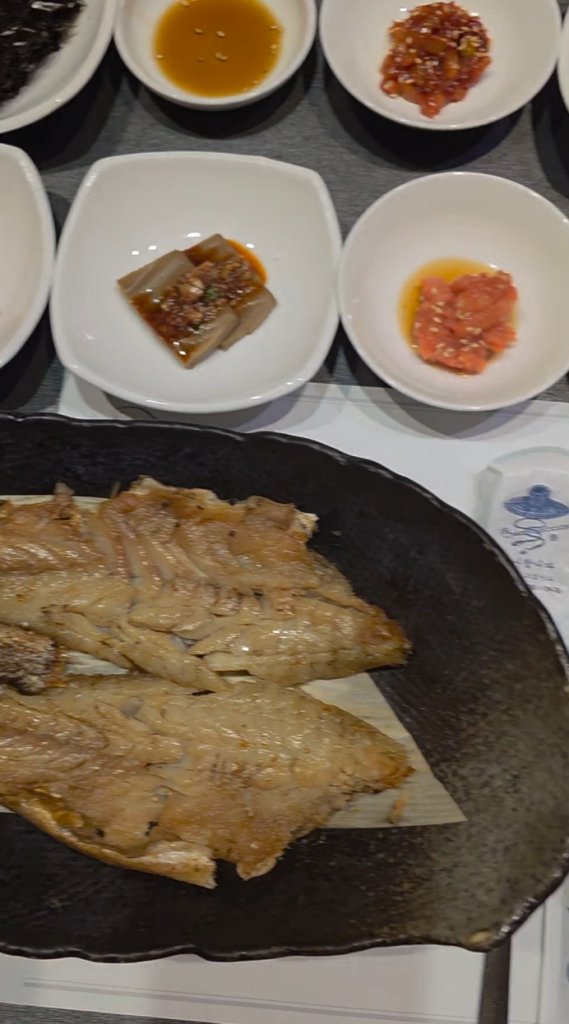
    bori-gulbi Hanjeongsik

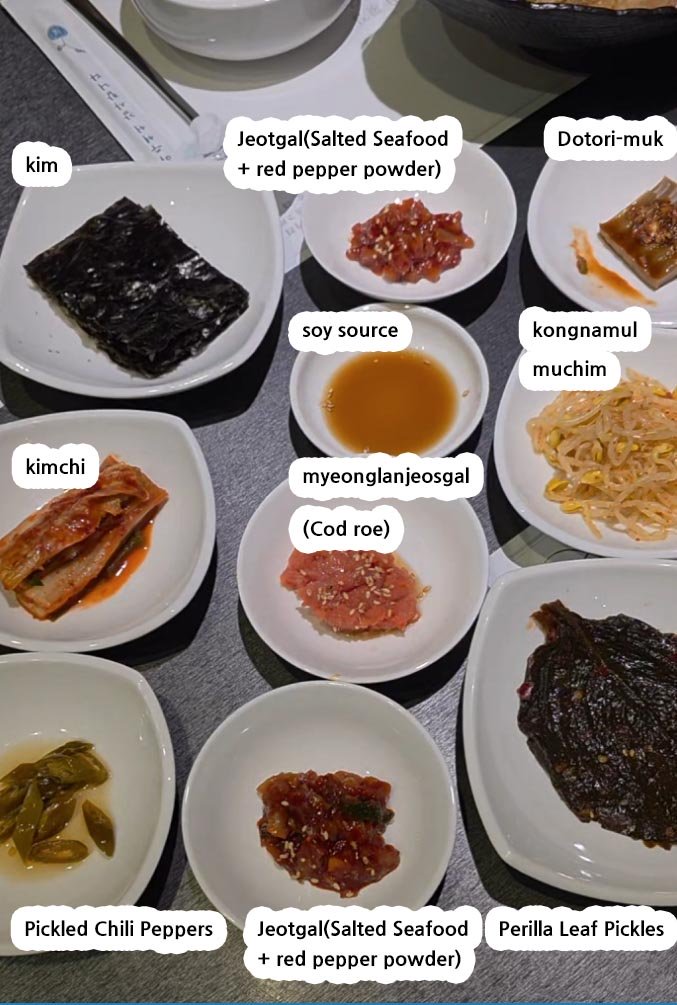
    bori-gulbi Hanjeongsik’s banchan

    A typical hanjeongsik table is impressively abundant. Depending on the restaurant, you’ll receive:

    • Banchan (side dishes): Minimum 4-10 different dishes
    • Main course: Galbijjim (braised short ribs), grilled fish, or specialty dishes depending on the restaurant’s focus
    • Rice and soup: Freshly cooked rice and traditional Korean soup
    • Condiments: Various kimchis, pickled vegetables, and fermented sauces

    Pro tip: When visiting a hanjeongsik restaurant, pay attention to the restaurant’s name. For example, “Godeungeo Hanjeongsik” (mackerel hanjeongsik) indicates that mackerel is their specialty main course. This helps you choose the right restaurant for your preferences.

    Traditional Hanjeongsik Composition

    Traditionally, hanjeongsik emphasizes nutritional balance and harmony through diverse ingredients:

    • Proteins: Meat and fish prepared in various ways
    • Vegetables: Seasonal namul (seasoned vegetables)
    • Fermented foods: Different varieties of kimchi
    • Minimum variety: At least 6 different banchan

    Traditional Serving Order

    The classic hanjeongsik follows this sequence:

    1. Juk (porridge) or mul-kimchi (water kimchi): Light starters to prepare the palate
    2. Main dishes: Grilled (gui), braised (jorim), steamed (jjim), or pan-fried (jeon) dishes
    3. Meal: Banchan, soup (guk), and rice (bap)
    4. Dessert: Traditional tea and fresh fruit

    This is the structure you’ll find at completely traditional Korean restaurants. However, if you visit hanjeongsik restaurants throughout Korea today, expect the banchan selection to vary widely between establishments—each restaurant has its own unique combination.

    What Does Hanjeongsik Cost?

    Hanjeongsik pricing typically ranges from ₩20,000 to ₩100,000 per person (approximately $15-$75 USD). Menus list prices on a per-person basis.

    Sample Price Points

    Budget-friendly (₩20,000-₩30,000 / $15-$23):

    • Godeungeo jeongsik (mackerel set meal)
    • Basic banchan selection (6-8 dishes)
    • Standard portions

    Mid-range (₩30,000-₩50,000 / $23-$38):

    • Premium fish or meat main courses
    • Expanded banchan selection (9-12 dishes)
    • Better quality ingredients

    Premium (₩50,000-₩100,000 / $38-$75):

    • Specialty main courses (ganjang gejang – soy sauce marinated crab, premium galbi)
    • Extensive banchan variety (12+ dishes)
    • Top-quality ingredients
    • Elegant private dining rooms

    Hotel restaurants: Even higher prices, often ₩100,000+ per person

    For most Koreans, including myself (age 50), ₩30,000 per person is a common price point for a satisfying hanjeongsik experience.

    Real Hanjeongsik Experience: Mackerel Set Meal

    Yesterday, I attended a business meeting at a mackerel hanjeongsik restaurant. Here’s exactly what was served:

    Main course: 1 whole grilled mackerel (godeungeo gui) Accompaniments:

    • Steamed rice (bap)
    • Soup (guk)
    • 9 different banchan including:
      • Various kimchis
      • Pickled vegetables (jangajji)
      • Seasoned seaweed (gim)
      • Several types of jeotgal (salted fermented seafood)

    Total cost: Approximately $30 USD per person

    Each person receives their own main course and individual portions of banchan—everything is prepared separately for each diner, not shared family-style.

    When Do Koreans Choose Hanjeongsik?

    Hanjeongsik falls on the expensive side of Korean dining options, so it’s typically reserved for special occasions and important meetings.

    Common Occasions for Hanjeongsik

    Business meetings: When you need to impress clients or partners Family gatherings: Celebrations, holidays, or reunions Special occasions: Birthdays, anniversaries, or achievements Formal introductions: Meeting your partner’s family (sanggyeonrye) Entertaining visitors: Taking out-of-town guests for an authentic Korean experience

    In my neighborhood, the local hanjeongsik restaurant specializes in:

    • Main courses: Tteokgalbi (grilled short rib patties), galbijjim (braised short ribs), borigulbi (dried yellow croaker), ganjang gejang (soy sauce marinated crab)
    • Banchan: Japchae (glass noodles), various namul (seasoned vegetables), jeon (savory pancakes), multiple kimchi varieties

    Importantly, most hanjeongsik restaurants add little to no refined sugar in their banchan. If sugar is used at all, it’s in very minimal amounts, maintaining the philosophy of natural flavors.

    Hanjeongsik for Formal Family Meetings (Sanggyeonrye)

    When I first met my wife’s family and we held our sanggyeonrye (the formal meeting of both families before marriage), we chose a hanjeongsik restaurant. This tradition continues today because hanjeongsik provides:

    Appropriate atmosphere:

    • Elegant but not overly formal
    • Private dining rooms available
    • Quiet environment for conversation

    Traditional values:

    • Represents Korean cultural heritage
    • Shows respect through food quality
    • Comfortable setting for older generations

    Practical benefits:

    • Everyone can enjoy the variety
    • No need to order individually
    • Impressive presentation

    Sanggyeonrye Hanjeongsik Pricing

    For these important family meetings, expect to pay:

    • Standard restaurants: ₩30,000-₩100,000 per person
    • Hotel restaurants: Higher rates, often ₩100,000+

    My personal preference is around ₩30,000 per person, which provides excellent quality without being excessive.

    Hanjeongsik vs. Popular Korean Food Abroad

    At age 50, I’ve observed how Korean food is perceived internationally. Abroad, Korean cuisine is mostly known for:

    • Fried chicken (chikin)
    • Bibimbap
    • Samgyetang (ginseng chicken soup)
    • Bulgogi
    • Galbi (Korean BBQ ribs)

    These dishes are delicious, and my family enjoys them several times a month at home. However, they represent only a small slice of Korean culinary tradition.

    Hanjeongsik offers something different—an experience that showcases:

    • Traditional cooking methods
    • Seasonal, natural ingredients
    • Balanced nutrition
    • The full breadth of Korean cuisine
    • Minimal processing and artificial ingredients

    Why Choose Hanjeongsik: Perfect for Health-Conscious Diners

    If you’re looking for authentic Korean food with health benefits, hanjeongsik is the ideal choice.

    Health Benefits

    Natural ingredients:

    • Minimal processed foods
    • Fresh seasonal vegetables
    • Quality proteins
    • Traditional fermented foods

    Balanced nutrition:

    • Variety ensures diverse nutrients
    • Appropriate portion sizes
    • Natural seasonings
    • Fermented foods for gut health

    Diet-friendly:

    • Low in refined sugar
    • Emphasis on vegetables
    • Lean proteins available
    • Natural cooking methods (steaming, grilling, braising)

    Clean flavors:

    • Taste ingredients in their natural state
    • Less reliance on heavy seasoning
    • No overwhelming spiciness
    • Subtle, complex flavors

    Who Should Try Hanjeongsik?

    Hanjeongsik is perfect if you:

    • Want to experience authentic Korean cuisine
    • Prefer natural flavors over heavily seasoned food
    • Are health-conscious or following a diet
    • Want to avoid overly spicy, sweet, or salty dishes
    • Appreciate the natural taste and aroma of ingredients
    • Seek a balanced, nutritious meal
    • Want to understand traditional Korean food culture

    Finding Hanjeongsik Restaurants

    When searching for hanjeongsik restaurants in Korea:

    Look for these names:

    • [Specialty] + Hanjeongsik (e.g., “Godeungeo Hanjeongsik” for mackerel specialty)
    • [Region] + Hanjeongsik (e.g., “Jeonju Hanjeongsik” for Jeonju-style)
    • Traditional Korean Restaurant (전통 한식당)

    What to expect:

    • Per-person pricing clearly listed
    • Private rooms available for groups
    • Reservation recommended for weekends
    • Menu may be in Korean only (staff usually helpful)

    Popular areas for hanjeongsik in Seoul:

    • Insadong: Traditional atmosphere, tourist-friendly
    • Gangnam: Modern interpretations, higher prices
    • Jongno: Classic old-school restaurants
    • Hongdae: Modern fusion approaches

    Tips for Your First Hanjeongsik Experience

    Ordering:

    • Ask about the restaurant’s specialty main course
    • Price per person is clearly marked
    • Don’t be shy about asking for recommendations
    • Consider dietary restrictions when ordering

    Dining etiquette:

    • Don’t rush—hanjeongsik is meant to be savored
    • Try a little of each banchan
    • Refills on banchan are usually complimentary
    • Rice and soup typically come with refills

    What to expect:

    • Courses served sequentially
    • Individual portions of main course
    • Shared banchan table (some restaurants serve individual portions)
    • Final tea and fruit

    The Cultural Significance of Hanjeongsik

    Hanjeongsik represents more than just food—it’s a window into Korean values:

    Respect for ingredients: Using quality ingredients prepared simply Balance: Nutritional balance through variety Seasonality: Dishes change with the seasons Hospitality: Abundant food shows care for guests Tradition: Maintaining historical cooking methods Health: Food as medicine philosophy

    For Koreans, choosing hanjeongsik for special occasions isn’t just about the food—it’s about honoring tradition, showing respect, and creating meaningful shared experiences around the table.

    Conclusion: Experience Korea’s Culinary Heritage

    If you’re seeking the most authentic Korean dining experience, hanjeongsik offers an unmatched window into Korea’s rich food culture. Unlike the Korean dishes popular abroad—chicken, bibimbap, and bulgogi—hanjeongsik presents the full spectrum of Korean cuisine in its most traditional and refined form.

    With its emphasis on natural ingredients, minimal refined sugar, balanced nutrition, and the pure flavors of each component, hanjeongsik is perfect for health-conscious diners and anyone wanting to taste Korean food as it’s been enjoyed for centuries.

    Whether you’re in Korea for business or pleasure, treating yourself to a hanjeongsik meal at a traditional restaurant is an investment in experiencing Korean culture at its most delicious. And at around ₩30,000 per person, it’s an accessible luxury that provides far more than just a meal—it’s a cultural education on a plate.

    For reference, I’ve only listed the Korean cuisine I’ve tried. If you visit Korea, you’ll find a wide variety of Korean cuisine. For world-famous Korean cuisines, search for bulgogi Korean cuisine, galbi Korean cuisine, and croaker Korean cuisine by name. Japchae is served as a side dish. If japchae is served as a side dish after a Korean cuisine meal, you can get refills. In other words, if you ask for more japchae, it may be free, or in some cases, it may cost a few thousand won more.

    may be You Look like Korean Banchan

    Q: How much does hanjeongsik cost?

    A: Hanjeongsik typically costs ₩20,000-₩100,000 ($15-$75 USD) per person, with most restaurants offering quality meals around ₩30,000 per person.

    Q: What is served in a hanjeongsik meal?

    A: A hanjeongsik meal includes a main course (grilled fish, braised ribs, or specialty dish), rice, soup, and 4-10+ side dishes (banchan) featuring vegetables, kimchi, and traditional preparations.

    Q: Is hanjeongsik healthy?

    A: Yes, hanjeongsik is very healthy, using natural ingredients, minimal refined sugar, traditional cooking methods, and emphasizing balanced nutrition through variety. It’s good for your health because there are also fermented side dishes.

    Q: When do Koreans eat hanjeongsik?

    A: Koreans typically choose hanjeongsik for special occasions, business meetings, family gatherings, formal introductions, and when entertaining visitors.

    Q: What’s the difference between hanjeongsik and regular Korean food?

    A: Hanjeongsik features more side dishes, uses minimal refined sugar, emphasizes natural ingredient flavors, and follows traditional recipes, unlike modern Korean fusion dishes.
    These are the side dishes traditionally eaten in Korea before the widespread adoption of flour-based foods like pizza, hamburgers, pasta, and chicken. Therefore, some side dishes contain minimal or no artificial seasonings, flour, gluten, sugar, or corn syrup.
  • What Is Tang in Korean Food? Korean Soup, Broth & Stew Explained

    What Is Tang in Korean Food? Korean Soup, Broth & Stew Explained

    In Korean cuisine, tang refers to a type of soup made by boiling water with various vegetables, meat, or seafood. While often translated simply as “soup,” tang carries cultural, historical, and culinary meanings that go far beyond that single word.

    What Is Tang?

    The development of tang is closely tied to Korea’s traditional ondol heating system. Because Korean homes were heated using underfloor systems powered by fire, cooking heat from the same hearth (agungi) could be used efficiently. This constant access to heat made boiling and simmering foods natural and practical, allowing soup-based dishes to evolve deeply into Korean food culture.

    Another important reason soup culture flourished in Korea is the historical availability of drinkable water. Long before modern infrastructure, Korea had relatively easy access to clean water, making broth-based cooking sustainable and widespread.


    Why Did Soup and Tang Become So Common in Korea?

    Hot, lightly salted broth pairs naturally with rice, which is a carbohydrate-heavy staple. This preference is closely connected to Korea’s climate, with cold winters and humid summers making warm, cooked foods easier to digest and more comforting.

    Another practical reason is portion size. Historically and even today, Koreans tend to eat larger meal portions compared to neighboring cultures. To feed many people sufficiently, cooking methods that could expand ingredients with water were essential. Tang allowed small amounts of meat or vegetables to nourish entire households.

    Despite common assumptions, many Korean soups are not high in calories. In fact, soups simmered for long periods often contain rich nutrients dissolved into the broth, making them easy to digest and nutritionally efficient—similar to Western soups in purpose, though different in structure.


    Tang as Nourishing and Medicinal Food

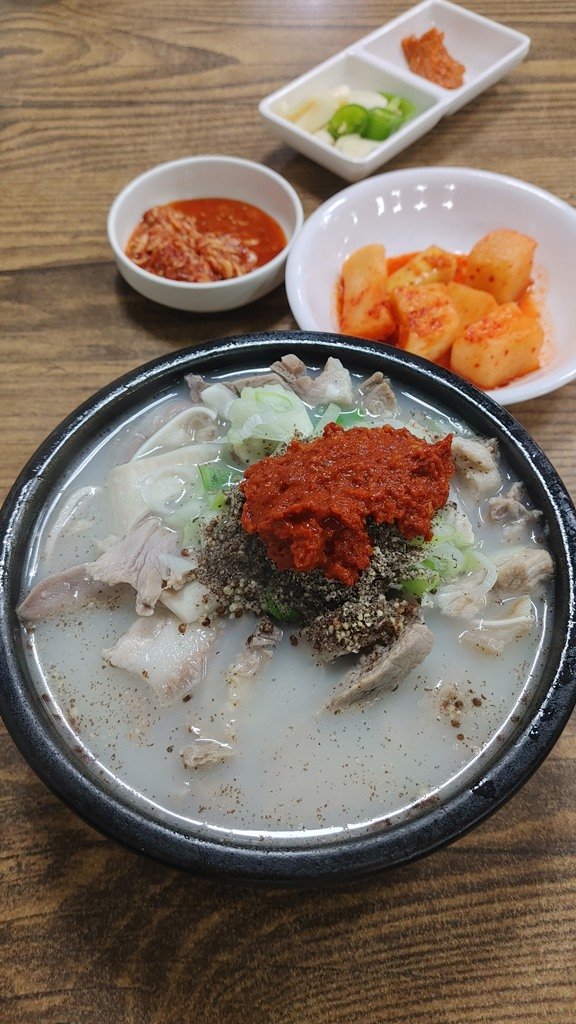
    Sundaeguk (Korean Sundaeguk) – Side dishes are complimentary.
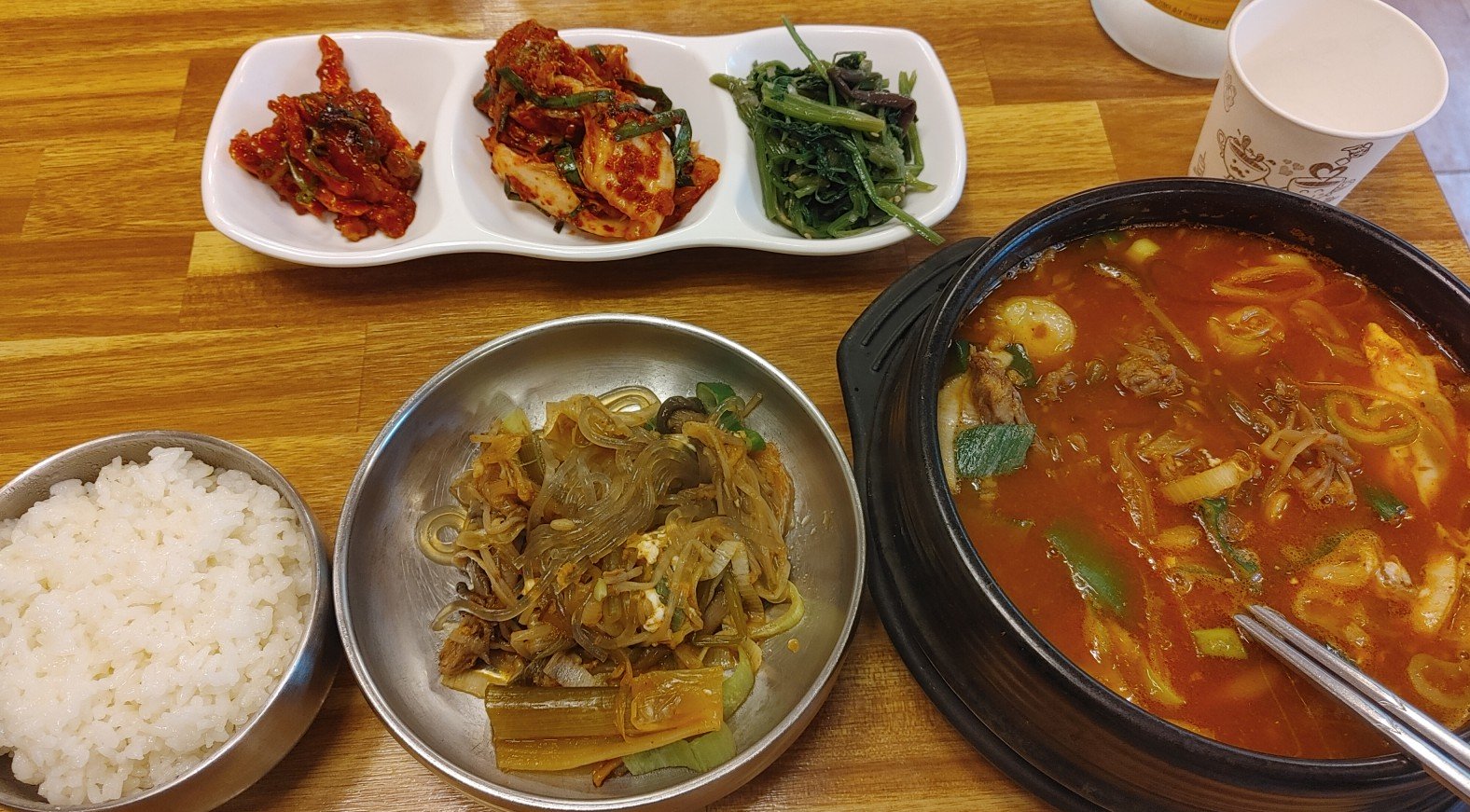
    Pork offal is simmered in water for a long time to create a broth. The red color is a seasoning made with red pepper powder, soy sauce, and other secret recipes from the restaurant. This sauce adds a savory flavor. The good news is that it contains no artificial sweeteners, colorings, or chemical seasonings. – pic by tastykoreanfood.com

    Soups made with precious ingredients were traditionally considered boyangshik (restorative foods). For people sensitive to raw or cold foods, boiled dishes were safer and gentler on the stomach.

    In both cold seasons, when digestion weakens, and hot seasons, when food spoils easily, boiled soups remained a reliable and safe option. This practicality reinforced the role of tang as everyday nourishment rather than an occasional dish.


    Tang, Jjigae, Jeongol, and Jorim: What’s the Difference?

    Tang is often confused with jjigae (stew), but they differ in structure and purpose.

    • Jjigae contains less water and more solid ingredients, resulting in a thicker, more intensely seasoned dish.
    • When even less liquid is used, the dish may resemble jorim (braised food). However, jorim focuses on cooking ingredients in minimal liquid rather than enjoying both broth and solids together.
    • Jeongol, on the other hand, is prepared at the table by adding raw ingredients to broth and cooking them together during the meal. Unlike tang or guk, it is interactive and communal.

    Tang, guk, jjigae, and jeongol all emphasize harmony between ingredients and liquid, while jorim focuses on the ingredients themselves.


    Tang in a Global Context

    In Western cuisine, soups and stews also fall under the broad category of broth-based dishes. If soup corresponds to guk or tang, then stew occupies a position closer to jjigae. All share the common principle of using liquid as the foundation of cooking.

    Japanese cuisine refers to soup-based dishes as shirumono (汁物), which includes miso soup and clear broths. Even Western consommé can be viewed within this broader category of soup-based cooking.

    The Korean word gukmul (broth) originally meant “the water that makes up soup,” but today it also refers to stock or base broth. Expressions like “There isn’t even broth left” evolved to mean that nothing remains to be gained—reflecting how essential broth was in daily life.


    What Does Tang (湯) Mean?

    The word tang (湯) is a respectful or elevated term for guk. Dishes such as gomtang, galbitang, and seolleongtang often require long cooking times, and seasoning is typically adjusted at the table with salt or green onions.

    Unlike guk, some tang dishes do not include the original cooking ingredients in the final bowl. Tang is usually served in individual bowls and emphasizes clear, deeply extracted broth.

    Representative Korean tang dishes include:

    • Galbitang (short rib soup)
    • Gamjatang (pork bone soup)
    • Samgyetang (ginseng chicken soup)
    • Maeuntang (spicy fish soup)
    • Chueotang (loach soup)
    • Haemultang (seafood soup)

    Interestingly, dakdoritang is not technically classified as tang due to its cooking method. International dishes such as shabu-shabu and mala tang are also examples of tang-style cooking.

    Historically, the term tang referred broadly to boiled liquids. Even plain water was once called baektang (白湯), and during Korea’s modernization period, coffee was sometimes referred to as “coffee tang.”


    What Is Jeongol?

    Jeongol is a traditional Korean dish cooked directly at the table. Raw meat, seafood, and vegetables are placed in a shallow pot, broth is added, and the ingredients are cooked together while eating. As the broth reduces, more stock is added, and the meal often ends with noodles or rice porridge cooked in the remaining broth.

    The key difference between jjigae and jeongol lies in preparation:

    • Jjigae is fully cooked before serving.
    • Jeongol is cooked gradually at the table.

    Tang Compared to Global Soup Cultures

    Nearly every country has its own representative soup dishes. Japan is known for ramen, with broth styles varying by region. China is famous for hot pot, mala tang, and wonton soup. Thailand has tom yum, and Vietnam has pho.

    In Europe, soup has historically been associated with poverty, stretching limited ingredients to feed many. French cuisine often elevated soup only by adding luxury ingredients. Colder regions such as Germany, Poland, and Russia developed hearty stew-like dishes instead.

    Germany’s Eintopf, often associated with grandmothers’ home cooking, and British stews are examples of how broth-based dishes symbolize comfort worldwide.


    So, What Is Tang in Korean Food?

    Tang is not just soup. It is a reflection of Korea’s climate, history, cooking methods, and philosophy of nourishment. It represents warmth, efficiency, balance, and care—qualities that define Korean food culture itself.

    Soup is only one part of the story. To understand how dishes like tang fit into daily meals, cultural traditions, and long-term eating habits, start with [What Is Korean Food?]

    Soup and tang are never served alone. They exist alongside rice and multiple side dishes, known as [What Is Banchan?], which together create balance and variety in a Korean meal..

  • What Is Banchan? Understanding Korean Meals and Side Dishes

    What Is Banchan? Understanding Korean Meals and Side Dishes

    WHAT IS BANCHAN
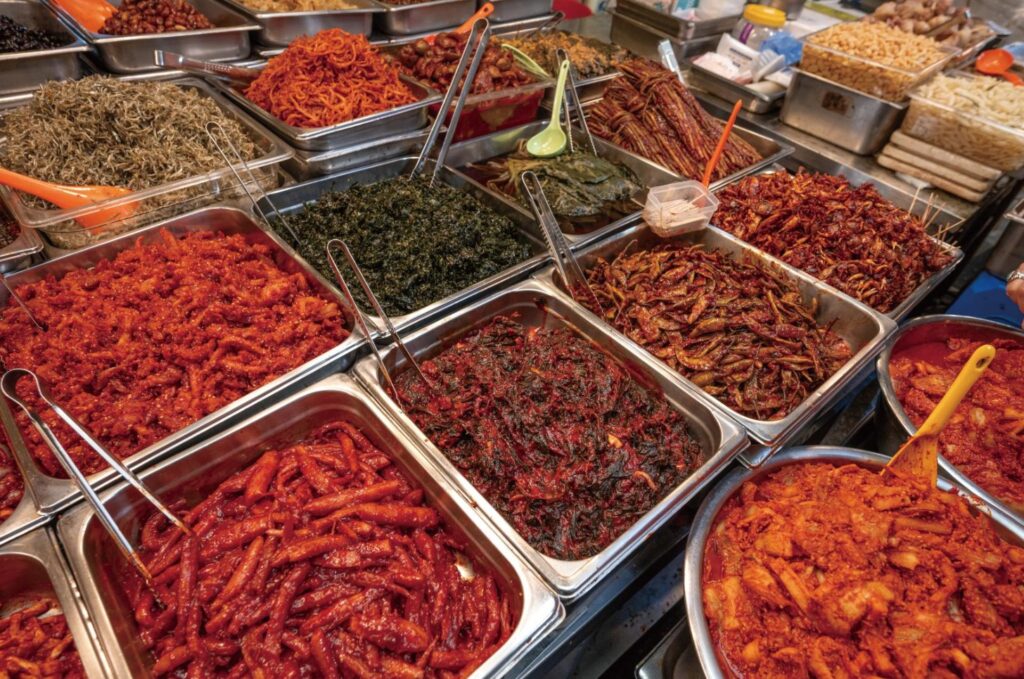
    Korean side dishes sold at the market / REFER TO 한국민속대백과사전

    What Is Banchan?

    Understanding Korean Side Dishes and Table Structure

    In traditional Korean dining, rice is the staple food, and all accompanying dishes are considered banchan, or side dishes.
    Unlike Western meals, where side dishes are served alongside or after a main dish, Korean side dishes are placed on the table all at once, forming a complete meal from the beginning.


    The Traditional Korean Table Setting (Bansang)

    A traditional Korean table setting, known as bansang, is organized around rice and soup.
    Side dishes are placed in small bowls, often with lids, called jaengcheop.

    The table is traditionally classified by the number of side dishes, excluding essential items such as:

    • Rice
    • Soup
    • Kimchi
    • Fermented sauces (jang)
    • Stews or hot dishes

    Based on the number of side dishes, Korean meals are described as:

    • 3-cheop table
    • 5-cheop table
    • 7-cheop table
    • 9-cheop table

    As the number of side dishes increases, the variety of kimchi, sauces, and fermented foods also expands.
    When preparing banchan, ingredients and cooking methods are carefully chosen so that no two dishes overlap in flavor or technique, and seasonal ingredients are always preferred.


    Banchan in Everyday Korean Homes

    Even today in Korea, most home meals follow this structure.

    If we compare it to the United States, it is similar to serving the main dish and all side dishes at the same time, rather than in courses.

    In Korea, almost everything on the table besides rice is considered banchan.
    However, the types of banchan served often change depending on the main dish of the day.

    One thing is constant: kimchi is always present.
    Beyond that, the variety depends on each household and the cooking skills of the person preparing the meal.

    For example, in my home, when we eat doenjang soup, the table usually includes:

    • Kimchi
    • Dried seaweed (gim)
    • Stir-fried fish cake
    • Spicy stir-fried pork
    • Soup served alongside rice

    Soups are also seasonal.
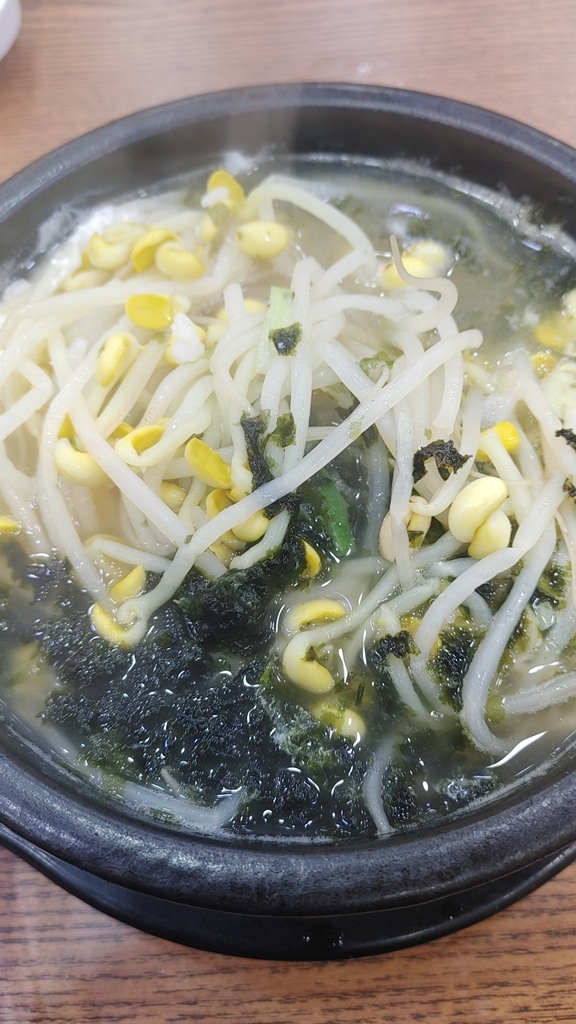
    In winter, we eat hot soups such as dried pollock soup, soybean sprout soup, or doenjang soup.
    If soup is not prepared, it is simply omitted—Korean meals are flexible, not rigid.


    What Does Banchan Mean in Daily Life?

    Banchan refers to any food eaten together with rice during a meal.

    Common expressions in Korean include:

    • Lunchbox side dishes
    • Spicy side dishes
    • Salty side dishes
    • Side-dish shops (banchan stores)

    People often say things like:

    • “There aren’t many side dishes today.”
    • “My favorite side dish is tofu made by my mom.”
    • “She has a great hand for cooking—every side dish she makes tastes good.”

    In Korean households, the number and quality of banchan often express care, celebration, or affection.


    What Are Dry Side Dishes (Mareun Banchan)?

    Dry side dishes are banchan prepared by stir-frying or simmering ingredients until there is little to no moisture.

    Examples include:

    • Stir-fried anchovies
    • Dried squid
    • Seasoned seaweed

    These dishes last longer and are easy to store, making them ideal for lunchboxes and everyday meals.
    Many Koreans prepare dry side dishes in large batches to save time during the week.


    What Is Banchangeori? (Side Dish Ingredients)

    Banchangeori refers to ingredients used to make side dishes.

    Common expressions include:

    • “We’re running out of side dish ingredients.”
    • “There’s nothing to make side dishes with.”
    • “I’m going to the market to buy ingredients.”

    Because food prices fluctuate, choosing seasonal ingredients is both economical and nutritious.


    What Are Mitbanchan? (Prepared Side Dishes)

    Mitbanchan are side dishes made in advance and stored for multiple meals.

    They are:

    • Easy to serve
    • Long-lasting
    • Essential for busy mornings

    Many Koreans rely on mitbanchan to quickly prepare breakfast or dinner without cooking from scratch.


    What Are Rice Side Dishes?

    Rice side dishes refer to any banchan eaten specifically to complement rice.

    In Korean meals, having three to five side dishes is considered standard, even for a simple home meal.
    This is why Koreans sometimes jokingly say, “There aren’t many side dishes today,” even when several dishes are on the table.

    Common expressions include:

    • “Delicious rice side dishes”
    • “There’s nothing to eat with rice”

    For many Koreans, the enjoyment of a meal depends on whether there is a side dish that pairs well with rice.


    Conclusion: Why Banchan Matters in Korean Food Culture

    Banchan is more than just side dishes.
    It represents balance, care, seasonality, and everyday life in Korean food culture.

    Rather than focusing on a single main dish, Korean meals are designed as a shared table, where rice and multiple side dishes come together to create harmony in flavor and nutrition.

    If you’re looking to try Korean side dishes, coming to Korea might be the best option. Many of these side dishes are made primarily with vegetables.

    You might ask, “What about the toxins in vegetables?” For hundreds of years, Koreans have used recipes designed to detoxify these vegetables, ensuring a safe and healthy nutrient intake.

    Don’t worry

    When eating in Korea, you’ll encounter a variety of side dishes. Especially when you’re eating your favorite side dish, if you say, “Auntie, please give me more side dishes,” they’ll give you more. It’s free, of course.

  • What Is Korean Food? Culture, Ingredients, and Philosophy Explained

    What Is Korean Food? Culture, Ingredients, and Philosophy Explained

    What Is Korean Food?

    Korean food is deeply connected to Korea’s dietary habits, geography, soil conditions, and long-standing Confucian culture.

    Rather than being defined by a few famous dishes, Korean food developed as a complete food system shaped by environment, history, and philosophy.


    How Geography Shaped Korean Food

    Traditionally, the Korean Peninsula is mountainous, which made large-scale livestock farming difficult.
    Unlike countries such as the United States, Korea historically did not produce large amounts of beef, pork, or poultry.

    As a result, grains and vegetables became the foundation of Korean meals, while meat was used more sparingly as a complementary ingredient rather than the centerpiece of a dish.


    Clear Separation Between Staple Foods and Side Dishes

    One defining feature of Korean cuisine is the clear distinction between staple foods (main foods) and side dishes.

    • Staple foods are primarily grain-based, such as rice, porridge, noodles, rice cakes, and dumplings.
    • Side dishes are designed to balance nutrition, flavor, and texture using seasonal ingredients.

    Because Korea experiences four distinct seasons, ingredients and cooking methods naturally change throughout the year.
    In summer, Koreans prefer lighter, cooler foods, while in winter, warm soups and stews are commonly enjoyed.


    Why Seasons Matter in Korean Cuisine

    Korean food relies heavily on fermented ingredients, especially soybean-based products such as doenjang (soybean paste).About US

    Historically, winter food shortages made long-term preservation essential. Fermented foods like doenjang were developed as practical solutions, but they also proved to be nutritionally rich and scientifically sound.

    These fermented seasonings provided protein, minerals, and flavor during times when fresh food was scarce.


    Balance Between Plant-Based and Animal-Based Foods

    Modern Korean cuisine emphasizes balance rather than excess.

    Meals typically combine:

    • Plant-based ingredients such as vegetables, grains, and legumes
    • Moderate amounts of animal-based foods like meat or seafood

    When meat is the main ingredient, vegetables and mushrooms are added to support nutritional balance.
    When vegetables are the main ingredient, sesame seeds or sesame oil are used to complement nutrients and flavor.


    Food as Medicine: The Philosophy of “Yaksik Dongwon”

    Korean food is strongly influenced by the traditional belief of “Yaksik Dongwon (醫食同源)”, which means food and medicine share the same origin.

    This philosophy views everyday food as a way to support health and prevent illness.
    As a result, medicinal herbs have historically been used not only in medicine but also in foods, teas, and traditional alcoholic drinks.

    Examples include:

    • Yakgwa (traditional honey cookies)
    • Yaksik (sweet rice with nuts and fruits)
    • Yakju (herbal rice wine)

    Yin-Yang and the Five Colors in Korean Food

    Korean cuisine follows the principles of Yin-Yang and the Five Elements, expressed through the Five Colors (Obangsaek):

    • White
    • Black
    • Blue/Green
    • Red
    • Yellow

    Many traditional dishes are designed to include all five colors, symbolizing nutritional balance and harmony.
    Dishes such as gujeolpan, sinsunro, and japchae reflect this philosophy, often enhanced with garnishes like sesame seeds, pine nuts, chili threads, and egg strips.


    Food as Medicine: The Philosophy of Yaksik Dongwon

    Confucian values strongly shaped Korean cooking methods and dining etiquette.

    Traditionally:

    • Food was arranged carefully based on the diner’s seating position
    • Elders began eating first
    • Loud eating or excessive talking during meals was discouraged

    In many households, families waited for the head of the household to return before starting meals, emphasizing respect and family unity.

    While many of these customs have softened over time, their influence is still visible in modern Korean dining culture.


    Holiday Foods and Seasonal Traditions

    Korean food culture includes special dishes associated with holidays and seasonal rituals.

    Examples include:

    • Tteokguk (rice cake soup) eaten on Lunar New Year to wish for a safe and healthy year
    • Patjuk (red bean porridge) eaten during the winter solstice to ward off bad luck
    • Chuseok foods, prepared using newly harvested ingredients to honor ancestors
    • Ogokbap (five-grain rice) eaten on the first full moon to wish for good health

    These foods often carry symbolic meanings rooted in tradition and belief.


    Regional Korean Foods and Local Ingredients

    Although Korea is geographically small, its diverse terrain and climate gave rise to many regional cuisines.

    Local foods developed based on:

    • Crops that grew well in specific areas
    • Temperature differences
    • Local preservation methods

    This led to a wide variety of regional dishes and cooking styles across the country.


    Why Rice Is the Foundation of Korean Meals

    Just as bread is central in Western diets, rice is the foundation of Korean meals.

    Korea’s environment is well-suited to rice farming, and over time, Koreans developed a wide range of grain-based foods using rice and mixed grains.

    To support these grain-based meals, fermented seasonings (jang) and traditional sweeteners like yeot and jocheong were developed.
    Before refined sugar became common, malt syrup and grain-based sweeteners were the primary sources of sweetness.


    Traditional Malt (Yeotgireum) and Fermented Sweetness

    Yeotgireum is made by sprouting barley and drying it, producing enzymes that break starch into sugar.
    It plays a key role in making traditional foods such as sikhye, jocheong, yeot, and makgeolli.

    Unfortunately, many modern commercial products no longer use traditional malt.
    If you ever visit Korea, tasting jocheong offers a deeper understanding of traditional Korean sweetness.


    Cooking Methods and Nutritional Preservation

    Korean cuisine uses many boiling and steaming methods, which help minimize nutrient loss.
    Combined with fermentation, these methods support digestion and long-term health.

    Korean food includes:

    • Over 350 types of staple foods (rice, porridge, noodles, dumplings, rice cakes)
    • Over 1,500 types of side dishes (soups, stews, grilled dishes, stir-fries, pickles)

    Korean Food as a Complete System

    Korean food is not simply a collection of dishes.
    It is a holistic food system shaped by geography, seasons, philosophy, and culture.

    At its core, Korean cuisine seeks balance—between grains and vegetables, plant and animal foods, flavor and nutrition, and tradition and daily life.