Tag: Korean Side Dishes

  • Korean Banchan: How Seasons Shape the Korean Table

    Korean Banchan: How Seasons Shape the Korean Table

    Korean Banchan: How Seasons Shape the Korean Table

    Korean side dishes, known as banchan, change with the seasons.
    This is not a coincidence, nor simply a matter of ingredient availability. It reflects a way of life that moves in rhythm with nature.

    In spring, the table fills with shepherd’s purse salad, wild chive sauce, and blanched shoots.
    Summer brings cucumber salad, soybean sprout soup, and stir-fried eggplant.
    In autumn, mushrooms, braised mackerel, and kimchi pancakes appear more often.
    Winter is the season of dongchimi, dried radish greens, and aged kimchi stew.

    This seasonality is not just about variety. It is about time. Korean side dishes are foods shaped by weather, harvest, and patience. That is why meals do not feel repetitive even when rice is eaten every day.


    Banchan as a Culture of Sharing

    The Korean table is built for sharing, not individual plates.

    Everyone sits around one table and eats from the same set of dishes. This structure is deeply connected to Korea’s community-oriented culture.

    A piece of kimchi, a slice of savory pancake, a spoonful of seasoned greens—
    through these small shared moments, people talk, connect, and build relationships. Side dishes become a medium of communication. Sharing food becomes a way of sustaining human bonds.


    The Functional Role of Banchan in a Rice-Centered System

    At the center of Korean cuisine is rice. Every side dish exists in relation to it.

    Salty dishes break the monotony of plain rice.
    Spicy or sour dishes revive the appetite.
    Rich or oily dishes provide fullness and satisfaction.
    Vegetable-based side dishes complete nutritional balance.

    Each banchan gains meaning through its relationship with rice. Rice is the main character; side dishes are its supporters. This structure reflects a food philosophy refined over thousands of years.


    The Emotional Power of Side Dishes

    For Koreans, banchan symbolizes home cooking.

    When people say “mom’s side dishes,” they are not talking only about flavor. They are talking about memory and comfort. Opening a container and smelling familiar kimchi, stir-fried anchovies, or rolled eggs can instantly bring emotional relief.

    In this way, Korean side dishes are not just food. They are fragments of memory that provide psychological stability in everyday life.


    From Home Kitchens to an Industry

    In recent years, the side-dish culture has expanded beyond the home.

    The rise of home-meal replacement (HMR) products has transformed banchan into an industry:

    • side-dish delivery services
    • meal-kit side dishes
    • convenience-store banchan packages
    • export-ready Korean side-dish sets

    With the global spread of Korean pop culture, many international consumers now see Korean side dishes as a “complete table kit.” Today, they can be found in Korean markets, online shops, and even fresh food sections of global platforms.

    A meal completed with just rice and side dishes has become a competitive model in the global food market.


    Banchan in the Global Context

    In many food cultures, meals consist of one main plate per person. Multiple shared side dishes are rare. This is why foreign diners are often surprised when they see a Korean table.

    “Are all of these included?”

    Many interpret Korean side dishes as generosity food—a form of hospitality. The abundance, sharing, and openness of the table are understood as warmth rather than excess. What begins as a meal often becomes a cultural experience.


    More Than Side Dishes

    Korean banchan represents:

    • balance and harmony of flavors
    • seasonality and respect for nature
    • sharing and communication
    • a rice-centered food system
    • emotional comfort
    • industrial and global potential

    Together, these small plates form a complete culinary expression. A single table setting can comfort someone, tell a story, and reveal a culture.

    Today, someone finds comfort in a bowl of warm rice and a few familiar side dishes. In that moment, Korean side-dish culture continues to live and breathe.

    Tonight, my wife is working late. A message arrived telling me which side dishes to serve our child for dinner.
    In moments like this, I am reminded that banchan is not just food—it is care.

    Today
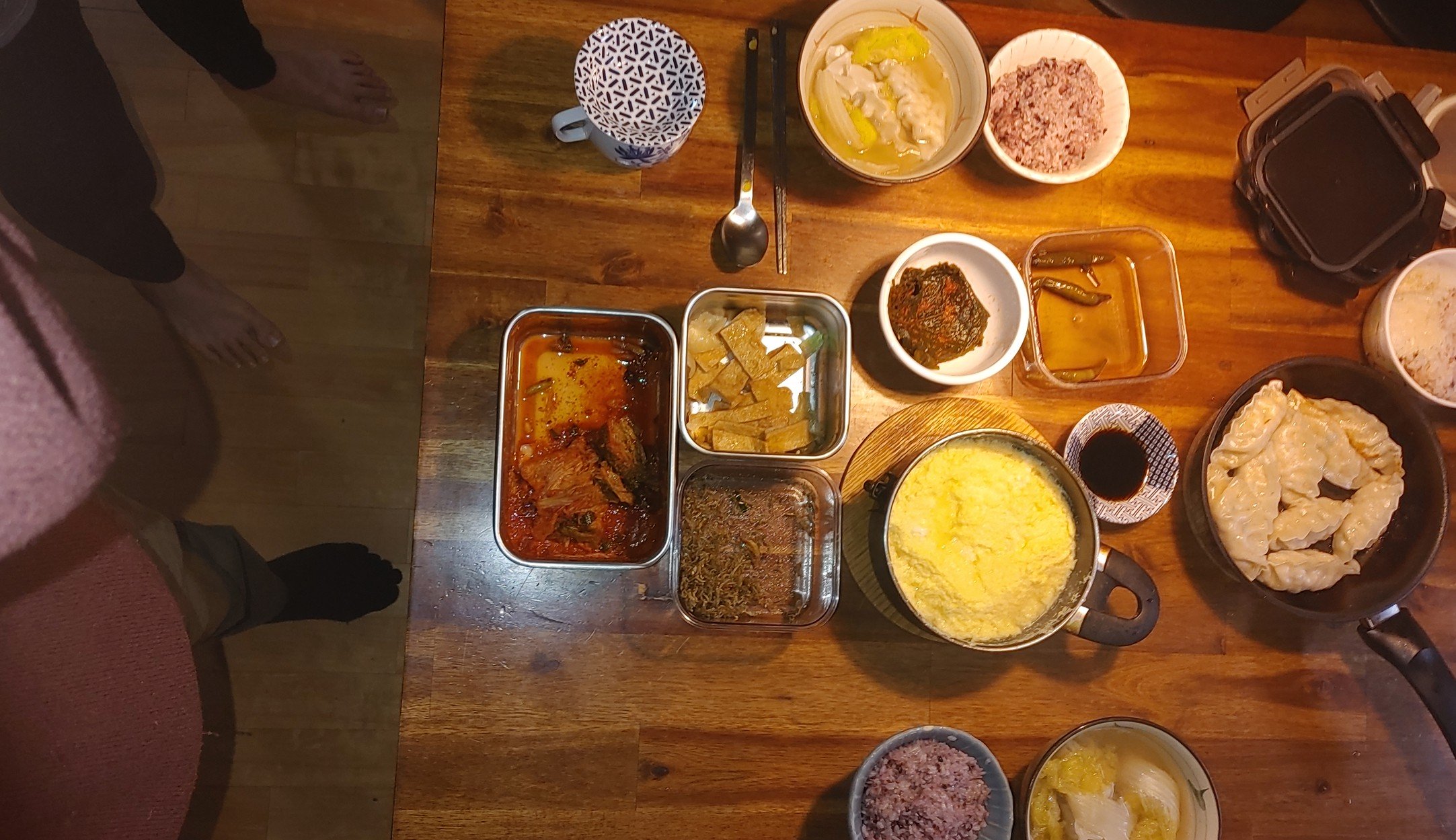
    Korean banchan on table

    My wife sent me a message asking me to pack lunch for the kids.
  • What Is Mitbanchan? Prepared Korean Side Dishes Explained

    What Is Mitbanchan? Prepared Korean Side Dishes Explained

    Why Prepared Side Dishes Matter in Everyday Korean Life

    Prepared Side Dishes in Everyday Korean Homes

    In Korea, mitbanchan refers to side dishes that are prepared in advance and kept ready for daily meals.

    When Koreans sit down to eat, there are usually a few dishes already prepared—even before deciding what the main dish will be.
    These prepared side dishes are what we call mitbanchan.

    Every household has its own version.
    In my home, kimchi is always the foundation of our mitbanchan.

    Simply put, if a dish is already prepared and served repeatedly without cooking again, it is considered mitbanchan.


    Why Mitbanchan Matters in Korean Family Life

    When my mother was raising children, one of her daily concerns was always the same:
    “What side dishes should I prepare today?”

    Often, she would decide on mitbanchan first, and then choose just one main dish for the day.

    This approach makes daily meals realistic and sustainable.
    Instead of cooking everything from scratch for every meal, Korean families rely on mitbanchan to keep meals balanced and complete.


    Mitbanchan at the Table: A Simple Example

    For example, when eating samgyetang (ginseng chicken soup), the side dishes served alongside—such as:

    • Cubed radish kimchi (kkakdugi)
    • Napa cabbage kimchi
    • Green chili peppers and onions
    • Soybean paste (doenjang)

    are all considered mitbanchan.

    The variety and selection depend on each household, and children often develop preferences based on their mother’s cooking style.


    Common Types of Mitbanchan

    Soy-Braised Black Beans (Kongjaban)

    Kongjaban is made by pressure-cooking black beans and simmering them in soy sauce.

    After cooking the beans, the water is discarded, and the beans are gently braised using soy sauce and grain syrup.
    The flavor is mildly sweet and savory, making it popular with both children and adults.


    Braised Meat (Jangjorim)

    Jangjorim can be made with beef or pork and is surprisingly simple.

    The meat is pressure-cooked until tender, then shredded and simmered again in a soy-based sauce.
    Pressure cooking shortens the cooking time and allows the seasoning to penetrate deeply.

    Using Korean soy sauce is essential to achieve authentic flavor.
    This is one reason why homemade or Korean-brand sauces still matter so much in Korean cooking.


    Seasoned Soybean Sprouts (Kongnamul Muchim)

    Soybean sprouts are grown by sprouting soybeans in dark conditions, which results in long roots.

    After boiling the sprouts briefly, they are seasoned with:

    • Soy sauce
    • Salt
    • Minced garlic
    • Sesame oil
    • Sesame seeds

    This dish is one of the easiest and most common mitbanchan in Korean homes.


    Modern Variations: Perilla Seed Broccoli

    More recently, dishes like broccoli seasoned with perilla seed powder have become popular.

    The broccoli is blanched and mixed with:

    • Perilla seed powder
    • Soy sauce
    • A small amount of salt
    • Minced garlic

    This reflects how mitbanchan continues to evolve with changing tastes.


    Kimchi and Seaweed as Everyday Mitbanchan

    Kimchi itself is one of the most important mitbanchan.
    Many Korean households store kimchi in a dedicated kimchi refrigerator and eat it throughout the year.

    Dried seaweed (gim) is another globally popular mitbanchan.
    It is often eaten plain or wrapped around rice and lightly dipped in soy sauce—similar to sushi, but simpler.


    How Mitbanchan Supports Weekly Home Cooking

    Mitbanchan is best understood as food prepared ahead of time, using seasonal vegetables, grains, and meat.

    Today, with modern refrigerators, many families prepare a week’s worth of mitbanchan on the weekend.
    These dishes are then rotated throughout the week, starting with the ones that spoil more quickly.

    Whether they last the full week or not is another question.


    A Question for You

    What side dishes would you prepare today?
    What does dinner look like in your home?

    In Korea, these everyday questions are exactly why mitbanchan exists.

    I’m at work now. It’s almost time to leave. What should I eat for dinner after work for my child?

    From REPUBLIC OF KOREA