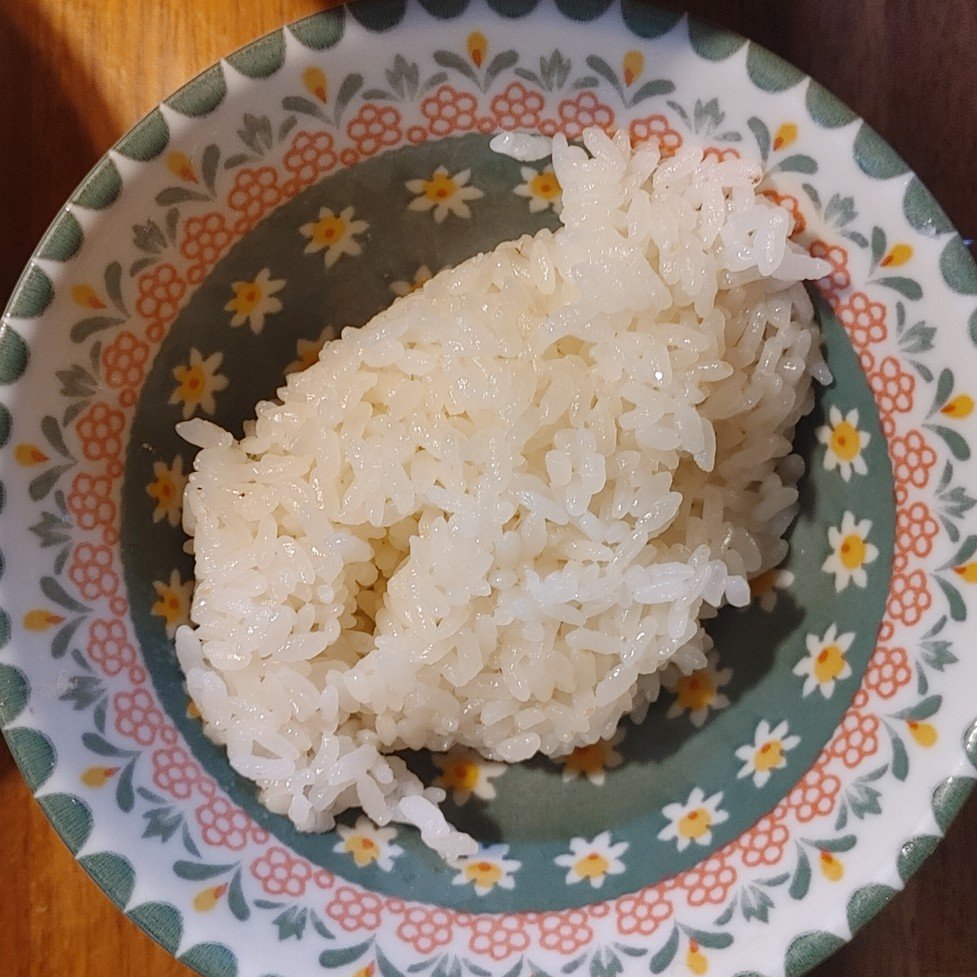
What Does Rice Mean in Korean Culture?
In Korean culture, rice is more than just food—it is life itself.
The Chinese character for rice, 米 (mi), can be visually broken down into eight–ten–eight (八十八). Traditionally, this symbolizes that at least 88 careful human efforts are required to produce a single grain of rice. From planting to harvesting, rice represents patience, labor, and devotion.
In Korea, the word food (食) is often synonymous with rice (밥). Rice was believed to be possible only when the energy of heaven, the fertility of the land, and the dedication of farmers came together as one. This belief shaped Korean attitudes toward food, farming, and respect for nature.
Why Was Rice So Important in Traditional Korean Society?
Korea was historically an agricultural society, often described as living under a form of “rice determinism.”
When rice harvests failed, people’s lives became difficult. When harvests were abundant, society prospered. Kings in the past worried constantly about rice farming, because the success of rice meant the survival of the nation.
Even today, rice is closely tied to food security and national identity in Korea. Although modern diets have diversified, rice still represents stability, self-sufficiency, and cultural pride.
Has Rice Lost Its Importance in Modern Korea?
As bread, pasta, and snacks became widely available, rice consumption in Korea has declined. Korean diets today include noodles, Western-style baked goods, and convenience foods.
However, rice has not disappeared.
Just as bread remains central in the United States or pasta in Italy, rice continues to be the foundation of Korean meals. Even when the main dish changes, rice often remains at the center of the table.
There is growing discussion in Korea about modernizing rice-based cuisine—creating fusion rice dishes that fit contemporary lifestyles while preserving nutritional value.
Where Did Rice Originate, and Why Did It Dominate Asia?
Rice cultivation began over 8,000 years ago, primarily in Asia. Along with salt, rice became a cornerstone of civilization—shaping currency systems, social structures, and traditions.
The importance of rice is deeply embedded in East Asian languages.
- Over 249 Chinese characters include the rice radical (米)
- 284 characters include the grain radical (禾)
Even words for time (second, 秒) and seasons (season, 季) contain the grain symbol.
Among many grains—barley, millet, beans, sorghum—rice has always been considered the most important.
Today, although rice is grown in over 100 countries, Asia accounts for nearly 90% of global rice cultivation.
Why Did East Asia Choose Rice While the West Chose Wheat?
The answer lies in climate, soil, and geography.
Rice thrives in hot, humid environments with abundant water. Wheat, on the other hand, grows well in dry, less fertile regions and is more resistant to harsh conditions.
Rice produces three times more calories per unit area than wheat, making it ideal for densely populated regions like Korea, China, and Japan.
Western regions, with drier climates and pastoral traditions, relied more on wheat and livestock, supplementing grain-based diets with dairy and meat.
Why Was Korea Especially Suited for Rice Farming?
Korea’s four distinct seasons, fertile soil, and plentiful water created ideal conditions for rice cultivation.
Rice is planted in spring, transplanted to flooded fields, and harvested in autumn—only once per year, making the crop highly valuable.
Rice farming requires constant water management and labor. Because irrigation systems were too large for individuals to manage alone, community cooperation became essential. This led to cultural traditions like dure and pumasi—mutual aid systems where neighbors helped one another during planting and harvesting seasons.
How Did Rice Farming Shape Korean Social Values?
Rice farming demanded collaboration, patience, and shared responsibility. As a result, Korean society developed a strong sense of collectivism and community-oriented values.
In contrast, wheat farming required less cooperation and allowed for more independent agricultural practices, reinforcing individualism in Western cultures.
Thus, rice did not just shape Korean meals—it shaped Korean social structure, work ethics, and communal identity.
How Is Rice Consumed Differently from Wheat?
Rice is typically consumed with minimal processing—harvested, polished, steamed, and eaten as rice.
Wheat must be ground into flour and transformed into bread or pasta, requiring extensive tools and large-scale production systems.
These differences influenced not only food preparation but also industrial development, transportation systems, and even the path toward the Industrial Revolution.
How Has Rice Evolved in Modern Korea?
Since the 1980s, advances in fertilizers and farming technology have significantly improved rice quality.
Korea now distributes over 100 rice varieties, with around 20 premium varieties officially monitored for quality. Popular types include:
- Chucheong rice
- Odae rice
- Dongjin rice
- Samgwang rice
- Koshihikari (originally developed in Japan)
Rice breeding continues today, adapting to changing climate conditions and consumer preferences.
Why Is Rice Still the Staple of the Korean Table?
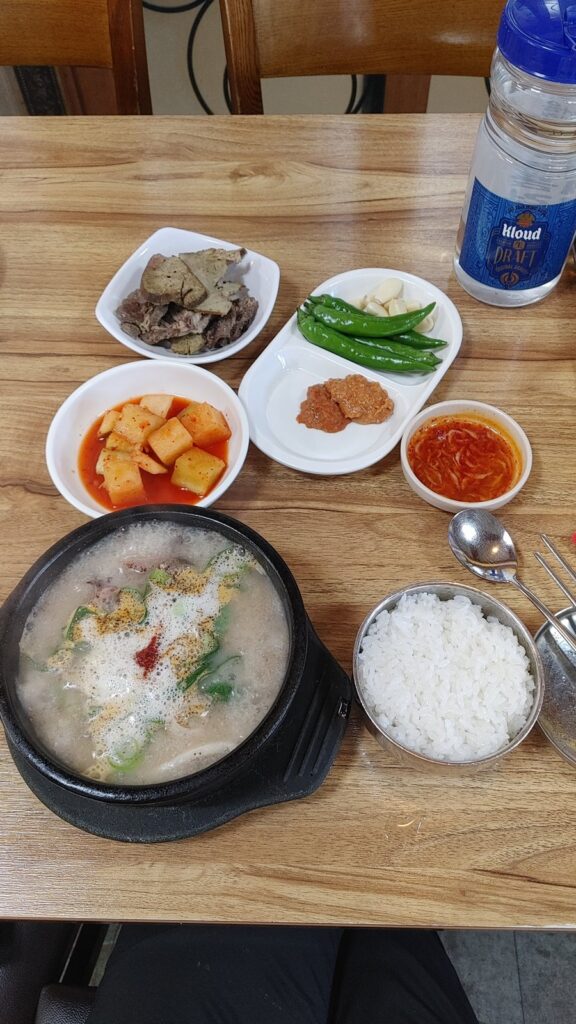
Despite modern dietary changes, rice remains central because:
- It matches Korea’s natural environment
- It provides efficient energy
- It pairs perfectly with fermented foods, soups, and vegetables
- It supports balanced nutrition
Korea’s climate—with hot, humid summers and cold winters—continues to favor rice-based meals served warm and comforting.
Everyday Life: Rice on a Modern Korean Table
Today, a typical Korean home still keeps warm rice ready in an electric rice cooker.
After work, parents decide what side dishes to prepare—perhaps grilled pork, seasonal vegetables, or simple soup. Even with limited ingredients, rice remains the reliable center of the meal.
Final Thought: Why Rice Still Matters in Korea
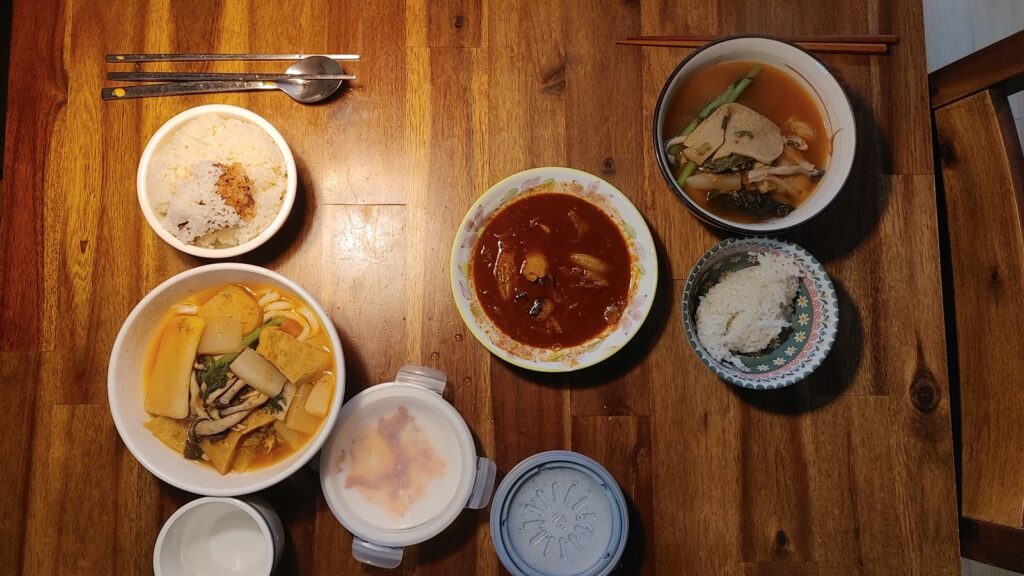
Rice is not just a carbohydrate in Korea. It is history, labor, climate, culture, and family life combined.
Understanding Korean food means understanding rice—not only how it is eaten, but why it exists at the heart of every meal.
What Is Korean Food?
To truly understand why rice matters so much, it helps to first understand what Korean food is and how it developed around grains, fermentation, and balance.
What Is Banchan?
Rice becomes nutritionally complete when eaten alongside banchan, the small side dishes that define everyday Korean meals.