Tag: SeoulFood

  • Jeyuk Bokkeum Hanjeongsik – 8 GMO-Free Korean Sides in 15 Minutes

    Jeyuk Bokkeum Hanjeongsik – 8 GMO-Free Korean Sides in 15 Minutes

    A Warm Meal to Start the Day in Cold Winter

    The winter weather that has persisted since last year has been quite cold. With temperatures dropping below -10°C in winter and rising above 30°C in summer, the foods we eat vary significantly by season. Today, I’m having lunch with a friend and colleague.

    Today’s menu is hanjeongsik. We’re going back to the same place we visited yesterday.

    The Charm of Hanjeongsik – Daily Changing Side Dishes and Menus

    Today’s Menu

    Most hanjeongsik restaurants prepare different side dishes each day. Of course, the main dishes are also configured differently. This is a major advantage of choosing hanjeongsik. For Korean office workers, there’s no need to worry about the menu or side dishes, and you don’t have to worry about what your boss thinks either.

    GMO-Free Side Dishes – A Healthy Table Made with Korean Produce

    Today’s hanjeongsik featured GMO-FREE side dishes. Most of the side dishes are made primarily from namul (seasoned vegetables). This is because Korean-grown agricultural products and vegetables are relatively affordable in Korea’s climate.

    Today’s Hanjeongsik Composition
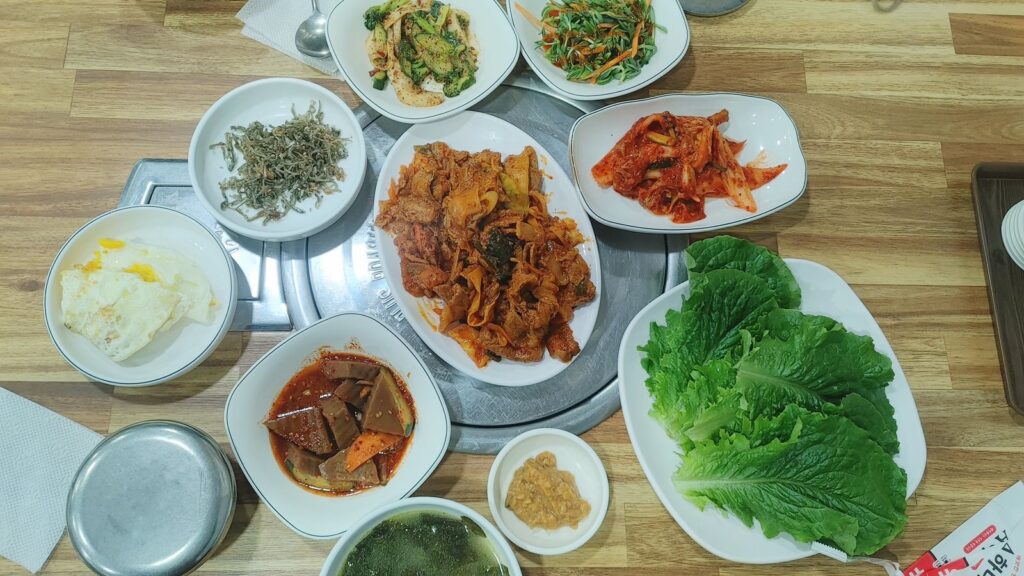
    Korean hanjeongsik table with jeyuk bokkeum and 8 GMO-free side dishes
    Jeyuk Bokkeum Hanjeongsik004-20260206

    🏷️ Menu List for tastyKoreanfood.com

    한글 메뉴명한글 발음 (Romanization)(English Name)
    계란후라이Gyeran-huraiFried Egg
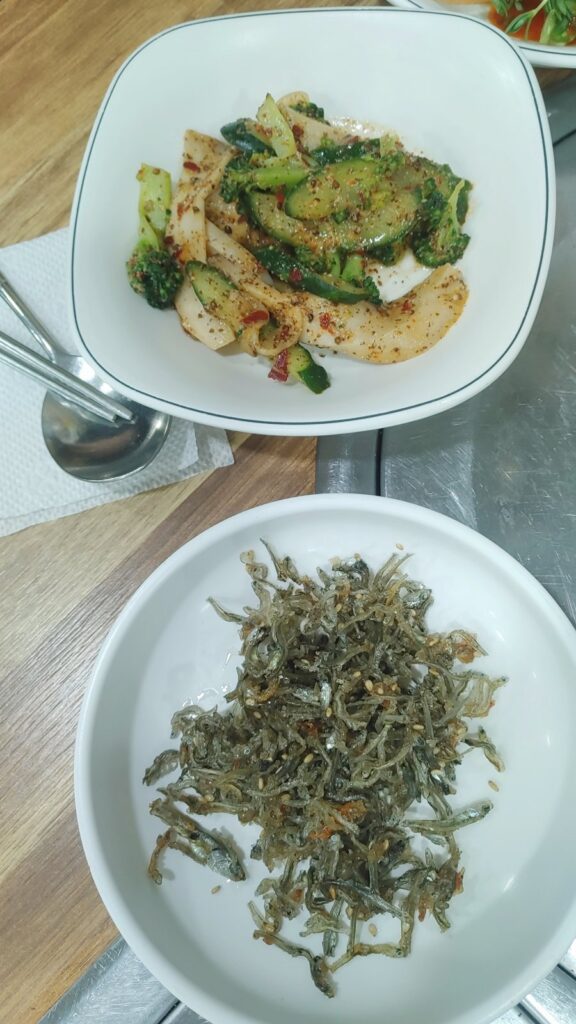
    멸치볶음Myeolchi-bokkeumStir-fried Anchovies
    오이무침Oi-muchimSpicy Cucumber Salad
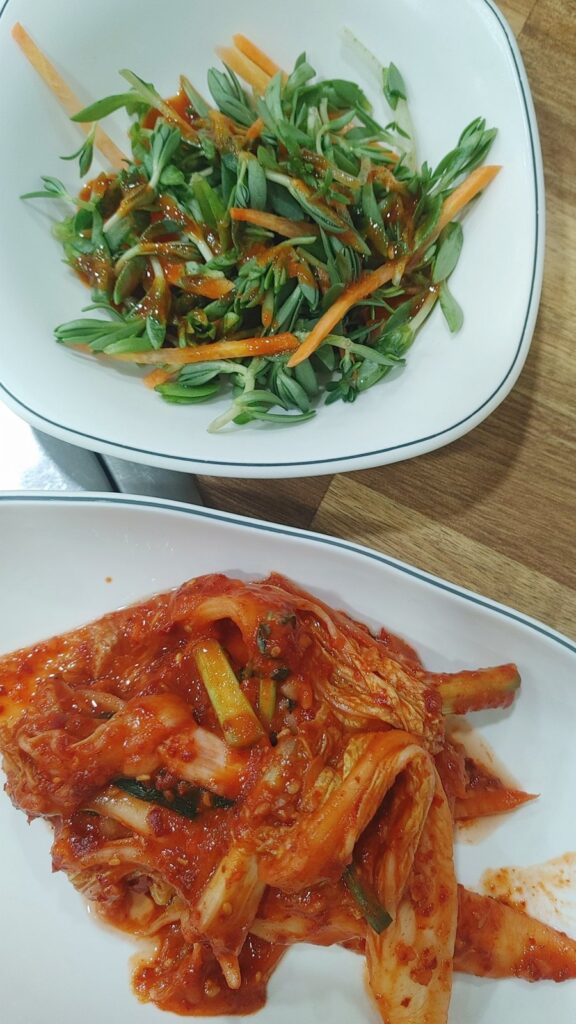
    돌나물무침Dolnamul-muchimSeasoned Sedum (Stonecrop)
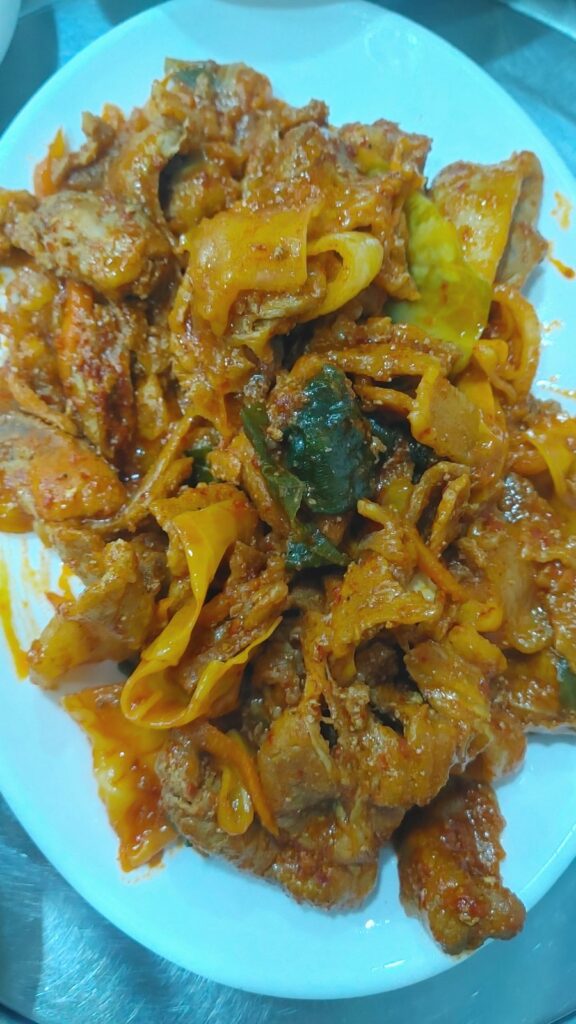
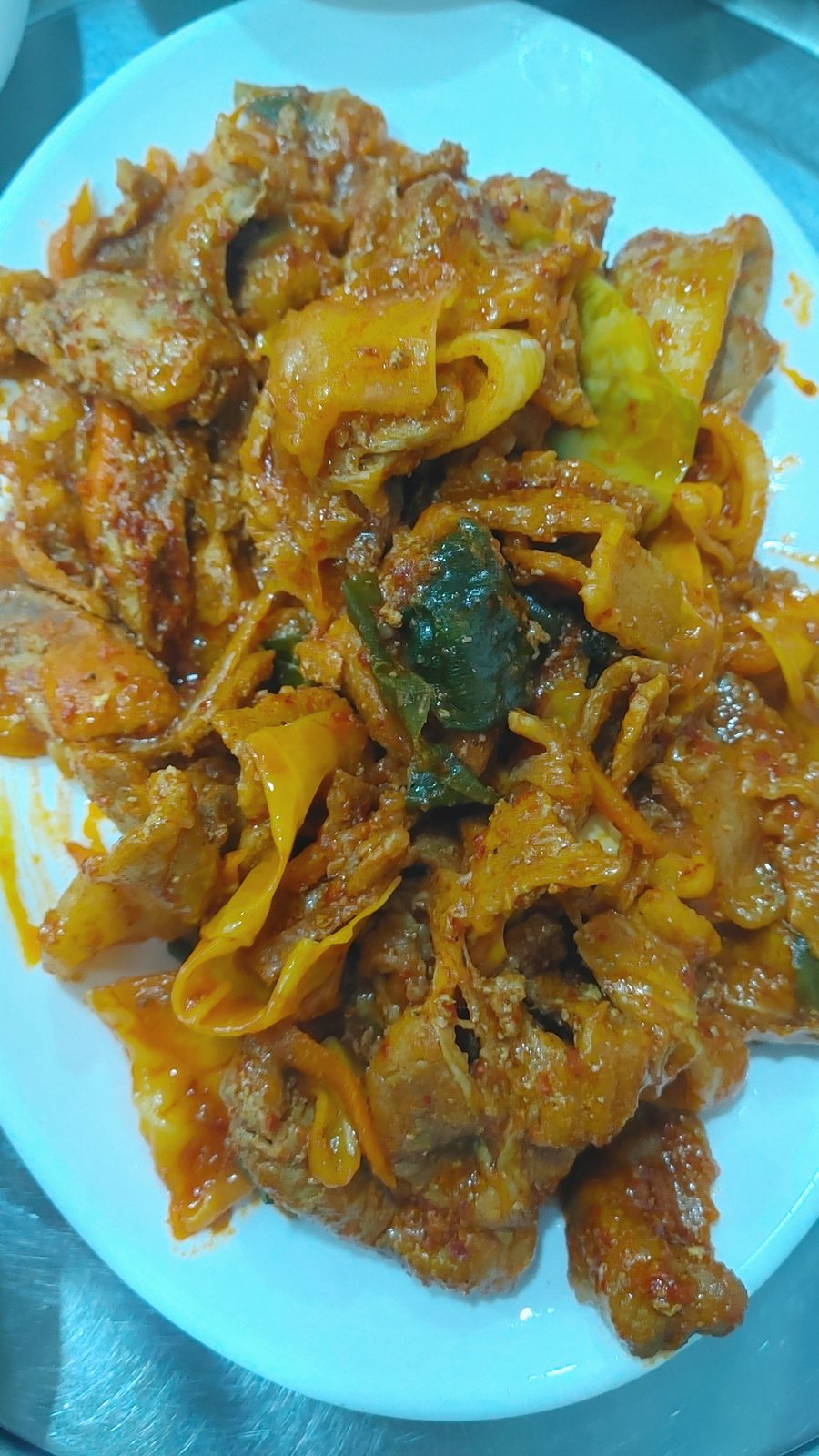
    제육볶음Jeyuk-bokkeumSpicy Stir-fried Pork
    김치KimchiKimchi
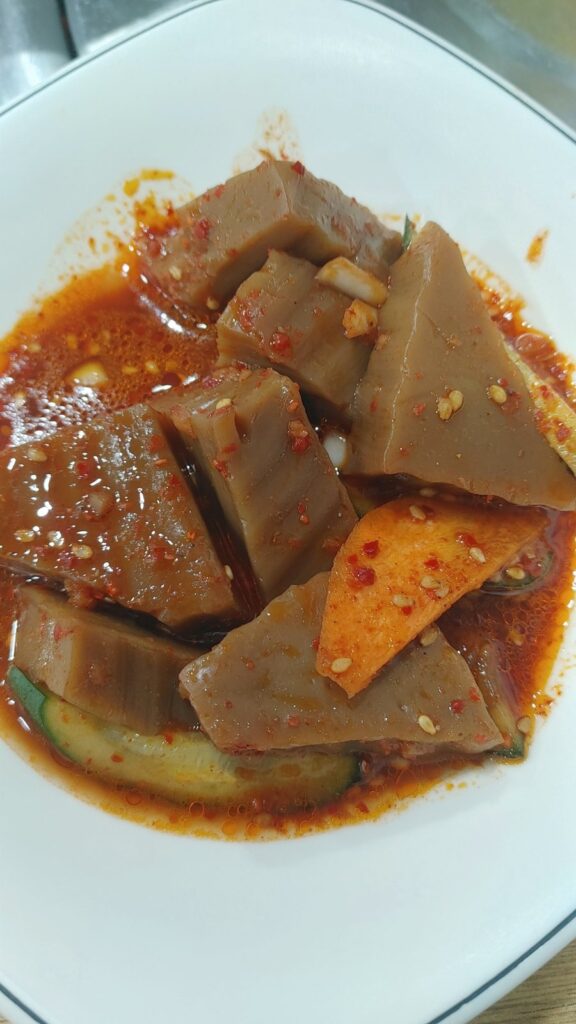
    도토리묵 무침Dotori-muk-muchimAcorn Jelly Salad
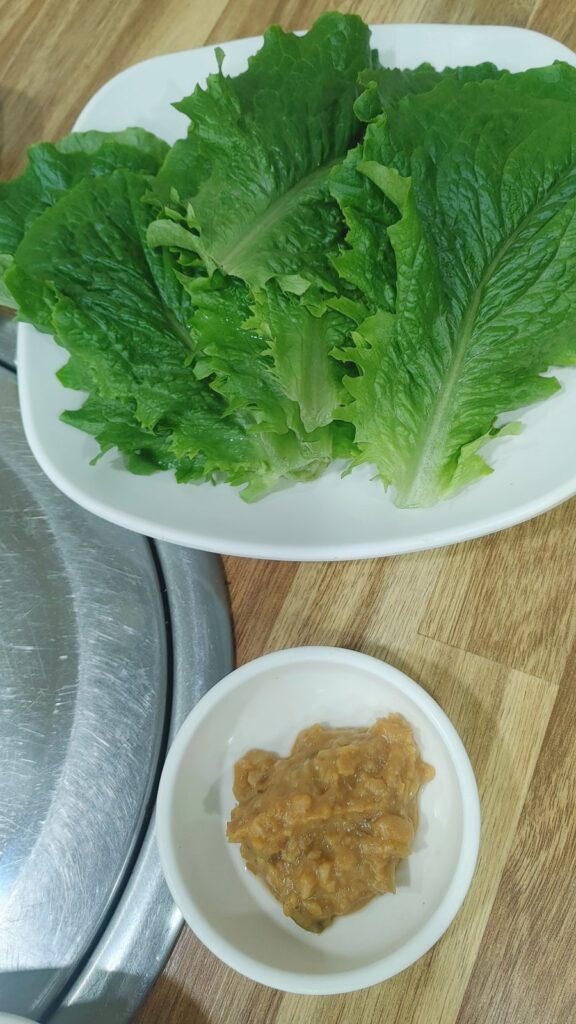
    상추SangchuLettuce
    쌈장SsamjangSsamjang (Seasoned Soybean Paste)
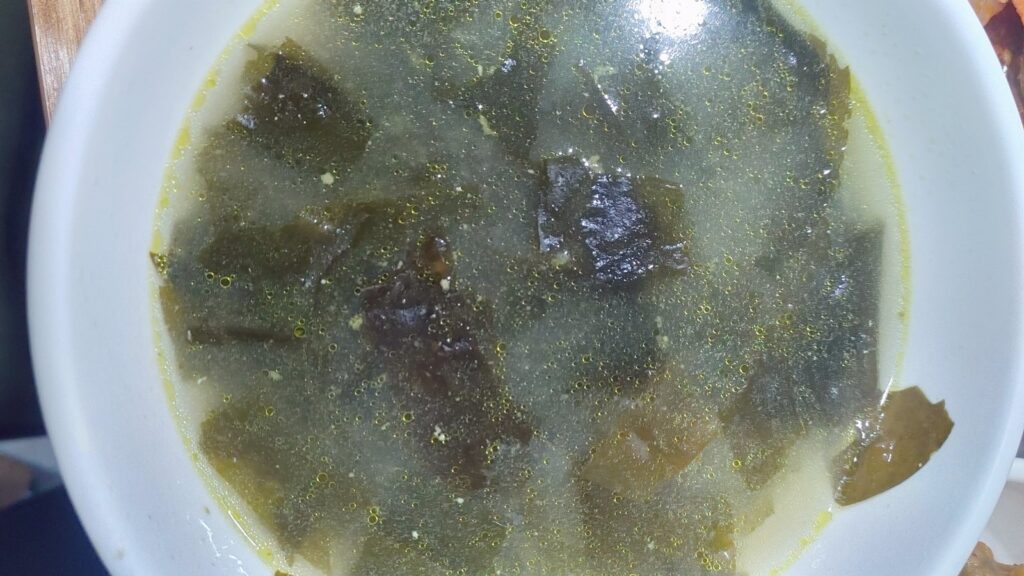
    미역국Miyeok-gukSeaweed Soup

    The main dish was jeyuk bokkeum (spicy stir-fried pork), accompanied by fresh vegetables for wrapping (ssam) and doenjang (fermented soybean paste). The soup was comforting miyeok-guk (seaweed soup), along with acorn jelly (dotori-muk), kimchi, freshly made kimchi, stir-fried mushrooms, fried egg, and anchovies. There was one side dish whose name I can’t quite remember… oh yes, dolnamul—young shoots of a succulent plant seasoned with red pepper powder and various seasonings.

    In total, there were 8 side dishes, miyeok-guk, and jeyuk bokkeum, making 10 items altogether. Looking at the composition of the side dishes and meal, most are made with Korean ingredients.

    Miyeok-guk – Korea’s Traditional Health Food for New Mothers
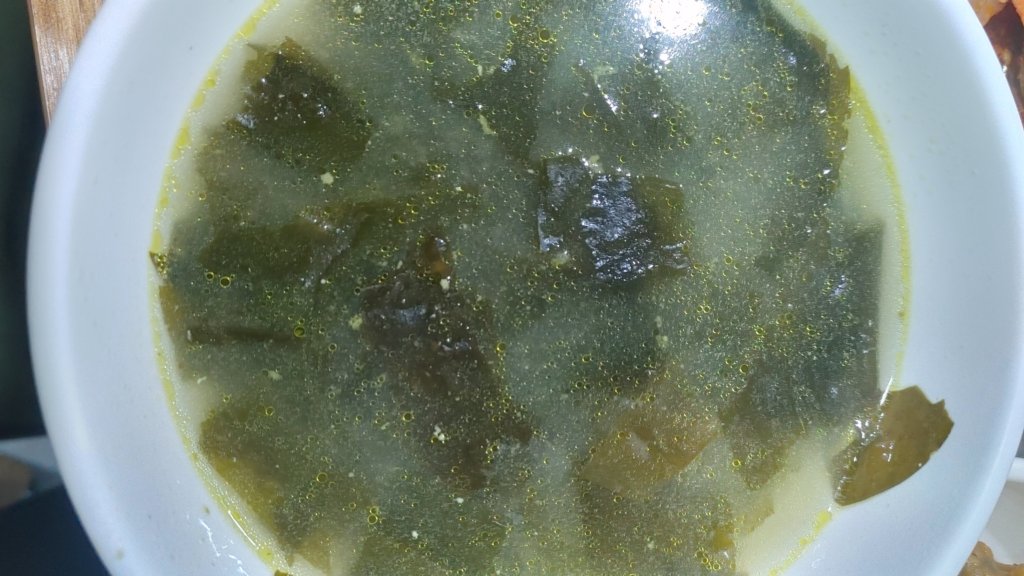
    Traditional Korean miyeok-guk (seaweed soup) for postpartum mothers, comparing wild vs farmed seaweed
    Miyeok-guk

    Miyeok-guk has always appeared in the diet of new mothers after childbirth.

    To introduce miyeok-guk: it’s a soup made primarily with miyeok (seaweed). Miyeok is an annual brown algae mainly consumed in Korea and Japan. In Korea, new mothers who have just given birth always seek it out. Eating miyeok-guk is said to promote breast milk production for the baby, and because seaweed has alkaline properties, it’s believed to be excellent for detoxifying the body.

    When my wife gave birth to our first and second children, she ate miyeok for almost a month. This custom of eating miyeok-guk dates back to ancient times. When a baby was born, the maternal family would visit their daughter with the best quality miyeok they could prepare.

    Wild Seaweed (Dol-miyeok) vs Farmed Seaweed – What’s the Difference?

    In Korea, the most preferred and highest quality seaweed is dol-miyeok (stone seaweed), which refers to naturally harvested seaweed collected from rocks.

    There’s also farmed miyeok, which is cultivated directly in the ocean. Compared to dol-miyeok, farmed seaweed has a thinner texture. However, dol-miyeok requires longer cooking time, but offers a richer, more flavorful taste.

    The Essence of Korean Food I Prefer – ‘Minimally Processed Food’

    I’m not from a generation that grew up eating donkatsu (Japanese-style pork cutlet). I’m approaching 50 years old now. So I don’t prefer donkatsu, and I frequently encountered what I call ‘rough foods’ that my mother made for me.

    ‘Rough food’ refers to dishes made from pure, unprocessed ingredients as they are. Nowadays, there’s what’s called ultra-processed food—finely textured foods that are widely distributed. But when I was young, I encountered many foods made with minimally processed ingredients like these. Even now, when choosing a restaurant with family or work colleagues, I tend to prefer rough, minimally processed foods whenever possible.

    Why I Don’t Spend My Own Money on Donkatsu?

    Everyone has their own constitution. My body reacts to fried foods. I experience poor digestion or stomach discomfort after eating them. That’s why I avoid fried foods as much as possible. I’m 52 years old now, after all.

    However, I do prefer foods cooked with pork fat or beef fat. According to data released by the FDA in 2026, animal fats are healthier than factory-produced seed oils made from plant seeds. Furthermore, they stated that consuming fermented butter or pure butter is healthier. So these days, although it’s not traditional Korean food, I eat fermented pure butter on my table for health reasons. (When I was young, I used to eat margarine.)

    Lunch Culture in Yeouido Financial District – Fast and Efficient

    At 11:30 AM, restaurants start getting crowded with customers coming for lunch.

    Yeouido, where I work, is full of office workers. Yeouido is Korea’s financial district, home to securities firms, banks, and financial industry professionals. Think of it as Korea’s Wall Street.

    Because most people commute early in the morning, lunch time for financial district workers starts as early as 11:00 AM for reservations, with crowds flooding restaurants from 11:30 AM onwards. Therefore, going early, eating quickly, and leaving is considered a virtue.

    What I mean is, when I eat with colleagues at a restaurant, I usually don’t exceed 15 minutes. The restaurants crowded here also do their main business during the lunch rush, so diners generally don’t sit for extended periods. In other words, meal times range from 15 to 25 minutes at most.

    Slightly more expensive restaurants offer separate rooms for dining. It seems to be the mindset of office workers to finish their meal quickly and rest a bit.

    Of course, if you visit a restaurant, you don’t have to finish your meal in 15 minutes. You can eat at a more leisurely pace. It’s just that Korea has this ‘ppalli-ppalli’ (quickly-quickly) mentality.

    Conclusion – Memories and Traditions in Korean Dining

    At Korean baekban (home-style meal) or hanjeongsik restaurants, the side dishes change almost daily. And most of these side dishes are the same ones my father and mother made for me when I was young, carried down to this day. So when I see these side dishes and foods, they bring back old memories.

    • GMO 검역 정보 → 식품의약품안전처

    • 미역의 영양 성분 → 국가표준식품성분표 DB

    • FDA 2026 발표 자료 → www.fda.gov (seed oils vs animal fats)

    • Korean food culture→ 한식진흥원


    What Is Banchan?

    In Korean meals, side dishes are not extras but an essential part of the table, which explains why banchan matters so much.

    Why Rice Is the Foundation of Korean Meals

      Even during a busy workday, Koreans still try to keep meals balanced, which is why rice remains the foundation of Korean meals.

      Why Soup Is Served in Most Korean Meals

        Soup is always placed next to rice, showing why soup is served in most Korean meals, even at lunch.
      1. Korean Office Lunch Hanjeongsik | Godari-jjim Complete Guide

        Korean Office Lunch Hanjeongsik | Godari-jjim Complete Guide

        What should we have for lunch?

        If you’re an office worker, there’s one question that comes up every single day: ‘What should I eat for lunch today?’ When the morning shift ends, my colleagues and I head out for lunch together. We usually go to our regular spots out of habit, but today we decided to visit a hanjeongsik (traditional Korean set meal) restaurant we’d been to before. Now, when I say hanjeongsik, this isn’t one of those fancy places with an overwhelming array of side dishes. However, what makes this place special is that they change their main dish every day throughout the week. And as you might know, the side dishes feature plenty of seasonal ingredients.

        What’s on Today’s Korean Menu?

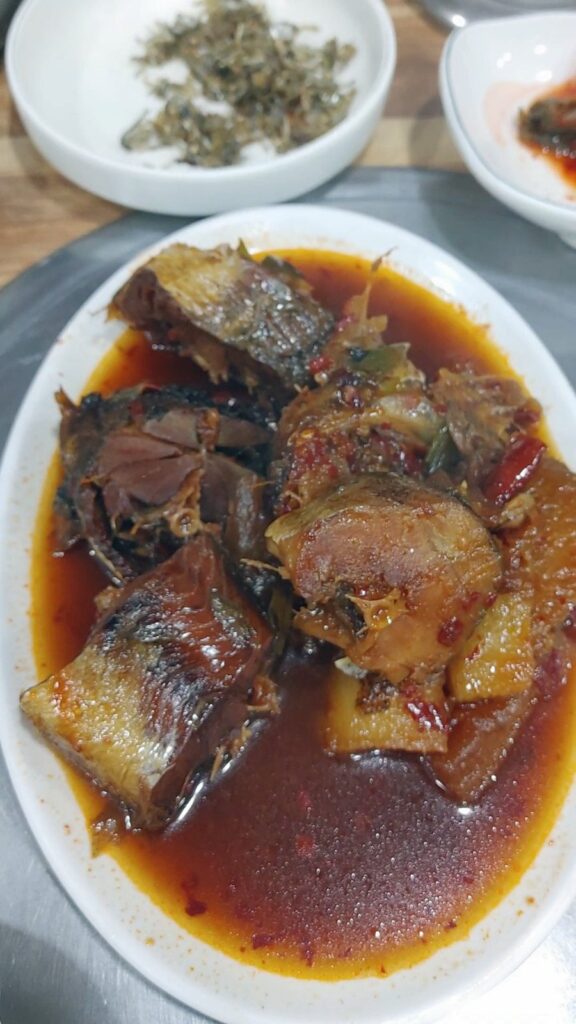
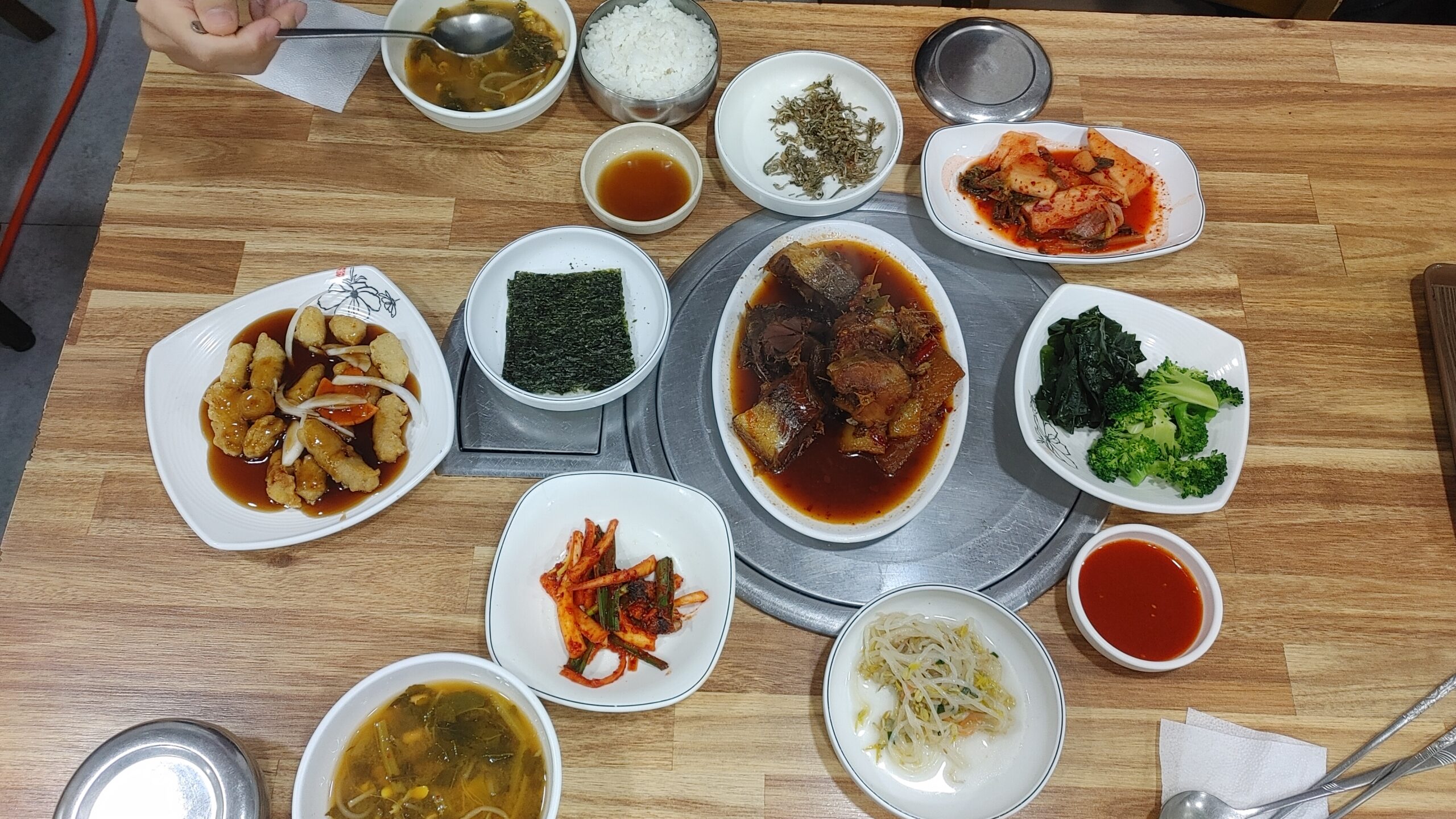
        After finally finding time to visit this hanjeongsik restaurant, we were greeted with their specialty: a traditional Korean meal set. Since lunch hours for office workers are always packed, we walked briskly to the restaurant. Today’s hanjeongsik features godari-jjim (braised half-dried pollock) as the main dish. Godari is young pollock that has been dried in the ocean breeze. This fish is then braised to perfection. The flavor leans toward soy sauce, though it can be prepared in either a soy-based or spicy style—most restaurants offer one or the other.

        What Exactly Is Godari?

        Godari is made from young pollock (myeongtae) that has been dried in the cold ocean wind, with about half of the fish’s moisture removed. This drying process typically happens during winter. When preparing godari-jjim, you don’t boil it in a lot of water—instead, you use minimal water and cook it down with a concentrated seasoning sauce. The texture of godari-jjim is quite unique: it’s chewy and firm, not soft at all. Because the fish has been dried in the sea breeze, the flesh has a somewhat dense, almost ‘gguddeok’ quality—a Korean word that describes that particular chewy-firm texture. It’s hard to translate precisely, but that’s the best way to describe it!

        Godari-jjim: A Winter Favorite

        The main ingredient in godari-jjim is young pollock, which is primarily dried during the winter months. When the cold winds of winter arrive, Koreans naturally think of daegu-tang (pollock stew). Pollock is abundantly caught during winter. In Korea, we enjoy various preparations of pollock during this season: dongtae-guk (soup made with frozen pollock—we call frozen pollock ‘dongtae’), and saengtae-guk (soup made with fresh, unfrozen pollock, which we call ‘saengtae’). Fish catches peak during winter. These days, pollock has become quite rare in Korean waters, so fishing vessels venture into international waters to catch them, of course following international fishing agreements and regulations between nations.

        korean Hanjeongsik
        Grab lunch with a colleague – pic (Tastykoreanfood.com – hoya)

        What’s Included in Today’s Hanjeongsik?

        The price for hanjeongsik is around 10 dollars. We went to a restaurant near our office. The hanjeongsik costs 10,000 won (approximately $10), which is quite a standard price. The reason for the price difference between this and fancier hanjeongsik restaurants comes down to the variety and quality of the side dishes and main courses. However, the defining feature of hanjeongsik is that it always includes at least six or more side dishes—that’s the minimum you can expect.

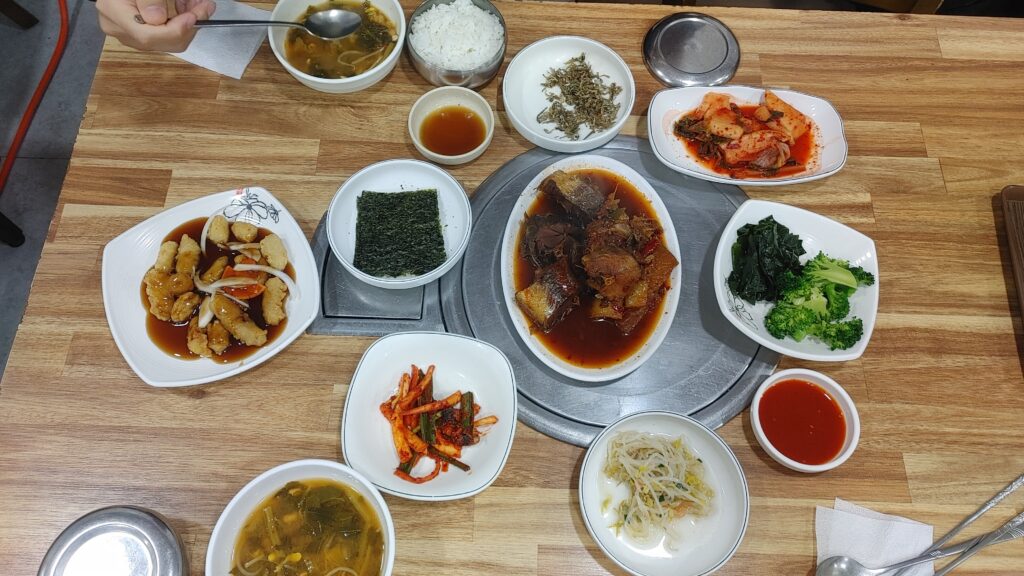
        Today’s Hanjeongsik Spread: 9 Side Dishes, 1 Soup, and Godari-jjim

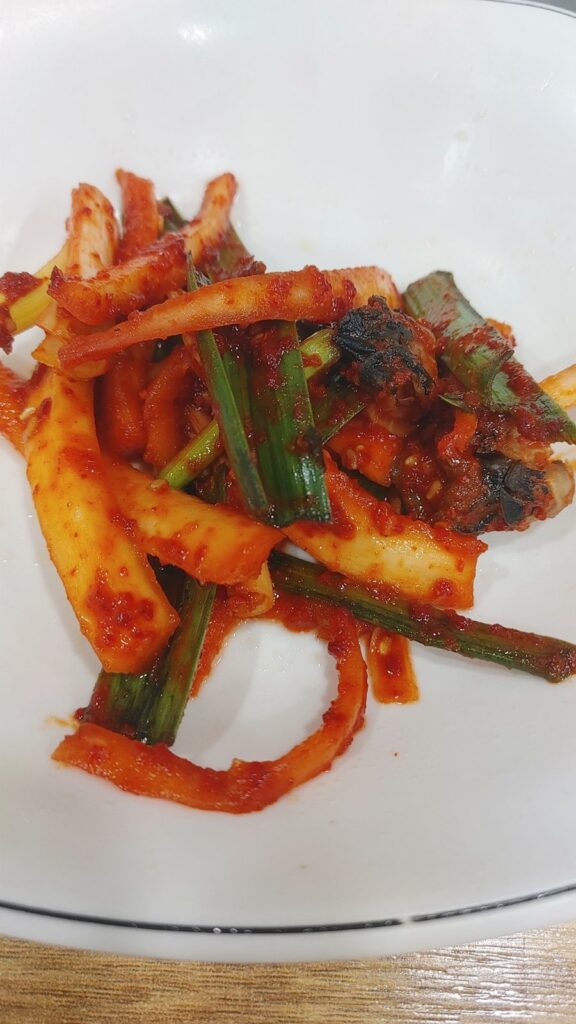
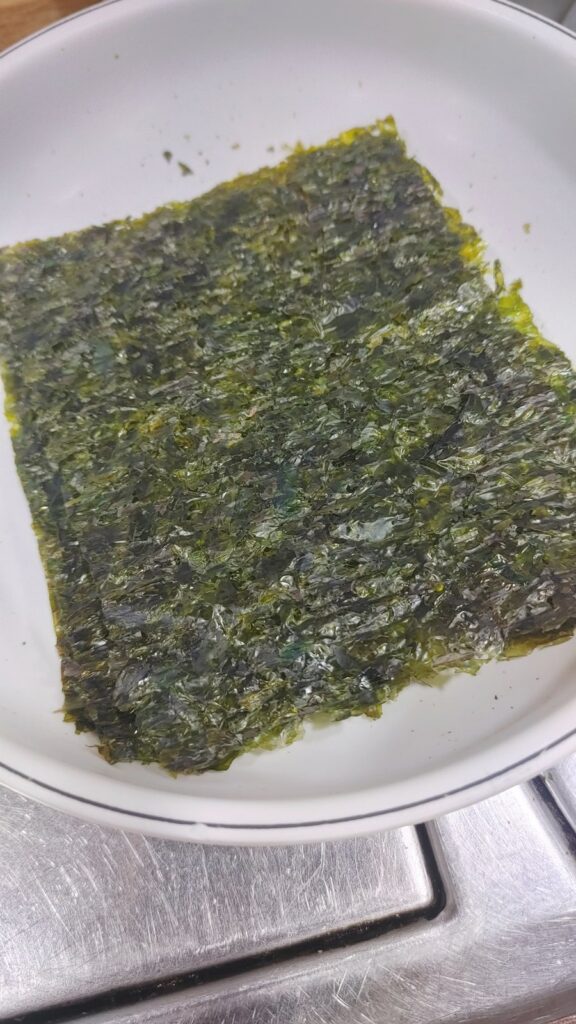
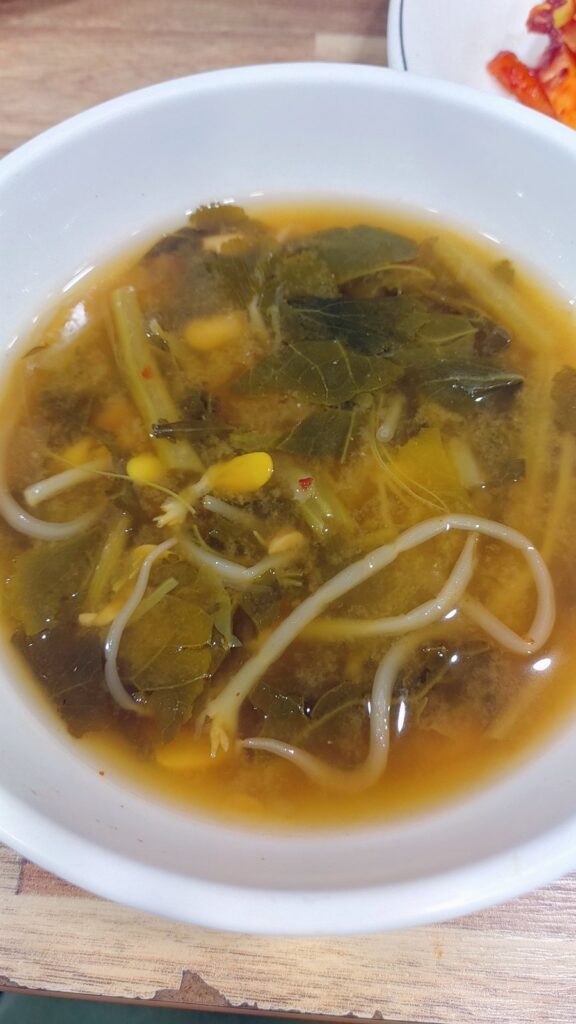
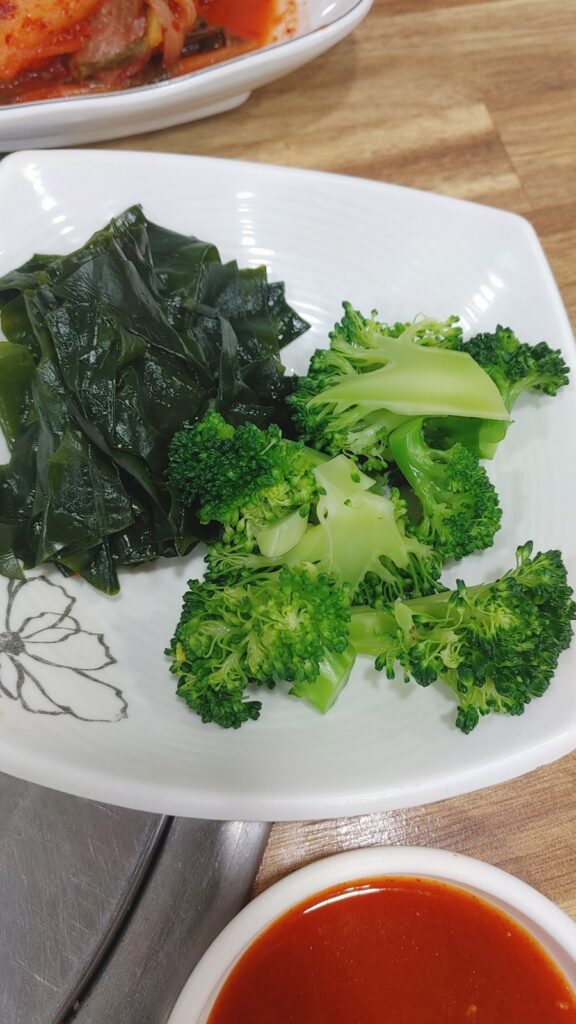
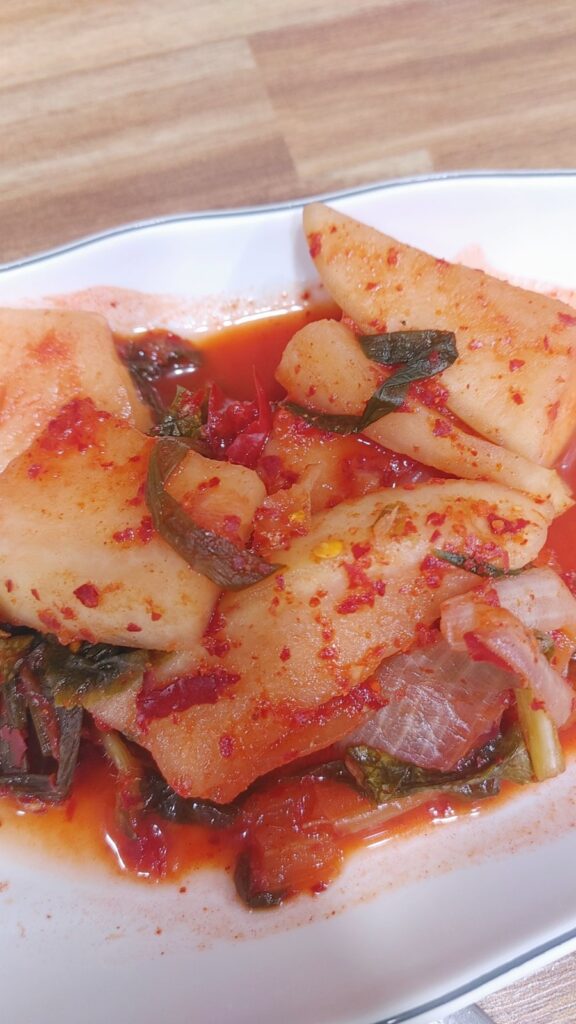
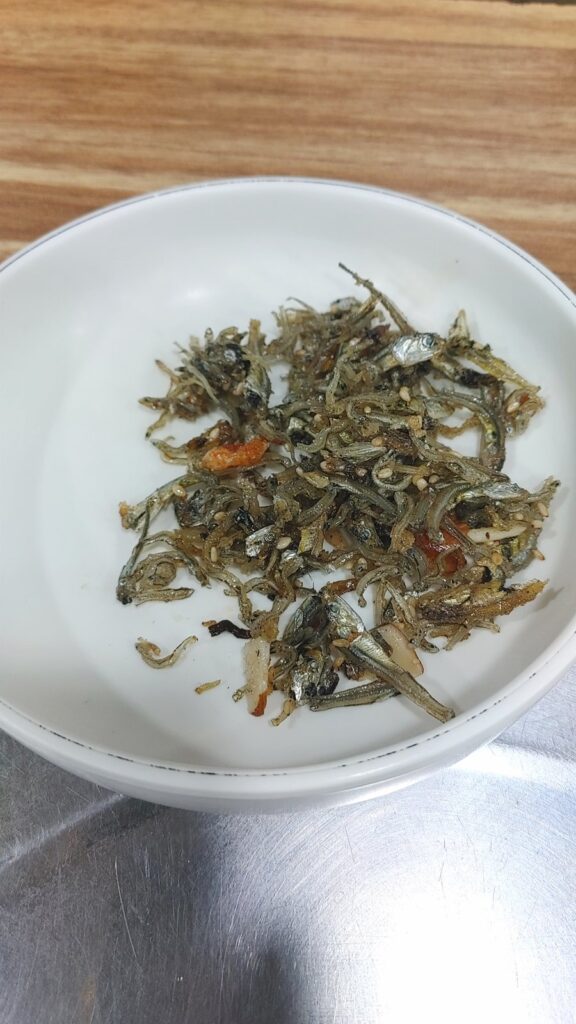
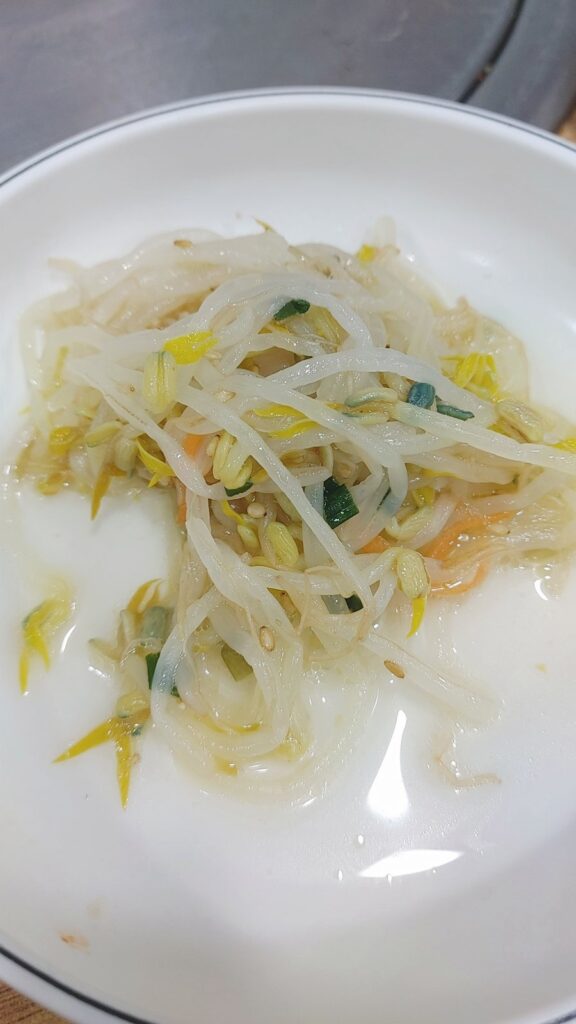
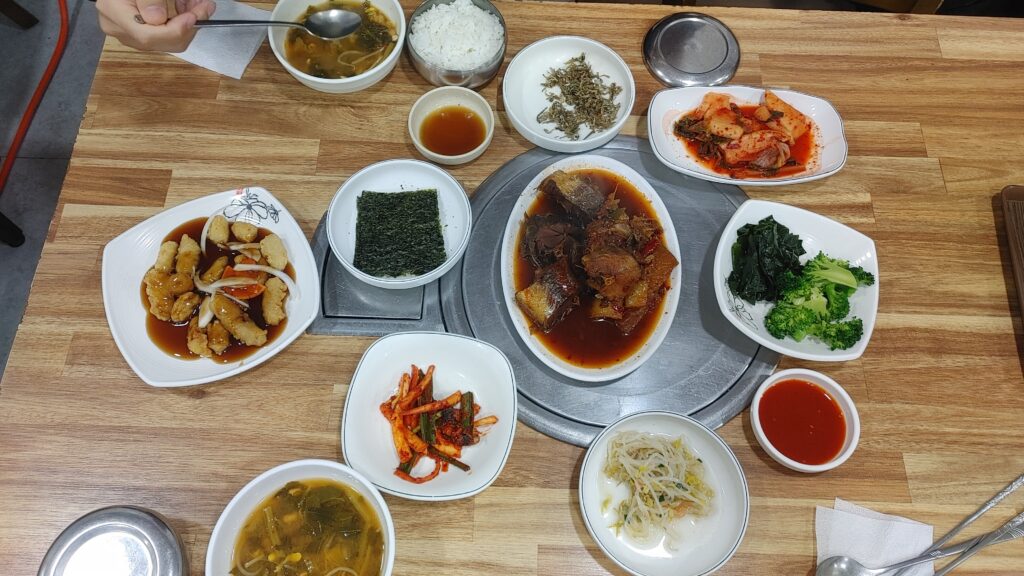
        The hanjeongsik my colleague and I enjoyed today included the following side dishes: doraji-muchim (seasoned bellflower root), sukju-namul (seasoned bean sprouts), blanched broccoli and seaweed (eaten with a vinegar-based dipping sauce called chojang), chonggak-mu (young radish kimchi), braised anchovies, gim (seaweed sheets), soy sauce (for dipping the seaweed), doenjang-guk (fermented soybean paste soup), and of course, the star of the meal—godari-jjim.

        Today korean Hanjeongsik Menu - about $10
        Today korean Hanjeongsik Menu – about $10

        The Traditional Korean Table Setting

        In Korean dining, the main dish is always placed in the center of the table, with all the side dishes arranged in a circle around it. Your bowl of rice comes with soup placed to its right. When I was growing up—and even now—soup has always been positioned to the right of the rice. This practice is rooted in both long-standing tradition and practical dining etiquette, primarily because most Koreans are right-handed. There’s also a deeper cultural interpretation: traditionally, in ceremonial table settings like those for ancestral rites (jesa), the east (right side) represents yang (positive energy) and the west (left side) represents eum (negative energy). Therefore, during meals, rice is placed on the west (left) and soup on the east (right). This custom also originates from Confucian culture, which has deeply influenced Korean society.

        Easy Way to Identify Flavors in Hanjeongsik

        You can tell a lot by looking at the colors of the side dishes. Red-colored banchan are usually somewhat spicy, because achieving that red color requires gochujang (red chili paste) or gochugaru (red chili powder).

        If a side dish retains the natural color of the vegetables used, then gochujang or chili powder hasn’t been added. In these cases, the seasoning typically involves soy sauce, salt, perilla oil (deulgireum), sesame oil (chamgireum), or other seasonings depending on the chef’s preference. This means it won’t be spicy.

        If a side dish has a darker color that’s not from the vegetables themselves, it’s usually been seasoned primarily with soy sauce. For example, dak-baeksuk (whole chicken soup) is whitish in color and not spicy at all—it’s seasoned with salt. Ganjang-bulgogi (soy sauce marinated beef) has a darker color because soy sauce is the primary flavoring. For vegetable dishes, since they maintain their natural colors, seasonings like salt, vinegar, soy sauce, sesame oil, and perilla oil are added. Of course, every restaurant has its own style of preparing banchan, so the seasonings vary from place to place. That’s why famous restaurants each have their distinct style and flavors. These days, I personally prefer side dishes and meals where I can taste the natural flavors of the ingredients rather than overpowering seasonings.

        The meal comes with a bowl of rice and soup. Restaurants that excel at hanjeongsik often make their doenjang-guk using house-made fermented soybean paste. This homemade doenjang has a much deeper, richer flavor compared to the sweeter commercial doenjang you might find at Amazon or Korean grocery stores, and it feels much gentler on your stomach. To put it more simply: if you’re older, after eating hanjeongsik, you might not feel completely stuffed, but your stomach will feel comfortable and at ease. There’s very little digestive discomfort.

        When I was raising my children, I tried my best to feed them organic and healthy ingredients, but in the end, as they progressed through elementary school, high school, and college, they inevitably ended up eating a lot of instant and processed foods.

        Does Hanjeongsik Use Instant Ingredients?

        Hanjeongsik restaurants avoid using instant or processed ingredients as much as possible, which is why the food is so healthy. After all, the less exposure you have to poor-quality ingredients, the better.

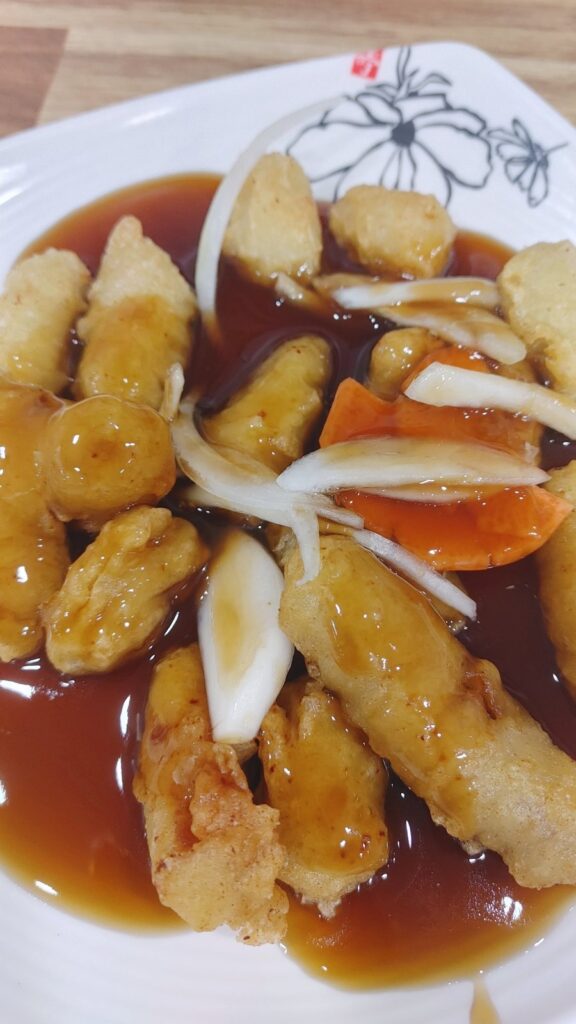
        In today’s hanjeongsik, there were very few side dishes made with what we commonly call instant ingredients. If I had to point out one, it would be tangsuyuk (sweet and sour pork), because it involves frying with flour-based batter. As you can see in the photos, hanjeongsik typically doesn’t include many fried foods. These days, GMO (genetically modified organism) ingredients have become a global concern, but in the hanjeongsik we had today, all the ingredients were GMO-free.

        Do Korean Side Dishes Use GMO Ingredients?

        South Korea does not produce GMO food ingredients—it’s strictly prohibited by law. The side dishes in today’s lunch were made mostly from ingredients grown domestically in Korea. Koreans have been concerned about GMO products and their health impacts for quite some time now. Perhaps it’s because I’m getting older, but I can usually tell just by looking whether something contains GMO ingredients. This is partly because Korea has relatively strict and rigorous quarantine procedures for imported agricultural products. Additionally, most restaurant owners actively avoid using GMO ingredients.

        Can You Get Refills on All These Side Dishes?

        Don’t worry—at most hanjeongsik restaurants, you can get refills on the side dishes, and they don’t charge extra for it. However, there are some cases where they might charge for refills, particularly if the side dishes are made with expensive ingredients. Just remember this: side dishes can generally be refilled at any time.

        How Much Does Hanjeongsik Near the Office Cost?

        Restaurants serving hanjeongsik near office buildings can’t charge too much, considering the budget constraints of office workers. Instead, they keep prices reasonable by focusing on healthy vegetables and home-style menu compositions. Today’s lunch for two people cost 20,000 won. If you order the special lunch menu, it’s 15,000 won per person. The additional 5,000 won includes premium side dishes like gulbi (salted and dried yellow corvina) and dwaeji-bossam (boiled pork wraps). Of course, keep in mind that prices vary from restaurant to restaurant.

        Conclusion

        If you’re visiting Korea, I highly recommend trying jeongsik (traditional set meal). The side dishes change with each season, and I encourage you to experience the variety these seasonal banchan offer. While some dishes might be spicy, each restaurant has its own style, so don’t worry too much about it. I hope you have the opportunity to enjoy delicious Korean food today!

        Refer to