
My First Encounter With Korean Convenience Stores
When I was young, my older brother left our hometown, Andong, to attend university in Seoul.
That was when I first encountered something completely new to me: the Korean convenience store.
What surprised me most was that these stores operated 24 hours a day. At the time, this felt revolutionary. In Korea, there are several major convenience store brands such as CU, GS25, Emart24, and 7-Eleven. Among them, CU and GS25 are by far the most common.
Convenience Stores as a Place for Everyday Meals
Today, I stopped by a convenience store to quickly solve dinner.
Convenience stores are widely used by middle school students, high school students, and university students, but recently, more adults rely on them as well.
Before convenience stores became so common, eating a meal usually meant going to a restaurant. In the past, small neighborhood grocery stores played a similar role, but many of them have disappeared over time.
Now, convenience stores sell daily necessities, drinks, snacks, and even full meal boxes designed to replace a proper meal.
As of 2026, the biggest reason people choose convenience store meals is price. Compared to restaurants, meals from convenience stores are about 20–30% cheaper. A typical restaurant meal costs around $9–10, while a convenience store lunchbox usually costs $4–5. Even a combination of cup ramen and kimbap usually stays under $6.
Instant Food in Korean Convenience Stores
Korean convenience store meals can be broadly divided into two categories. Most lunchboxes are based on Korean food or Korean-style dishes adapted to modern tastes, such as pork cutlet or rice bowls.
Personally, I often choose bibimbap lunchboxes. Sometimes I eat kimbap with cup ramen, but for health reasons, I try to avoid ramen when possible and stick to bibimbap.
One thing is certain: convenience store lunchboxes have very short expiration dates. If you visit Korea and want to try convenience store food, I strongly recommend trying a bibimbap lunchbox. However, they often sell out quickly because of their popularity and short shelf life.
Even convenience store meals in Korea still follow the basic structure of rice, side dishes, and balance found in traditional Korean meals.
What I Chose Today at the Convenience Store
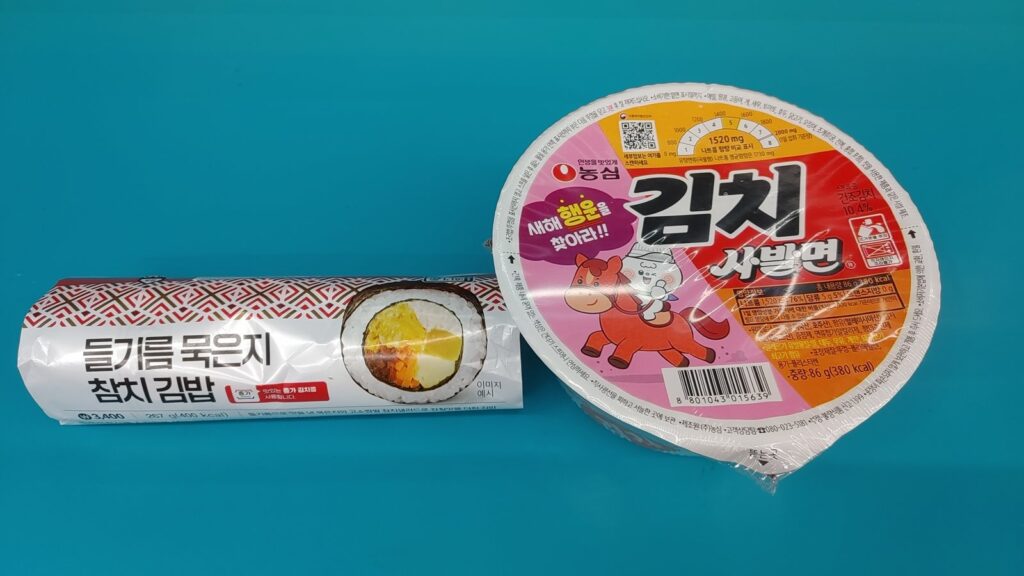
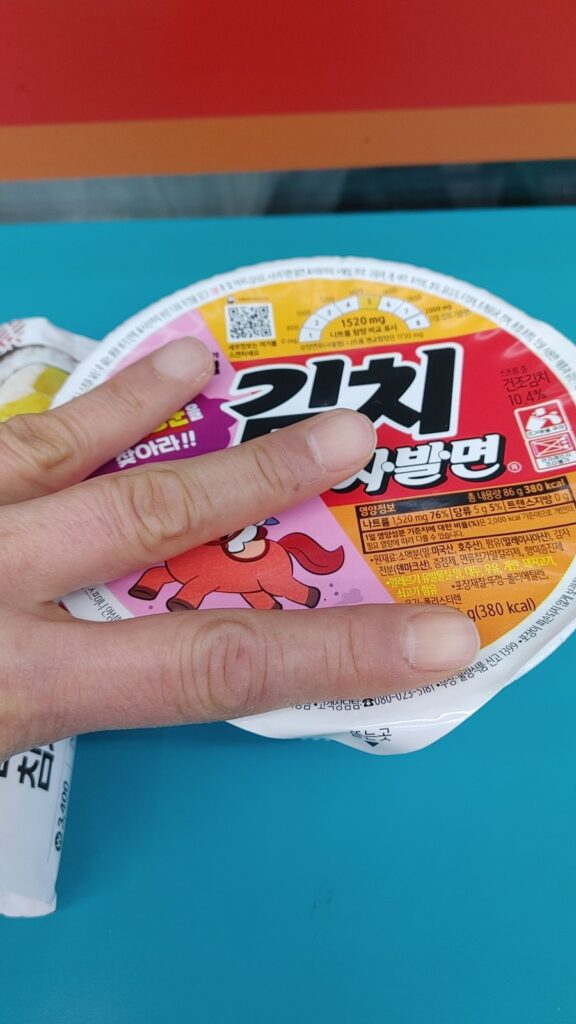
Today, I chose a kimchi-flavored cup ramen and kimbap to enjoy the taste of kimchi. For kimbap, I usually pick the most basic version without ham. For ramen, I choose a small-size cup.
If you want to experience different flavors, I recommend trying several types of kimbap.
Popular GS25 kimbap options include:
- Jeonju Bibimbap Kimbap
- Flying Fish Roe Tuna Mayo Kimbap
- Jinmichae Kimbap from the “Pyeonstorang” series
There are also meat-based options like bulgogi kimbap and pork cutlet kimbap, as well as cheese kimbap, spicy kimbap, egg kimbap, and chili kimbap.
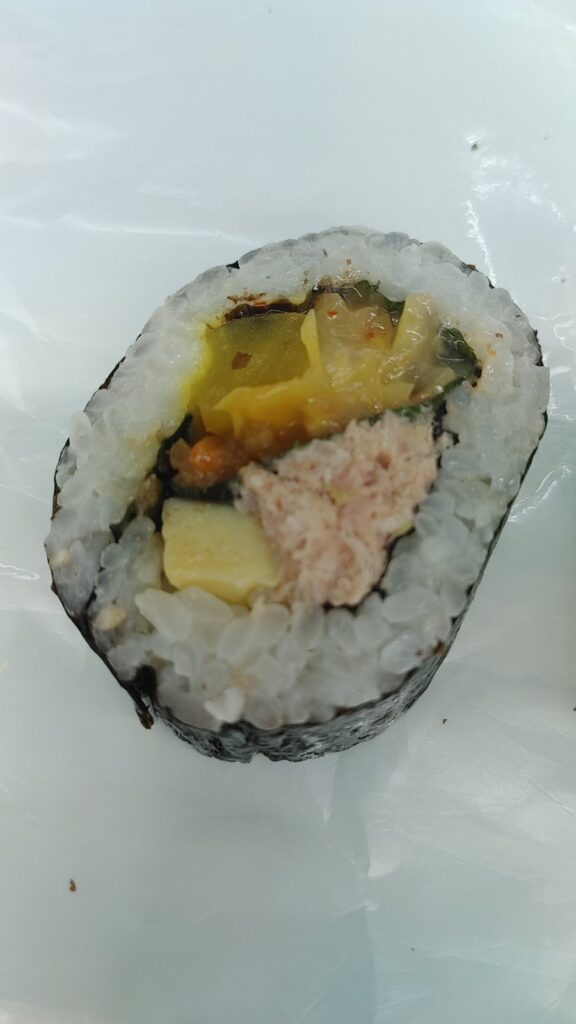
The ingredients include fermented kimchi, fermented kimchi, and tuna.
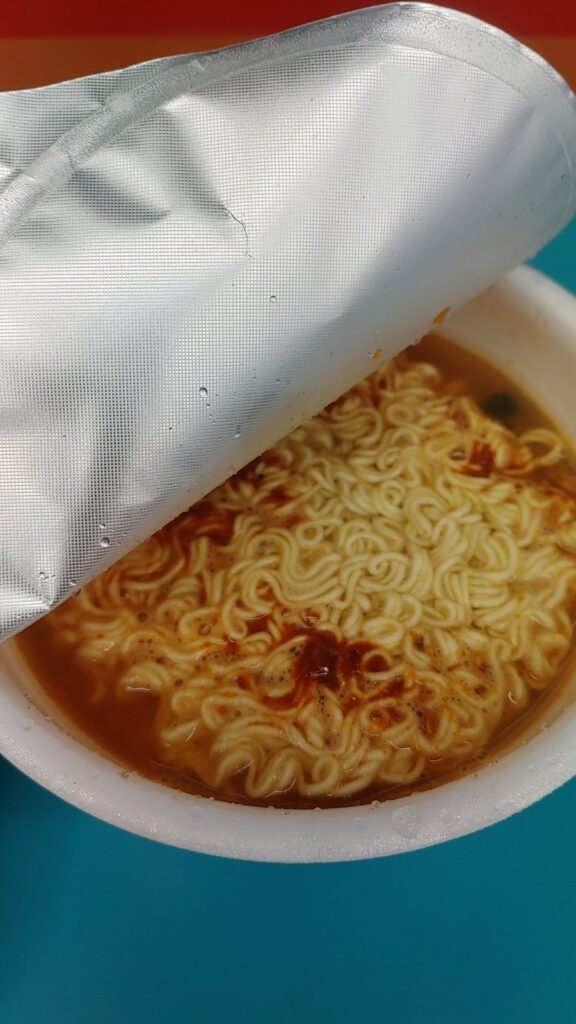
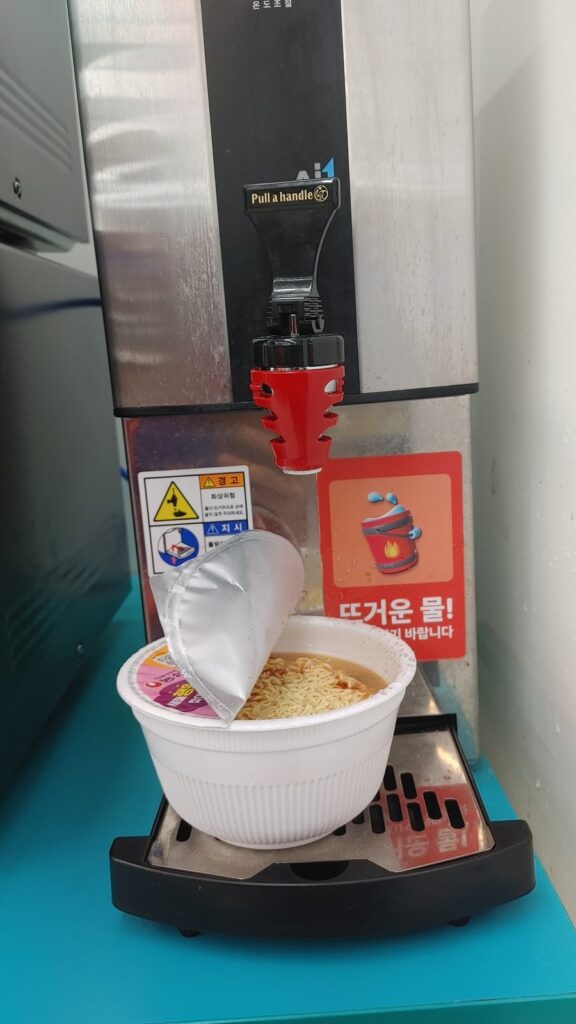
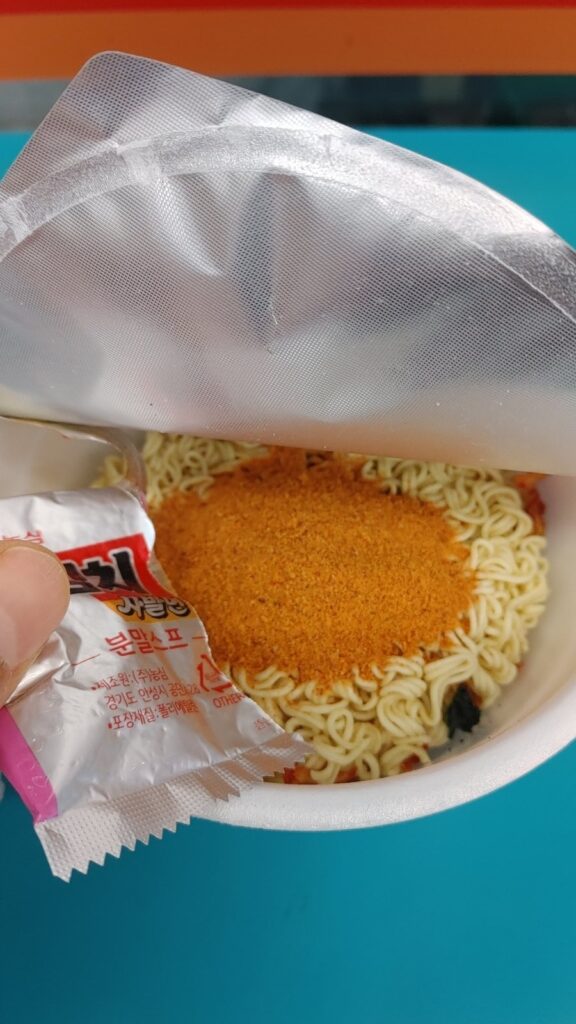
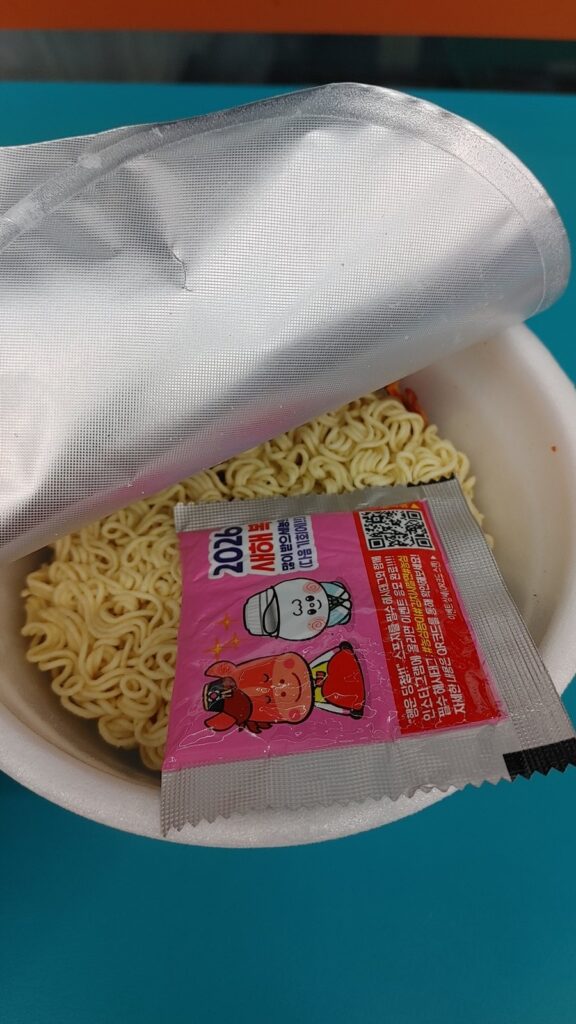
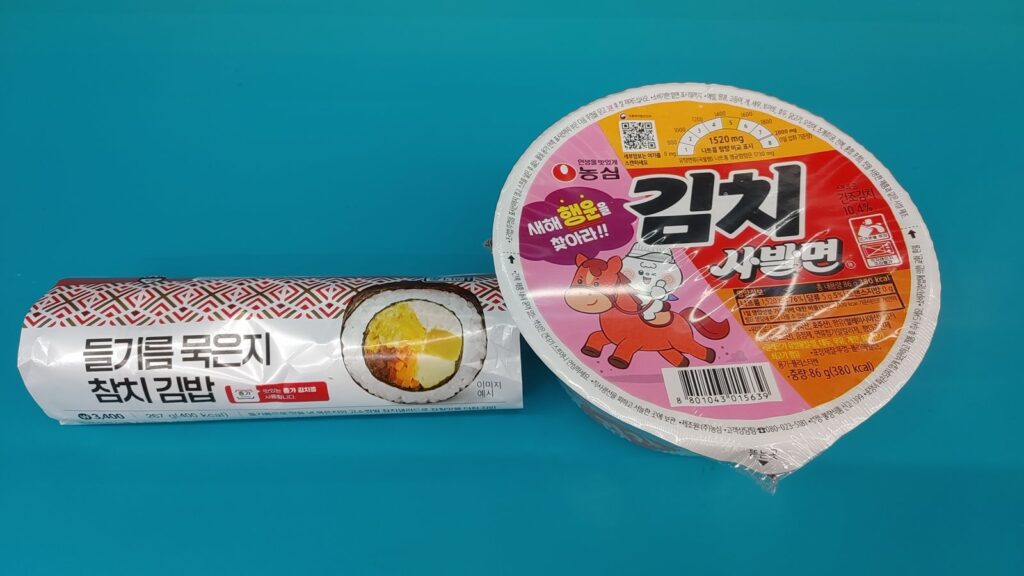
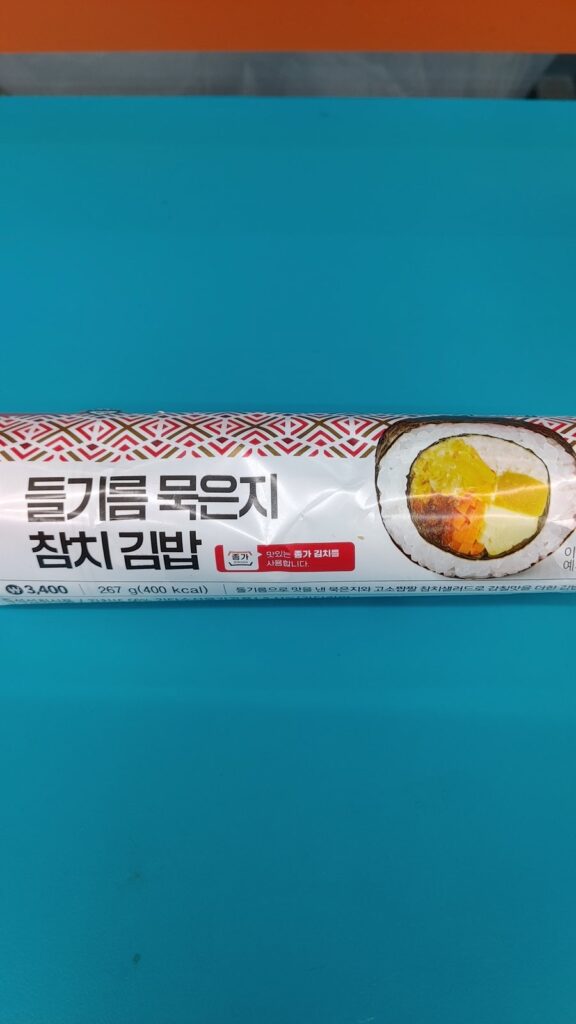
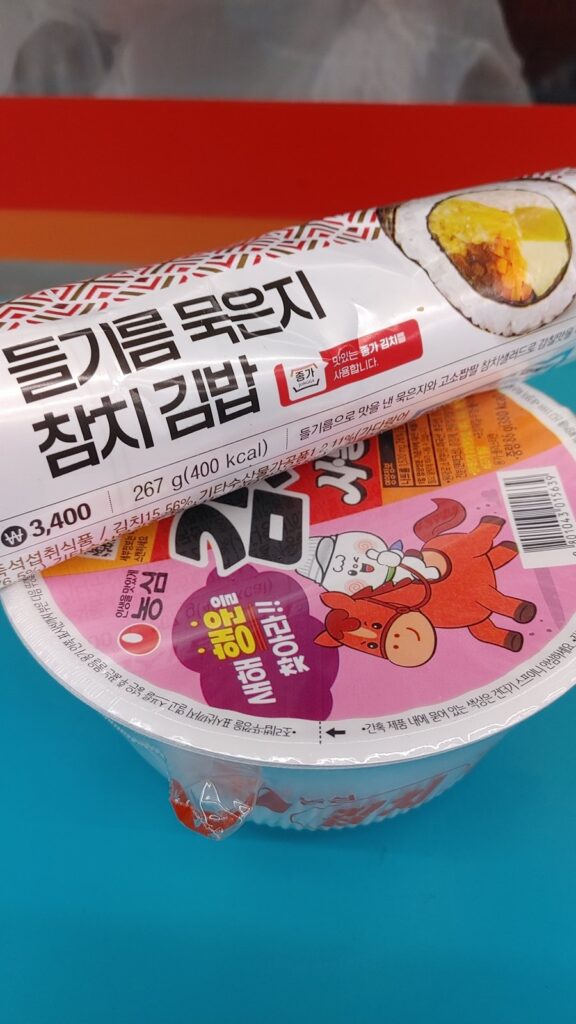
All Korean convenience stores sell kimbap. If you are vegan, vegetable kimbap is your best option. It does not include meat, though you should check for ham and ask to exclude it if needed.
The Changing Flow of Korean Instant Food
Korean instant food has evolved significantly from traditional Korean home cooking.
Imported ingredients such as ham, cheese, cooking oils, and foreign seasonings have blended into Korean recipes. Even Korean fried chicken has become part of everyday food culture.
When I was young, ham and cheese were not common ingredients in Korean households. Most meals were made with locally grown ingredients and homemade sauces. Food options were limited, but people were physically healthier. We played outside more, had fewer illnesses, and stayed active.
This is part of Korea’s broader instant food culture, which still reflects home-style eating rather than fast food.
HMR and Modern Convenience Meals
Today, home meal replacement (HMR) products are everywhere in Korea. The logic is simple: buying prepared meals saves time and sometimes money.
However, based on my life experience, I think it is still important to check ingredients carefully. Even though nutrition labels exist, many modern products are designed mainly to satisfy popular tastes rather than long-term health.
Watching my mother cook when I was young, I learned that traditional meals were focused less on strong flavors and more on balance.
Instant Food Is Not Bad — But Balance Matters
Everyone lives busy lives today, and Korea is especially fast-paced. I spend about 11 hours a day outside, including commuting. When I return home exhausted, instant food sometimes becomes the easiest option.
Delivery foods like pork cutlet, rice bowls, and curry are common choices. Delivery fees are usually added separately.
Instant food is not bad. It is simply a paid shortcut for busy moments.
Tonight’s Dinner: Ramen and Kimbap
Tonight, I bought ramen and kimbap at a GS25 convenience store.
Now that I am over 50, I notice my body feels different. I feel full after eating, but sometimes my stomach feels uncomfortable.
If you visit Korea, I recommend trying convenience store kimbap and kimchi cup ramen at least once. Kimchi cup ramen is slightly spicy. Other famous options include Buldak Bokkeum Myun (very spicy), Jin Ramen Mild, and Chapagetti cup noodles.
Korean convenience store food may look simple, but it reflects how modern Koreans eat: fast, practical, and still connected to home-style meals.
What Is Banchan?
What do Koreans eat when they’re busy?
There are three main reasons. First, Koreans often eat at home with side dishes and soups prepared the day before.
Second, Koreans often choose convenience store food like kimbap, cup ramen, lunch boxes, and bread. These foods are cheap and convenient.
Third, they often order delivery after work. Fourth, they often enjoy a quick meal out with family. When dining out, a meal for three people typically costs at least $25 to $30.
Is Korean convenience store food healthy?
Korean convenience store food is designed for convenience, not health, but many options like bibimbap or vegetable kimbap can be relatively balanced compared to fast food.
Why is kimbap so popular in Korean convenience stores?
Kimbap is easy to eat, affordable, and familiar to Koreans. It represents a simple extension of home cooking and is available everywhere, making it a popular everyday choice.
Is Korean convenience store food considered fast food?
Not exactly. Korean convenience store food reflects home-style meals adapted for busy lifestyles, rather than Western-style fast food focused on speed and indulgence.
Leave a Reply