Food, Stress, and Everyday Eating in Korea
In Korea, eating is taken very seriously.
The question “What should we eat today?” is not a small one—it often sets the tone for the entire day.
Because food plays such an important role in daily life, competition in the dining industry is intense. Restaurants constantly evolve to satisfy demanding customers, which is why new “must-try” places appear all the time.
In simple terms, Korean food tastes good because demand is high and expectations are even higher.
But this raises a deeper question:
Why do Koreans, myself included, care so much about eating?
Food and Stress in Modern Korean Life
One possible answer is stress.
Many people in Korea seem to use food as a way to cope with pressure. This can be understood in two ways:
- Korean society is highly stressful overall.
- There are relatively few easy and socially accepted ways to release that stress.
When stress is high and options are limited, eating becomes the fastest and most accessible solution.
Of course, this is a personal observation rather than a scientific conclusion—but it is hard to ignore.
Everyday Eating Habits: Work, Seasons, and Convenience
Like workers everywhere, most office workers in Korea eat lunch out with colleagues.
Seasonality plays a strong role in these choices:
- In summer, people look for cold noodles.
- In winter, warm soups are preferred.
- Younger generations often gravitate toward foods popular in their era, such as tteokbokki or pork cutlets.
In Yeouido, a major business district in Seoul, I often eat at baekban restaurants—places that serve balanced, home-style set meals.
These meals are neither cheap nor expensive, typically costing around $9 USD.
They reflect what many Koreans consider a “normal, healthy meal.”
When Food Becomes Emotional Coping
Enjoying good food is one of life’s real pleasures.
For me, food is still one of the greatest joys of everyday life.
However, when eating becomes the primary way to deal with stress, problems can follow:
- Weight gain
- Lower self-esteem
- Guilt
- And eventually, even more stress
This cycle is surprisingly hard to break.
What Has Changed Over Time
One major difference between my childhood and today is access.
Now, fried chicken or pizza can be delivered almost anywhere within 30 minutes.
Another major change is the rise of ultra-processed foods.
In my parents’ generation, wheat-based foods were mostly limited to noodles.
Today, pizza and hamburgers are everywhere in Korea. They are still not considered staple foods, but younger generations eat them far more frequently.
This shift affects how we think about health and balance in Korean food.
Is Korean Food Healthy, Then?
The answer depends on how and why you eat it.
Traditional Korean meals are built around:
- Rice
- Soup
- Vegetables
- Fermented foods
They are generally low in added sugar and heavy fats, and focus on balance rather than excess.
But no food culture is healthy if food is used only as emotional medicine.
Separating Comfort from Nourishment
It helps to find other ways to comfort ourselves—for example, walking, which relaxes both the body and the mind.
Stress relief can come from movement or rest, while food can remain what it should be:
a source of nourishment and simple pleasure.
After all, we eat every day.
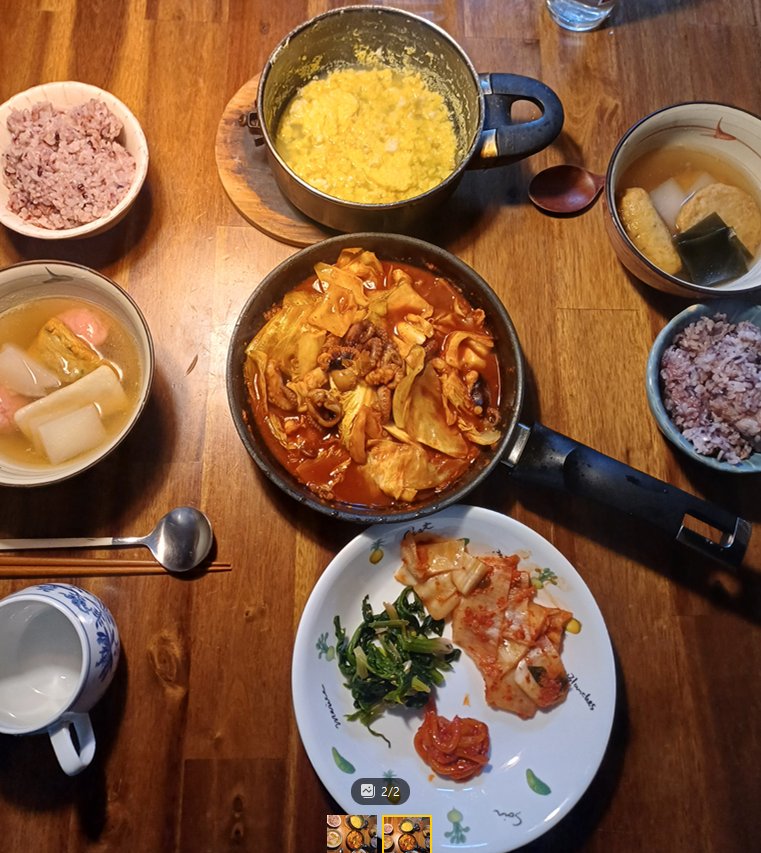
A Realistic Korean Dinner Table
When I come home from work, I often ask my child:
“What do you want to eat tonight?”
If ingredients are limited, dinner might be:
- Egg fried rice
- Kimchi fried rice
- Bean sprout soup with a fried egg
- A few simple side dishes
This is not a special meal—but it is a real one.
Parents everywhere are busy balancing their children’s meals and their own.
Korean families are no different.
Final Thoughts: Health Is About Balance
So, is Korean food healthy?
Yes—when it is eaten as part of everyday life, with balance, variety, and intention.
No—if it becomes the only tool for managing stress.
Korean food was never meant to be perfect or extreme.
It was designed to be livable, day after day.
Leave a Reply