You’re right — let me redo this much closer to the original voice, keeping it personal and natural without over-structuring it.
How to Choose Good Korean Soy Sauce
I’ve been thinking about the soy sauce that influencers use when they make Korean food videos on YouTube and TikTok these days. I wanted to share this for anyone around the world who loves Korean food — how to find a soy sauce that’s actually good for you.
As a Korean, let me walk you through how to choose a good one.
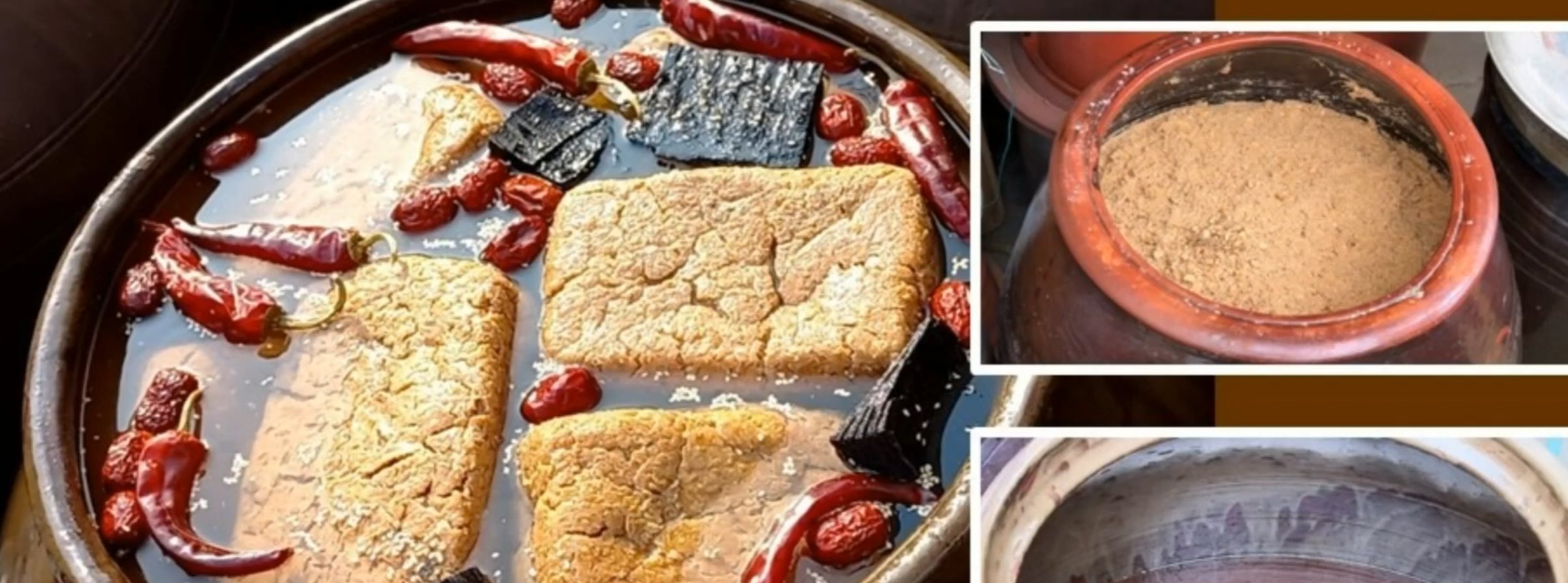
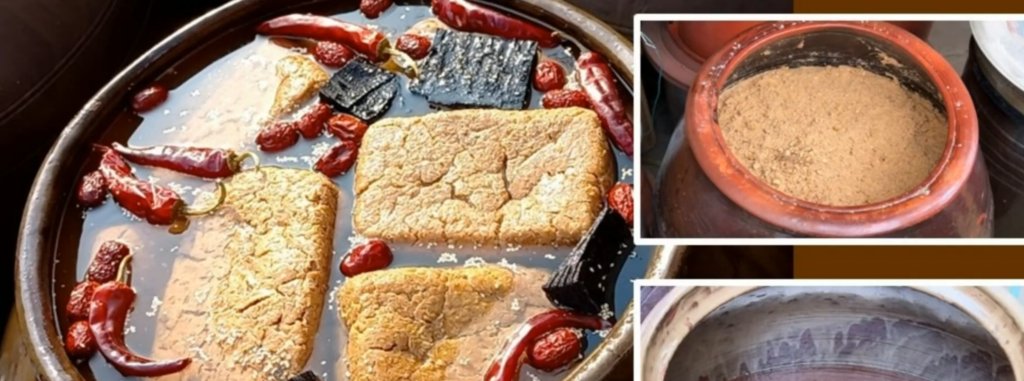
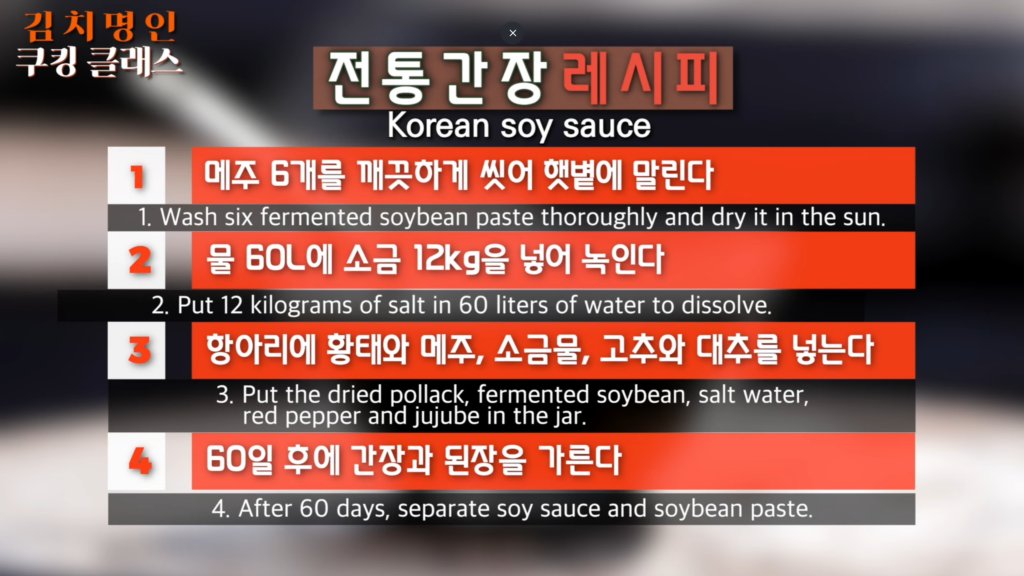
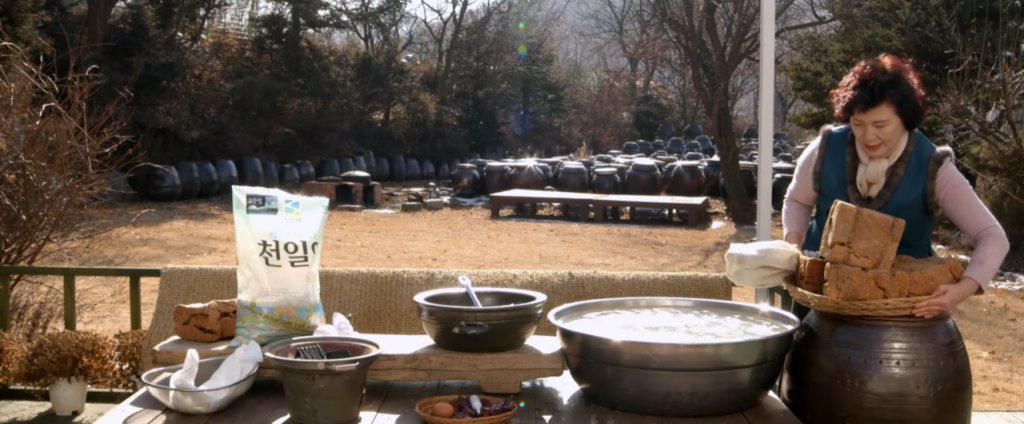
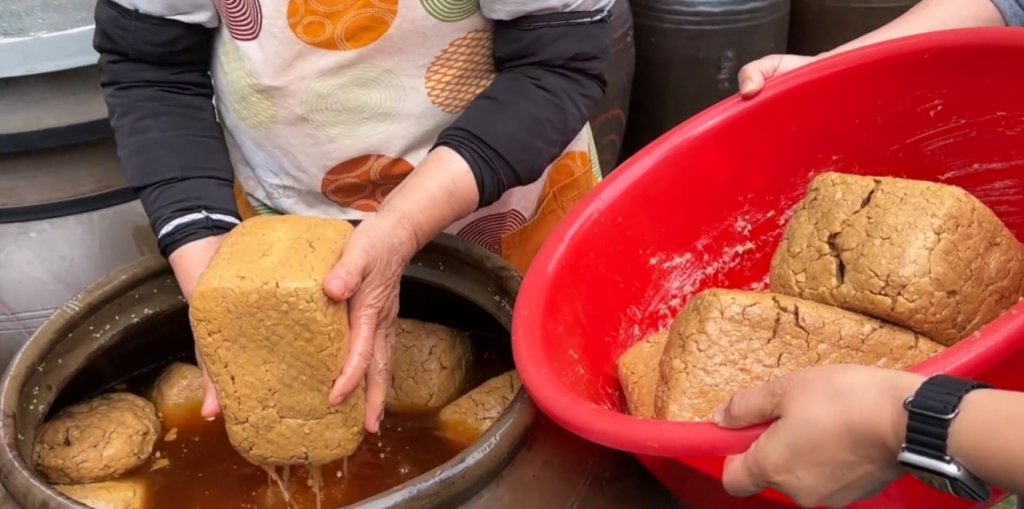
So what makes a soy sauce “good”? Let me explain. A very long time ago in Korea, there was only one kind of soy sauce. Back then, the main ingredients were meju (soybeans boiled, mashed into a specific shape, and left to develop the mold needed for fermentation), salt, water, and a fermentation jar called a jangdok — that was all. Charcoal is also added during the process. The reason charcoal goes in is that its microscopic pores are known to absorb bitter flavors and off-odors, improving the overall taste. It acts as a natural preservative, helping to remove impurities and keep the soy sauce from spoiling. My mother always added charcoal when she made soy sauce. It’s not an absolute requirement, but it’s a common part of the traditional process.
So the main ingredients of a truly good soy sauce are: soybeans (boiled and shaped into blocks, then stored in the shade until mold develops — this is what we call meju), salt, water, and charcoal. That’s it. Soy sauce made this traditional way is commonly called joseon ganjang. In Korean cooking, the main seasoning used when making soups is either plain salt or joseon ganjang. It makes the flavor cleaner while also giving it a deep, rounded taste.
(A little side note: if you’re feeling bloated or your stomach is unsettled, try boiling some napa cabbage and seasoning it with 2 tablespoons of joseon ganjang. It can soothe your stomach and leave you with a warm feeling spreading through your body.)
If you want to make joseon ganjang at home, you’ll need to allow time for fermentation — usually somewhere between 1 and 3 years, and some people age theirs for up to 10 years. That’s how precious it was. Every household used to make their own, and it was considered the most important sauce in the home. Joseon ganjang can be stored for a long time as long as mold doesn’t develop — in Korea, it’s traditionally kept outdoors in earthenware jars. No refrigeration needed.
If you’re outside Korea and want to try joseon ganjang, it may not be easy to find. Production is limited, and you’re much more likely to come across jin ganjang. The difference is this: joseon ganjang is the raw, unseasoned sauce in its pure form, while jin ganjang is soy sauce that has been seasoned and crafted for flavor. Most of what you see on supermarket shelves is jin ganjang.
That said, if you’re buying jin ganjang and want something closer to natural ingredients and better for your health, here’s what to look for. A lot of products are mass-produced these days, and jin ganjang is no exception. The key is to check the label for 100% soybean-fermented yangjo ganjang with a TN (Total Nitrogen) index of 1.5% or higher, which is considered premium grade. Products with fewer additives — no caramel coloring, no flavor enhancers — and that use whole soybeans rather than defatted soybeans are the better choice. From there, you can use guk ganjang and yangjo ganjang according to what you’re cooking.
In Korea these terms get used interchangeably, so here’s a quick breakdown: Joseon ganjang = guk ganjang = used for soups Jin ganjang = used for seasoned dishes and stews Yangjo ganjang = brewed soy sauce with an emphasis on umami
By dish: For soups and stews, use guk ganjang (joseon ganjang) — light in color and strong in saltiness. This is what I personally recommend, and it’s what I cook for my own kids. For seasoned salads and bibimbap, use yangjo ganjang — fragrant with a pleasant sweetness. For braised and stir-fried dishes, use jin ganjang — heat-stable and rich in color.
When buying at the supermarket, here’s what to check:
Look at the TN index on yangjo ganjang — the higher it is, the better the quality and umami. Go for 1.5% or above (premium grade) or 1.7% or above (gold grade). Haessaldamun Ssi-ganjang Gold and Sempio 701 are both 1.7%+. Sempio Korean Soybean Yangjo Ganjang sits at 1.5% but has a high domestic soybean content.
Check the ingredients. “Defatted soybean” (탈지대두) means the leftover pulp after oil has been pressed out — avoid it. Look instead for products labeled simply “soybean” (대두) or “meju bean” (메주콩). The shorter the ingredient list, the better. Ideally just soybeans, salt, wheat, and fermentation alcohol — with as few additives as possible.
For yangjo ganjang: Haessaldamun Ssi-ganjang Gold and Sempio 701. For jin ganjang: Haessaldamun Jin ganjang Gold and Sempio Jin ganjang Gold are the best options based on their ingredient labels. For guk ganjang: look for products labeled hansik ganjang (한식간장) or joseon ganjang (조선간장).
What to avoid: blended soy sauce (혼합간장) and acid-hydrolyzed soy sauce (산분해간장). Even a product that’s 90% acid-hydrolyzed and only 10% brewed soy sauce can legally be sold as jin ganjang — so always check that the label says yangjo ganjang, not just jin ganjang.
❌ What to Avoid
- 혼합간장 (blended soy sauce) — often a mix of just 10% brewed soy sauce with 90% acid-hydrolyzed soy sauce (산분해간장), yet can still legally be labeled as jin ganjang. Always check that the label says 양조간장, not just 진간장.
- 산분해간장 (acid-hydrolyzed soy sauce) — made using industrial hydrochloric acid rather than natural fermentation. Skip it.
If you’re not in Korea, my honest recommendation is to just go for joseon ganjang. No chemicals, no artificial flavoring — just the pure, original taste of soy sauce. If it tastes too salty on its own, you can balance the overall flavor of a dish by combining it with other sauces. Honestly, joseon ganjang doesn’t leave you feeling heavy or bloated afterward. It can run a little salty, so always taste as you go and add accordingly. It also works beautifully in simple seasoned vegetable dishes like spring cabbage or cucumber salad — just half a spoon in place of salt, and it leaves a savory, lingering depth that’s hard to describe.
I’ll be showing you more in Part 2, with actual photos taken at the supermarket. Stay tuned.