Tag: banchan

  • Korean Dining Etiquette: Why Koreans Eat the Way They Do

    Korean Dining Etiquette: Why Koreans Eat the Way They Do


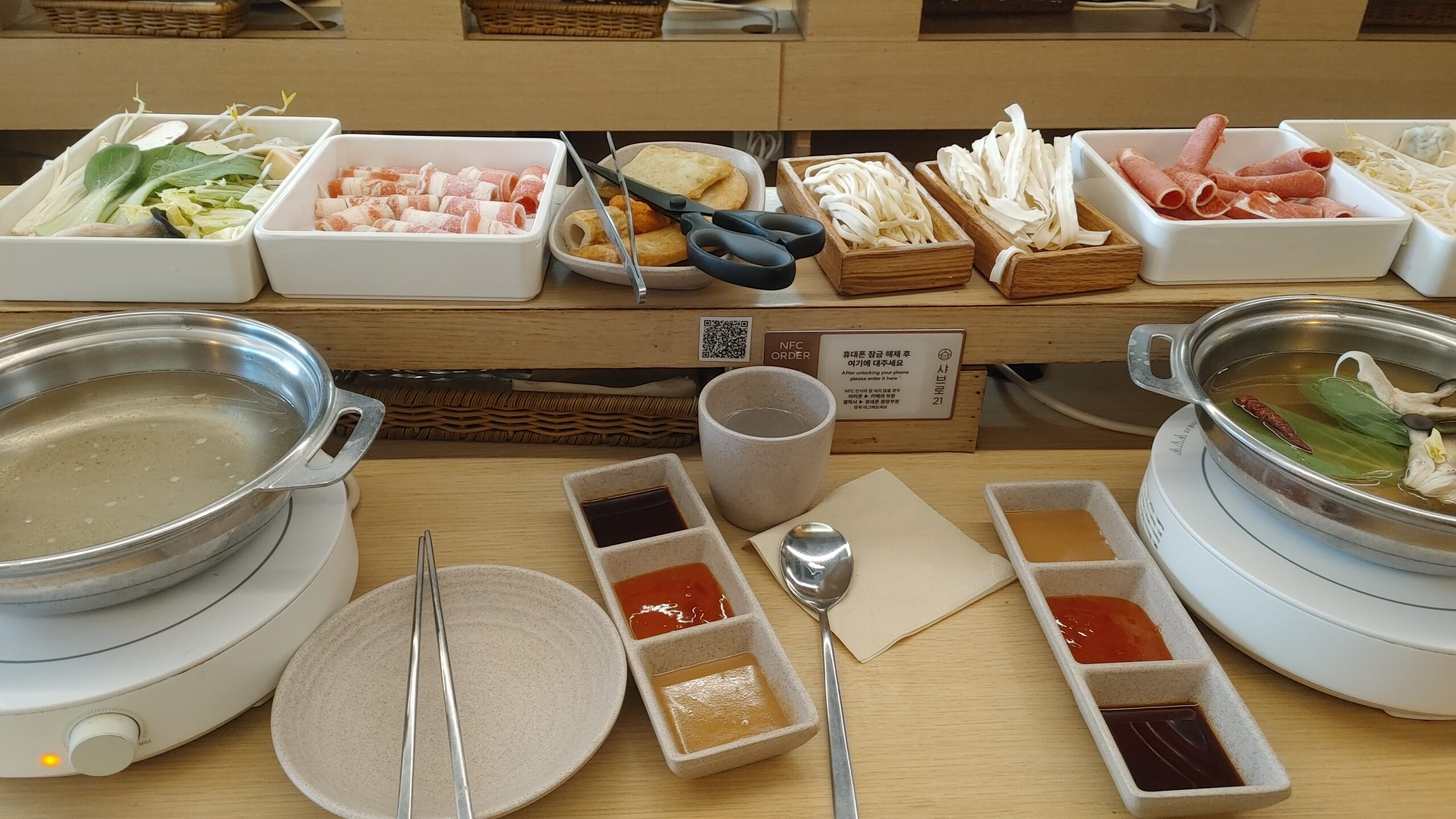
    with my sons - With my son at a single-serving shabu-shabu restaurant - Location: Hongdae Station
    with my sons – With my son at a single-serving shabu-shabu restaurant – Location: Hongdae Station

    Korean dining etiquette is unlike anything else in the world — distinct not only from Western table manners, but also from those of neighboring China and Japan. A traditional Korean table is set with an abundance of side dishes, everyone shares a communal stew from the same pot, and the order in which you pick up your spoon actually matters. So how did Korean dining etiquette come to be this way — and what does it tell us about Korean culture?

    The Unwritten Rules at the Korean Table

    Even as Korean food culture has evolved over the decades, certain foundational rules at the dinner table remain deeply embedded in everyday life. These aren’t arbitrary customs; they are the living expression of Confucian values that have shaped Korean society for centuries.

    Growing up in a Korean household, I experienced this firsthand. Every evening when my father came home from work, my mother would have dinner ready. The children were expected to be seated at the table first. Only when my father sat down and reached for his spoon — his sujeo — would the rest of the family begin eating. The eldest or most senior person at the table always lifts their spoon first. No one eats until they do.

    This simple act carries tremendous meaning: it is a gesture of respect for the person who provides for the family, a quiet acknowledgment of the day’s hard work. It is rooted in Confucian tradition, and for many Korean families, it is still observed today.


    No Loud Eating, No Heated Arguments

    One of the most distinctive aspects of Korean table manners is the expectation of quiet, mindful eating. Koreans are taught from a young age not to make noise while chewing and to keep their mouths closed when eating. There is an old saying that eating with your mouth open will drive away good fortune (bok) — so Koreans tend to eat carefully and quietly.

    Conversation at the dinner table tends to be gentle and measured. The eldest typically leads the discussion, and exchanges often resemble a soft check-in — the elder asks, the younger responds. Heated debates and arguments at the dinner table are considered inappropriate. The meal itself is the priority.

    In my childhood home, my mother always set aside the first scoop of freshly cooked rice — the warmest, most fragrant portion — specifically for my father’s bowl. She kept it warm in the rice cooker until he arrived home. It was a small act, but it spoke volumes: a daily ritual of love and gratitude from a wife to a husband who worked hard to support a family of six.


    Why Koreans Use Both a Spoon and Chopsticks
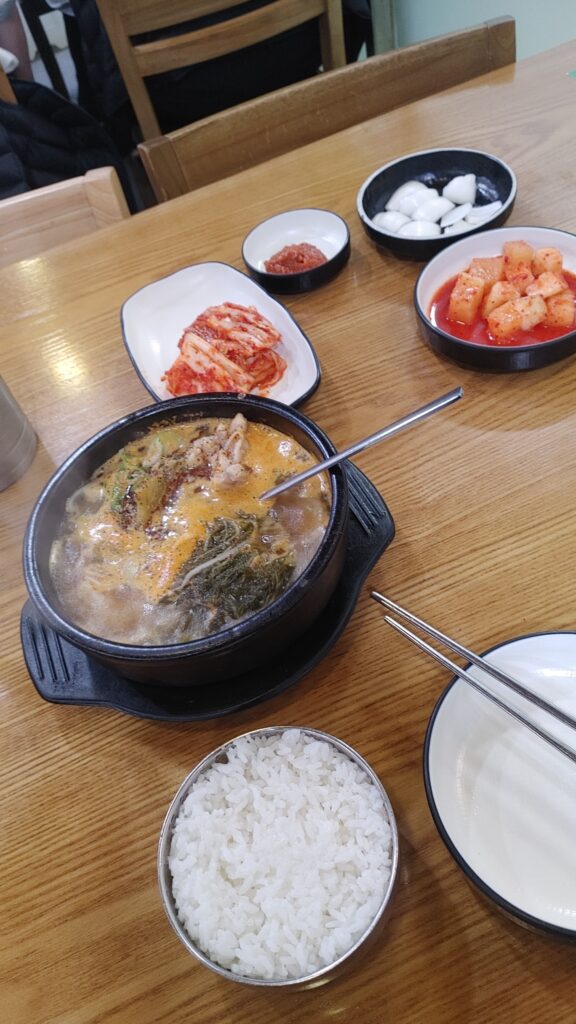
    Today Lunuch - Korean dining etiquette table setting
    Korean-style tripe soup for lunch – Location: Yeouido, South Korea

    If you’ve ever sat down at a Korean restaurant and noticed both a long-handled metal spoon and metal chopsticks beside your bowl, you may have wondered — why both?

    According to the Korea Cultural Promotion Institute, the combined use of the spoon (숟가락, sutgarak) and chopsticks (젓가락, jeotgarak) — collectively called sujeo — evolved directly from Korea’s soup-centered food culture and its grain-based diet.

    • The spoon is used for rice and broth. Korean meals are built around guk (soup) and jjigae (stew), making a spoon indispensable for scooping liquid-heavy dishes.
    • The chopsticks are used to pick up side dishes (banchan) and solid foods.

    This is what sets Korea apart from Japan and China, where chopsticks alone are typically used for rice. Korean rice, while slightly sticky, is eaten with a spoon alongside a bowl of soup — a habit refined over many centuries of Korean culinary tradition.

    Another reason for metal utensils goes back to the royal court and Joseon Dynasty (1392–1897), when silver spoons and chopsticks were used specifically to detect poison in food. Silver reacts visibly to certain toxins, making it a practical safety measure for those serving royalty. The preference for metal utensils eventually spread throughout Korean society, reinforcing hygiene standards — metal is easier to sanitize than wood, especially in a culture centered around broth and soups.


    The Art of Setting a Korean Table

    In traditional Korean table setting, every item has a designated place:

    • Rice bowl is placed to the left.
    • Soup bowl goes to the right of the rice.
    • Spoon and chopsticks are placed to the right side of the soup bowl.
    • Banchan (side dishes) are arranged in the center of the table so everyone can reach them comfortably.
    • Special or freshly prepared dishes are placed at the center front — the position of honor and easy access.

    This arrangement is not accidental. It reflects a philosophy of communal generosity — the food belongs to everyone at the table. Sharing banchan from common dishes is a hallmark of Korean dining culture, one that often surprises Western visitors who are accustomed to individual plating.

    Traditionally, Korean families ate seated on the floor (jwasik culture), with a low table set on the warm ondol floor. As modernization brought Western-style furniture into Korean homes, dining chairs and elevated tables gradually replaced the floor-sitting tradition — though the values underneath remained the same.


    “Let’s Grab a Meal Together Sometime” — More Than Just Food

    In Korean culture, the phrase “언제 밥 한번 같이 먹자” (“Let’s eat together sometime”) carries far more weight than a casual lunch invitation. It is an expression of wanting to connect, to share, to build a relationship.

    Korean meals serve as the backdrop for nearly every significant social interaction:

    • Family bonding — parents checking in on children, spouses catching up after long days.
    • Friendship and community — school moms gathering at a restaurant to share parenting advice over doenjang jjigae.
    • Romance — couples sharing their first meals together as a way of deepening emotional intimacy.
    • Business relationships — deals discussed, trust built over shared samgyeopsal and soju.

    Eating together is the fundamental social glue of Korean life. Sharing food — especially food you’ve cooked yourself — is one of the most powerful ways to say: “I care about you.”


    The Rise of “Honbap” — Eating Alone

    Yet something is shifting. In 21st-century Korea, the phenomena of honbap (혼밥, eating alone) and honsul (혼술, drinking alone) have become increasingly mainstream — especially in major cities like Seoul. Rapid urbanization and industrialization have reshaped the rhythms of daily life, pulling families apart and pushing meals into the individual sphere.

    When I was a child, it was common for friends or my father’s colleagues to be invited into our home for a shared meal. Today, that kind of hospitality has largely moved to restaurants. Even within families, eating together has become a special occasion rather than a daily habit. We hear phrases like “Let’s make more time to eat together as a family” — a sign that something once taken for granted is now something we have to consciously protect.

    The individualization of Korean meal culture is real. But the longing for connection at the table remains.


    Keeping the Tradition Alive, One Meal at a Time

    As a father of two, I make it a point to cook for my children whenever I can. The food might not be restaurant-quality, but it’s food I’ve chosen with care — made with simple, wholesome ingredients, free from anything harmful. More importantly, it’s food made with intention and love.

    Korean dining etiquette isn’t just a set of rules about where to place your spoon. It is a living record of how Koreans have expressed respect, love, hierarchy, and community through the act of eating. Understanding these traditions gives you a far richer window into Korean culture than any guidebook can offer.

    The next time someone says “밥 한번 먹자” to you — take them up on it. There’s a whole world of meaning in that shared meal.

    💡 Part of our Guide to Korean Dining Culture This article is a deep dive into Korean Dining Etiquette. It explores how Confucianism and communal values shape the way Koreans eat, from the use of metal chopsticks to the philosophy of sharing.

    Related artices


    Q: Is it okay to lift your bowl while eating in Korea?

    A: No, in traditional Korean etiquette, lifting your rice or soup bowl is considered impolite. This is a key difference from Japanese dining culture. Bowls should remain on the table, and you should use your spoon to eat.

    Q: Why are Korean chopsticks usually made of metal?

    A: Historically, silver was used in the royal court to detect poison. Today, metal is preferred for its hygiene and durability, especially when eating or wash dishes
  • Jeyuk Bokkeum Hanjeongsik – 8 GMO-Free Korean Sides in 15 Minutes

    Jeyuk Bokkeum Hanjeongsik – 8 GMO-Free Korean Sides in 15 Minutes

    A Warm Meal to Start the Day in Cold Winter

    The winter weather that has persisted since last year has been quite cold. With temperatures dropping below -10°C in winter and rising above 30°C in summer, the foods we eat vary significantly by season. Today, I’m having lunch with a friend and colleague.

    Today’s menu is hanjeongsik. We’re going back to the same place we visited yesterday.

    The Charm of Hanjeongsik – Daily Changing Side Dishes and Menus

    Today’s Menu

    Most hanjeongsik restaurants prepare different side dishes each day. Of course, the main dishes are also configured differently. This is a major advantage of choosing hanjeongsik. For Korean office workers, there’s no need to worry about the menu or side dishes, and you don’t have to worry about what your boss thinks either.

    GMO-Free Side Dishes – A Healthy Table Made with Korean Produce

    Today’s hanjeongsik featured GMO-FREE side dishes. Most of the side dishes are made primarily from namul (seasoned vegetables). This is because Korean-grown agricultural products and vegetables are relatively affordable in Korea’s climate.

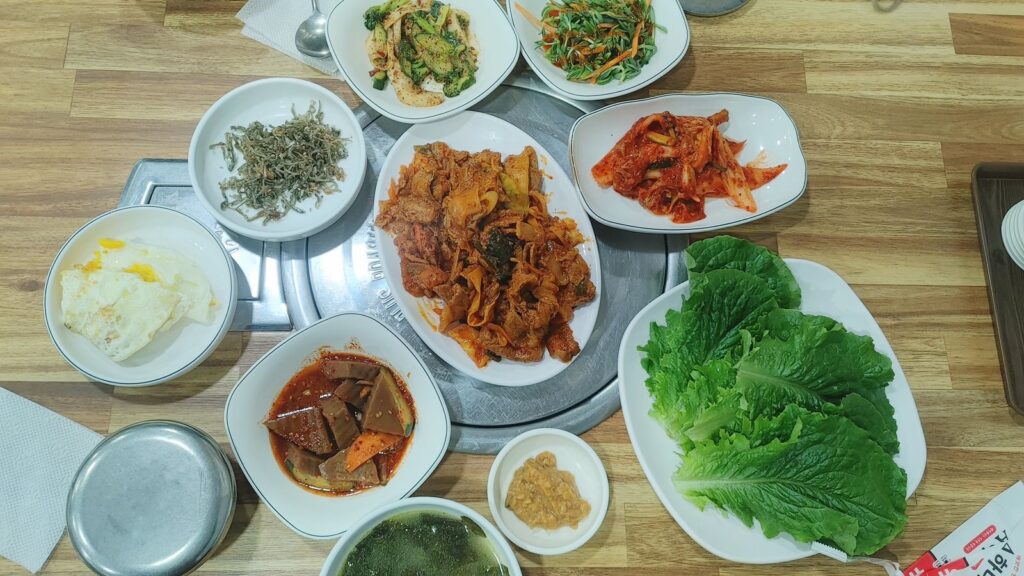
    Today’s Hanjeongsik Composition

    Korean hanjeongsik table with jeyuk bokkeum and 8 GMO-free side dishes
    Jeyuk Bokkeum Hanjeongsik004-20260206

    🏷️ Menu List for tastyKoreanfood.com

    한글 메뉴명한글 발음 (Romanization)(English Name)
    계란후라이Gyeran-huraiFried Egg
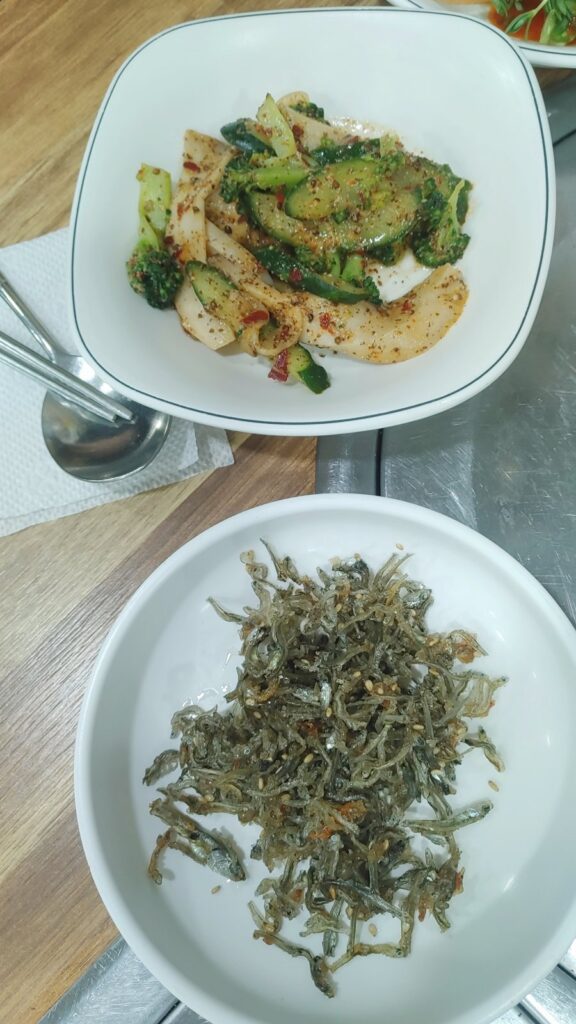
    멸치볶음Myeolchi-bokkeumStir-fried Anchovies
    오이무침Oi-muchimSpicy Cucumber Salad
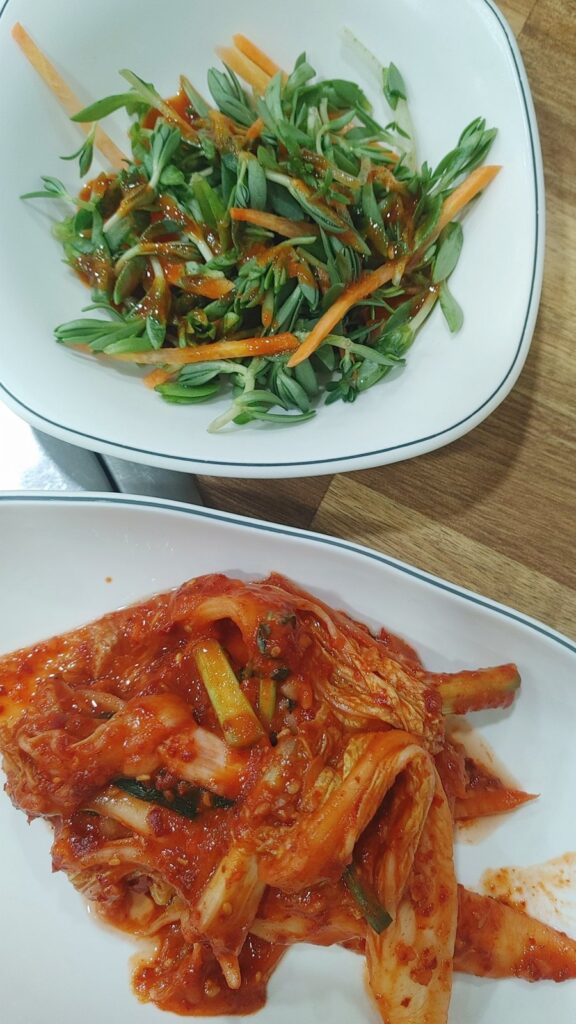
    돌나물무침Dolnamul-muchimSeasoned Sedum (Stonecrop)
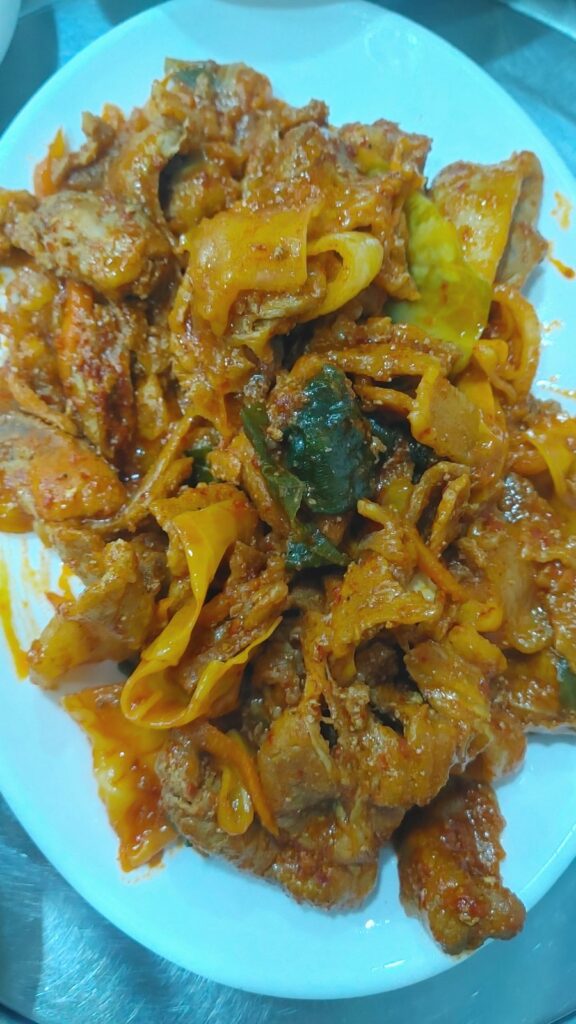
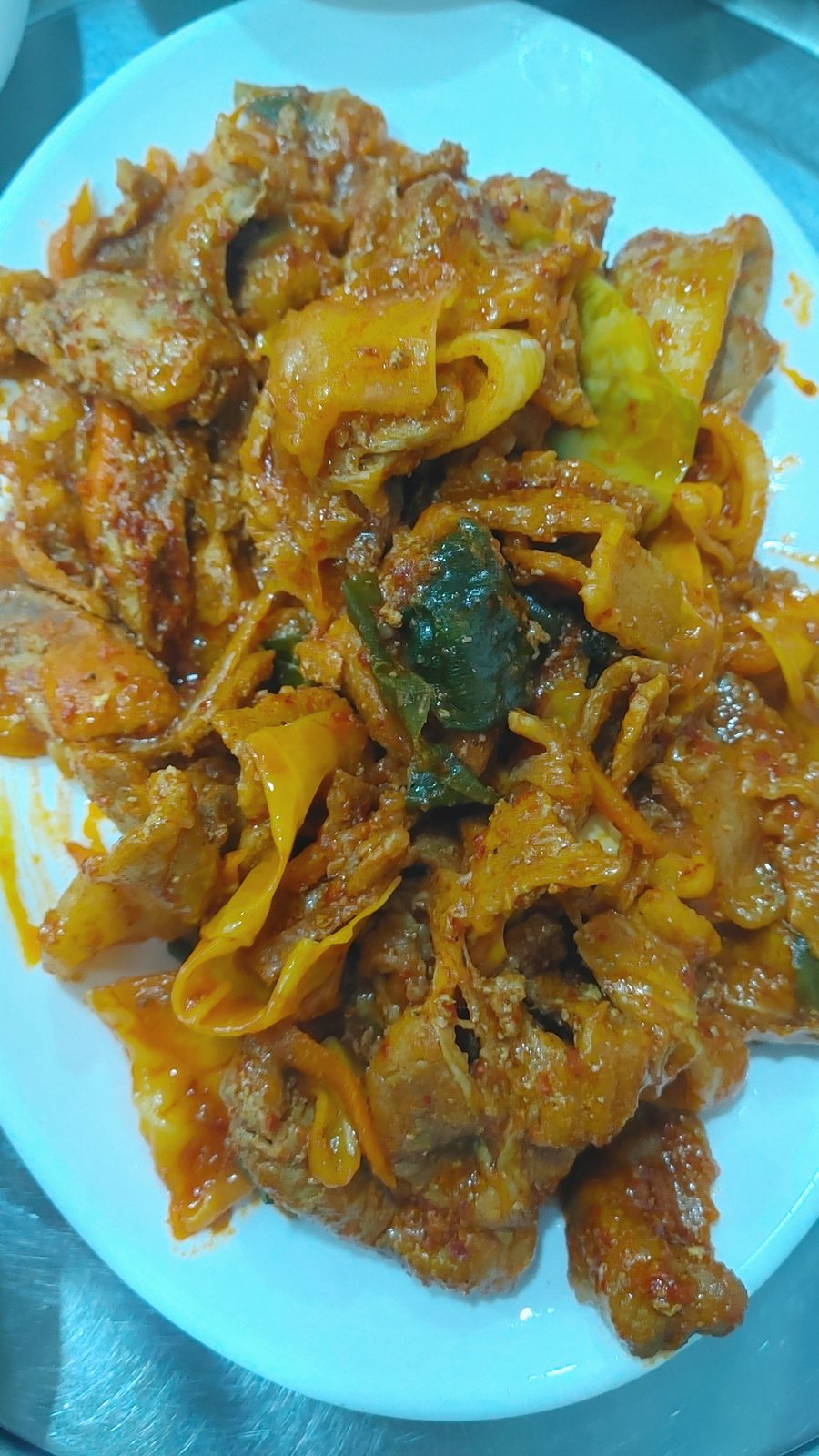
    제육볶음Jeyuk-bokkeumSpicy Stir-fried Pork
    김치KimchiKimchi
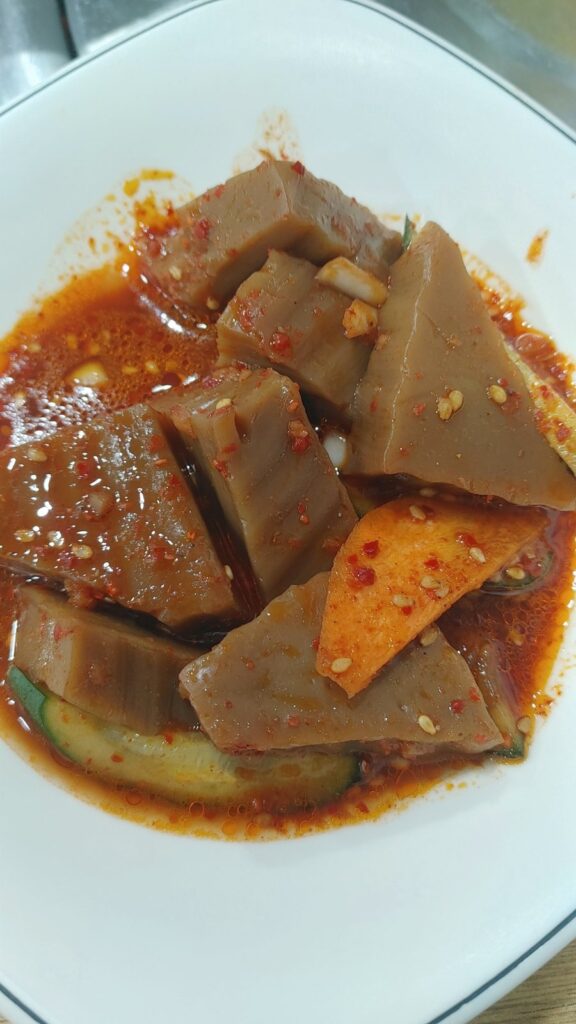
    도토리묵 무침Dotori-muk-muchimAcorn Jelly Salad
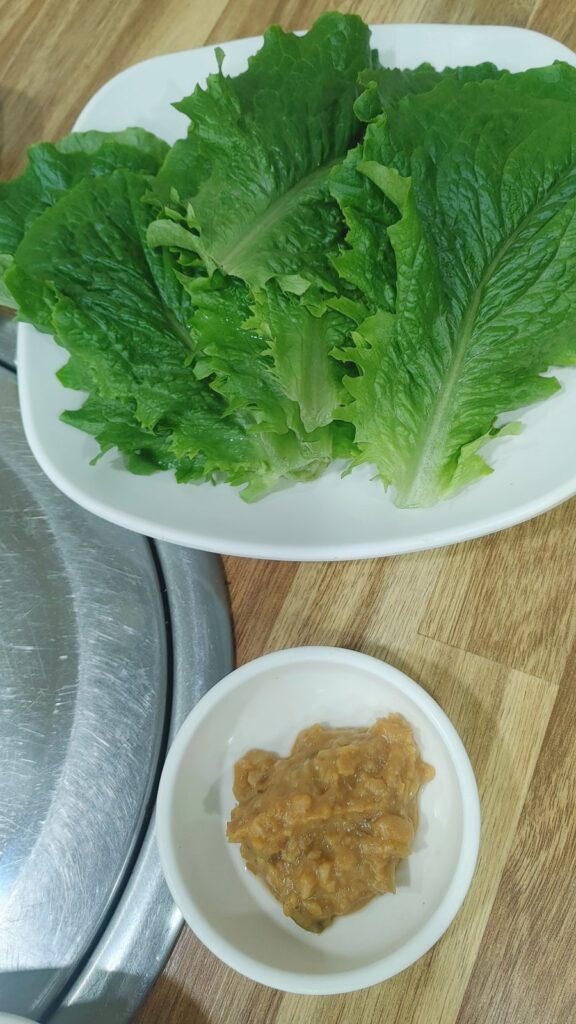
    상추SangchuLettuce
    쌈장SsamjangSsamjang (Seasoned Soybean Paste)
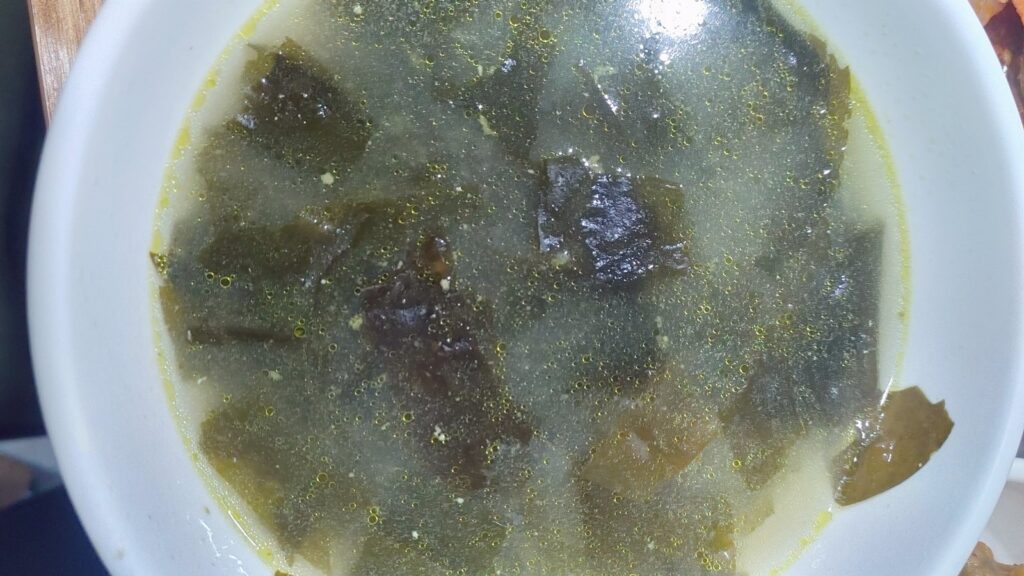
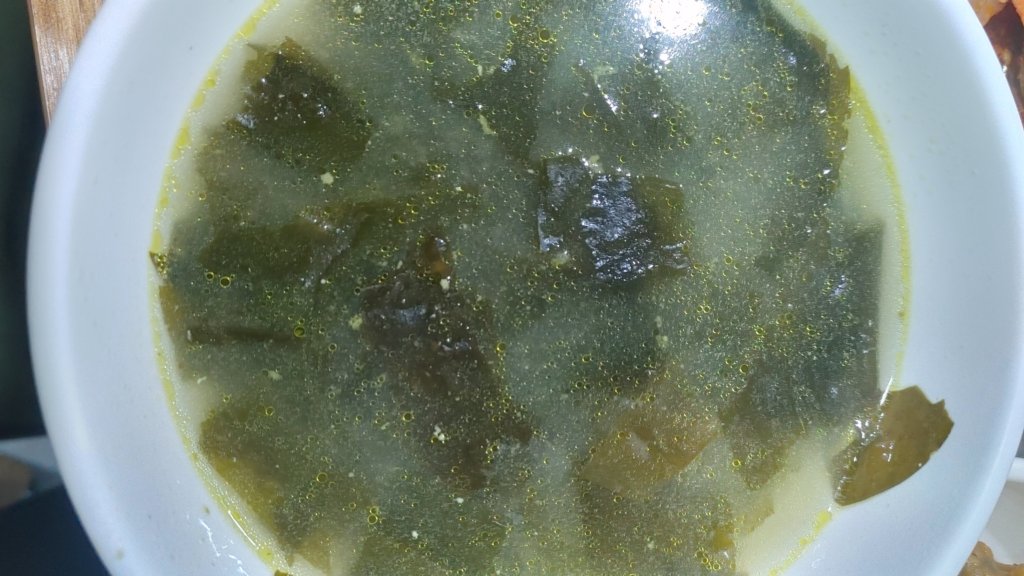
    미역국Miyeok-gukSeaweed Soup

    The main dish was jeyuk bokkeum (spicy stir-fried pork), accompanied by fresh vegetables for wrapping (ssam) and doenjang (fermented soybean paste). The soup was comforting miyeok-guk (seaweed soup), along with acorn jelly (dotori-muk), kimchi, freshly made kimchi, stir-fried mushrooms, fried egg, and anchovies. There was one side dish whose name I can’t quite remember… oh yes, dolnamul—young shoots of a succulent plant seasoned with red pepper powder and various seasonings.

    In total, there were 8 side dishes, miyeok-guk, and jeyuk bokkeum, making 10 items altogether. Looking at the composition of the side dishes and meal, most are made with Korean ingredients.

    Miyeok-guk – Korea’s Traditional Health Food for New Mothers

    Traditional Korean miyeok-guk (seaweed soup) for postpartum mothers, comparing wild vs farmed seaweed
    Miyeok-guk

    Miyeok-guk has always appeared in the diet of new mothers after childbirth.

    To introduce miyeok-guk: it’s a soup made primarily with miyeok (seaweed). Miyeok is an annual brown algae mainly consumed in Korea and Japan. In Korea, new mothers who have just given birth always seek it out. Eating miyeok-guk is said to promote breast milk production for the baby, and because seaweed has alkaline properties, it’s believed to be excellent for detoxifying the body.

    When my wife gave birth to our first and second children, she ate miyeok for almost a month. This custom of eating miyeok-guk dates back to ancient times. When a baby was born, the maternal family would visit their daughter with the best quality miyeok they could prepare.

    Wild Seaweed (Dol-miyeok) vs Farmed Seaweed – What’s the Difference?

    In Korea, the most preferred and highest quality seaweed is dol-miyeok (stone seaweed), which refers to naturally harvested seaweed collected from rocks.

    There’s also farmed miyeok, which is cultivated directly in the ocean. Compared to dol-miyeok, farmed seaweed has a thinner texture. However, dol-miyeok requires longer cooking time, but offers a richer, more flavorful taste.

    The Essence of Korean Food I Prefer – ‘Minimally Processed Food’

    I’m not from a generation that grew up eating donkatsu (Japanese-style pork cutlet). I’m approaching 50 years old now. So I don’t prefer donkatsu, and I frequently encountered what I call ‘rough foods’ that my mother made for me.

    ‘Rough food’ refers to dishes made from pure, unprocessed ingredients as they are. Nowadays, there’s what’s called ultra-processed food—finely textured foods that are widely distributed. But when I was young, I encountered many foods made with minimally processed ingredients like these. Even now, when choosing a restaurant with family or work colleagues, I tend to prefer rough, minimally processed foods whenever possible.

    Why I Don’t Spend My Own Money on Donkatsu?

    Everyone has their own constitution. My body reacts to fried foods. I experience poor digestion or stomach discomfort after eating them. That’s why I avoid fried foods as much as possible. I’m 52 years old now, after all.

    However, I do prefer foods cooked with pork fat or beef fat. According to data released by the FDA in 2026, animal fats are healthier than factory-produced seed oils made from plant seeds. Furthermore, they stated that consuming fermented butter or pure butter is healthier. So these days, although it’s not traditional Korean food, I eat fermented pure butter on my table for health reasons. (When I was young, I used to eat margarine.)

    Lunch Culture in Yeouido Financial District – Fast and Efficient

    At 11:30 AM, restaurants start getting crowded with customers coming for lunch.

    Yeouido, where I work, is full of office workers. Yeouido is Korea’s financial district, home to securities firms, banks, and financial industry professionals. Think of it as Korea’s Wall Street.

    Because most people commute early in the morning, lunch time for financial district workers starts as early as 11:00 AM for reservations, with crowds flooding restaurants from 11:30 AM onwards. Therefore, going early, eating quickly, and leaving is considered a virtue.

    What I mean is, when I eat with colleagues at a restaurant, I usually don’t exceed 15 minutes. The restaurants crowded here also do their main business during the lunch rush, so diners generally don’t sit for extended periods. In other words, meal times range from 15 to 25 minutes at most.

    Slightly more expensive restaurants offer separate rooms for dining. It seems to be the mindset of office workers to finish their meal quickly and rest a bit.

    Of course, if you visit a restaurant, you don’t have to finish your meal in 15 minutes. You can eat at a more leisurely pace. It’s just that Korea has this ‘ppalli-ppalli’ (quickly-quickly) mentality.

    Conclusion – Memories and Traditions in Korean Dining

    At Korean baekban (home-style meal) or hanjeongsik restaurants, the side dishes change almost daily. And most of these side dishes are the same ones my father and mother made for me when I was young, carried down to this day. So when I see these side dishes and foods, they bring back old memories.

    • GMO 검역 정보 → 식품의약품안전처

    • 미역의 영양 성분 → 국가표준식품성분표 DB

    • FDA 2026 발표 자료 → www.fda.gov (seed oils vs animal fats)

    • Korean food culture→ 한식진흥원


    What Is Banchan?

    In Korean meals, side dishes are not extras but an essential part of the table, which explains why banchan matters so much.

    Why Rice Is the Foundation of Korean Meals

    Even during a busy workday, Koreans still try to keep meals balanced, which is why rice remains the foundation of Korean meals.

    Why Soup Is Served in Most Korean Meals

    Soup is always placed next to rice, showing why soup is served in most Korean meals, even at lunch.

  • What Is Banchan? Understanding Korean Meals and Side Dishes

    What Is Banchan? Understanding Korean Meals and Side Dishes

    WHAT IS BANCHAN
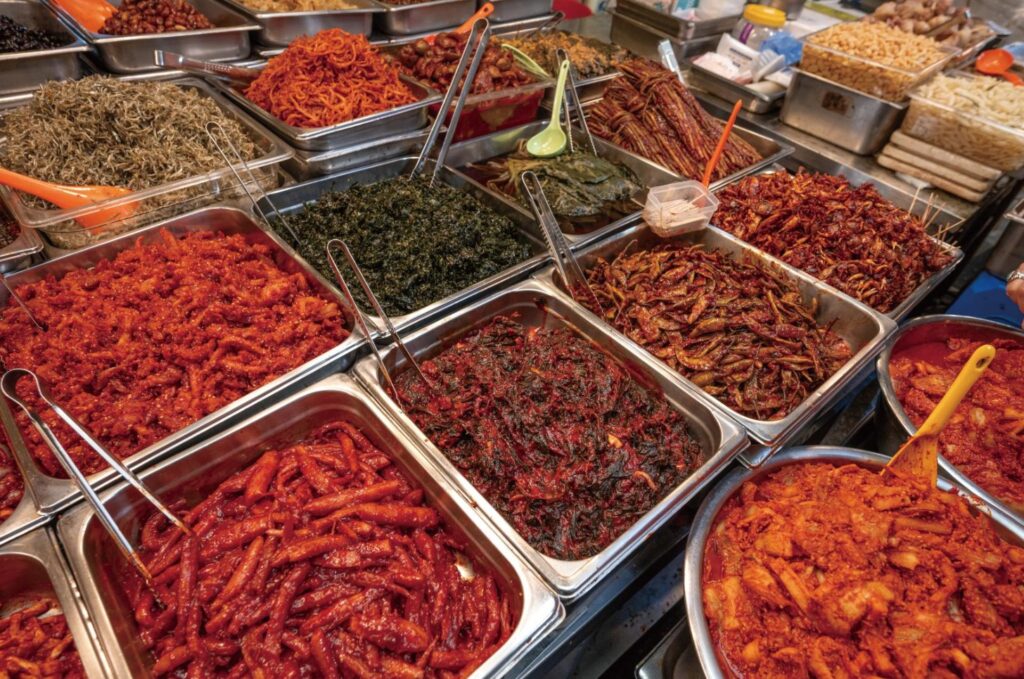
    Korean side dishes sold at the market / REFER TO 한국민속대백과사전

    What Is Banchan?

    Understanding Korean Side Dishes and Table Structure

    In traditional Korean dining, rice is the staple food, and all accompanying dishes are considered banchan, or side dishes.
    Unlike Western meals, where side dishes are served alongside or after a main dish, Korean side dishes are placed on the table all at once, forming a complete meal from the beginning.


    The Traditional Korean Table Setting (Bansang)

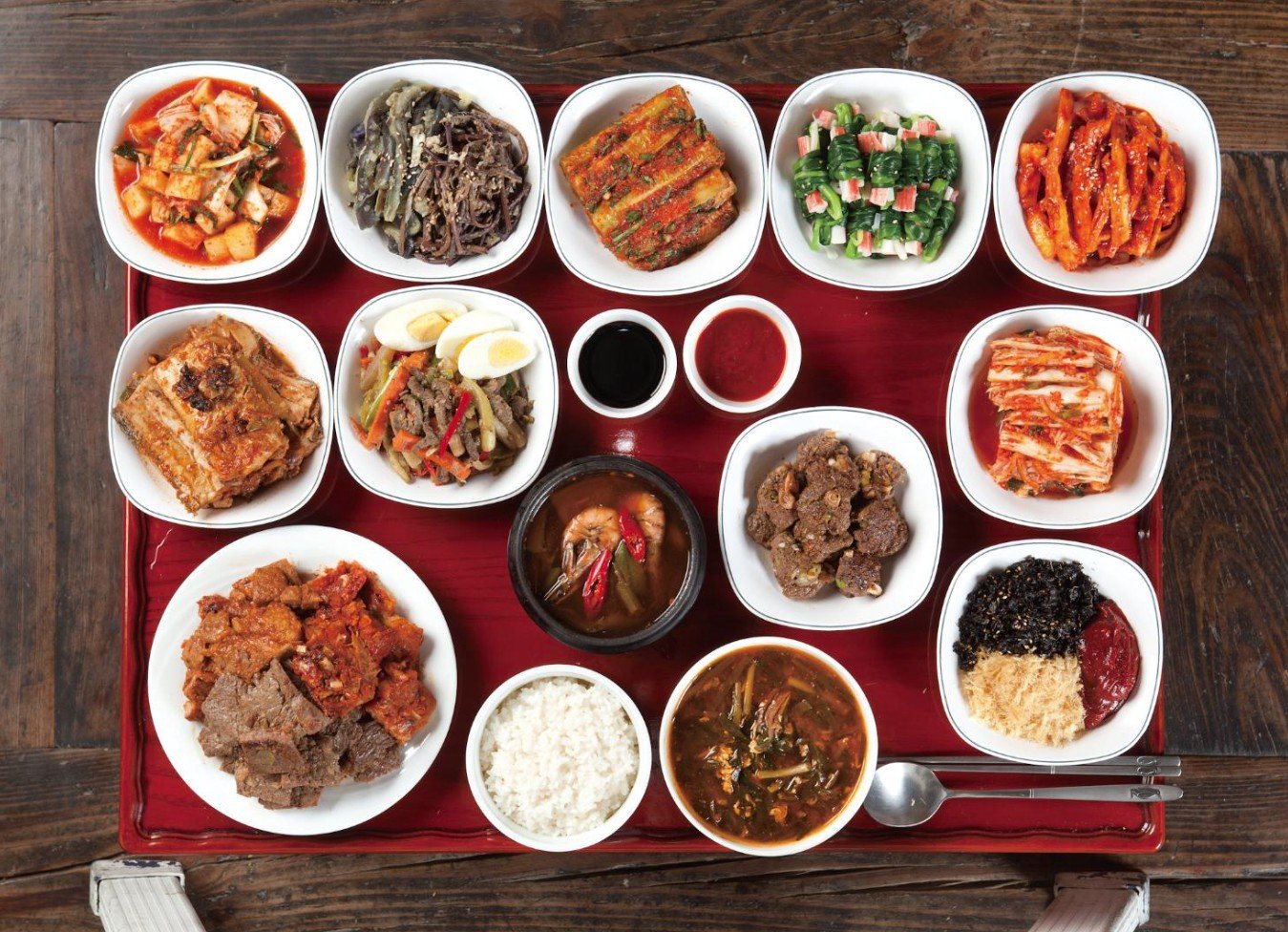
    A traditional Korean table setting, known as bansang, is organized around rice and soup.
    Side dishes are placed in small bowls, often with lids, called jaengcheop.

    The table is traditionally classified by the number of side dishes, excluding essential items such as:

    • Rice
    • Soup
    • Kimchi
    • Fermented sauces (jang)
    • Stews or hot dishes

    Based on the number of side dishes, Korean meals are described as:

    • 3-cheop table
    • 5-cheop table
    • 7-cheop table
    • 9-cheop table

    As the number of side dishes increases, the variety of kimchi, sauces, and fermented foods also expands.
    When preparing banchan, ingredients and cooking methods are carefully chosen so that no two dishes overlap in flavor or technique, and seasonal ingredients are always preferred.


    Banchan in Everyday Korean Homes

    Even today in Korea, most home meals follow this structure.

    If we compare it to the United States, it is similar to serving the main dish and all side dishes at the same time, rather than in courses.

    In Korea, almost everything on the table besides rice is considered banchan.
    However, the types of banchan served often change depending on the main dish of the day.

    One thing is constant: kimchi is always present.
    Beyond that, the variety depends on each household and the cooking skills of the person preparing the meal.

    For example, in my home, when we eat doenjang soup, the table usually includes:

    • Kimchi
    • Dried seaweed (gim)
    • Stir-fried fish cake
    • Spicy stir-fried pork
    • Soup served alongside rice

    Soups are also seasonal.
    In winter, we eat hot soups such as dried pollock soup, soybean sprout soup, or doenjang soup.
    If soup is not prepared, it is simply omitted—Korean meals are flexible, not rigid.


    What Does Banchan Mean in Daily Life?

    Banchan refers to any food eaten together with rice during a meal.

    Common expressions in Korean include:

    • Lunchbox side dishes
    • Spicy side dishes
    • Salty side dishes
    • Side-dish shops (banchan stores)

    People often say things like:

    • “There aren’t many side dishes today.”
    • “My favorite side dish is tofu made by my mom.”
    • “She has a great hand for cooking—every side dish she makes tastes good.”

    In Korean households, the number and quality of banchan often express care, celebration, or affection.


    What Are Dry Side Dishes (Mareun Banchan)?

    Dry side dishes are banchan prepared by stir-frying or simmering ingredients until there is little to no moisture.

    Examples include:

    • Stir-fried anchovies
    • Dried squid
    • Seasoned seaweed

    These dishes last longer and are easy to store, making them ideal for lunchboxes and everyday meals.
    Many Koreans prepare dry side dishes in large batches to save time during the week.


    What Is Banchangeori? (Side Dish Ingredients)

    Banchangeori refers to ingredients used to make side dishes.

    Common expressions include:

    • “We’re running out of side dish ingredients.”
    • “There’s nothing to make side dishes with.”
    • “I’m going to the market to buy ingredients.”

    Because food prices fluctuate, choosing seasonal ingredients is both economical and nutritious.


    What Are Mitbanchan? (Prepared Side Dishes)

    Mitbanchan are side dishes made in advance and stored for multiple meals.

    They are:

    • Easy to serve
    • Long-lasting
    • Essential for busy mornings

    Many Koreans rely on mitbanchan to quickly prepare breakfast or dinner without cooking from scratch.


    What Are Rice Side Dishes?

    Rice side dishes refer to any banchan eaten specifically to complement rice.

    In Korean meals, having three to five side dishes is considered standard, even for a simple home meal.
    This is why Koreans sometimes jokingly say, “There aren’t many side dishes today,” even when several dishes are on the table.

    Common expressions include:

    • “Delicious rice side dishes”
    • “There’s nothing to eat with rice”

    For many Koreans, the enjoyment of a meal depends on whether there is a side dish that pairs well with rice.


    Conclusion: Why Banchan Matters in Korean Food Culture

    Banchan is more than just side dishes.
    It represents balance, care, seasonality, and everyday life in Korean food culture.

    Rather than focusing on a single main dish, Korean meals are designed as a shared table, where rice and multiple side dishes come together to create harmony in flavor and nutrition.

    If you’re looking to try Korean side dishes, coming to Korea might be the best option. Many of these side dishes are made primarily with vegetables.

    You might ask, “What about the toxins in vegetables?” For hundreds of years, Koreans have used recipes designed to detoxify these vegetables, ensuring a safe and healthy nutrient intake.

    Don’t worry

    When eating in Korea, you’ll encounter a variety of side dishes. Especially when you’re eating your favorite side dish, if you say, “Auntie, please give me more side dishes,” they’ll give you more. It’s free, of course.