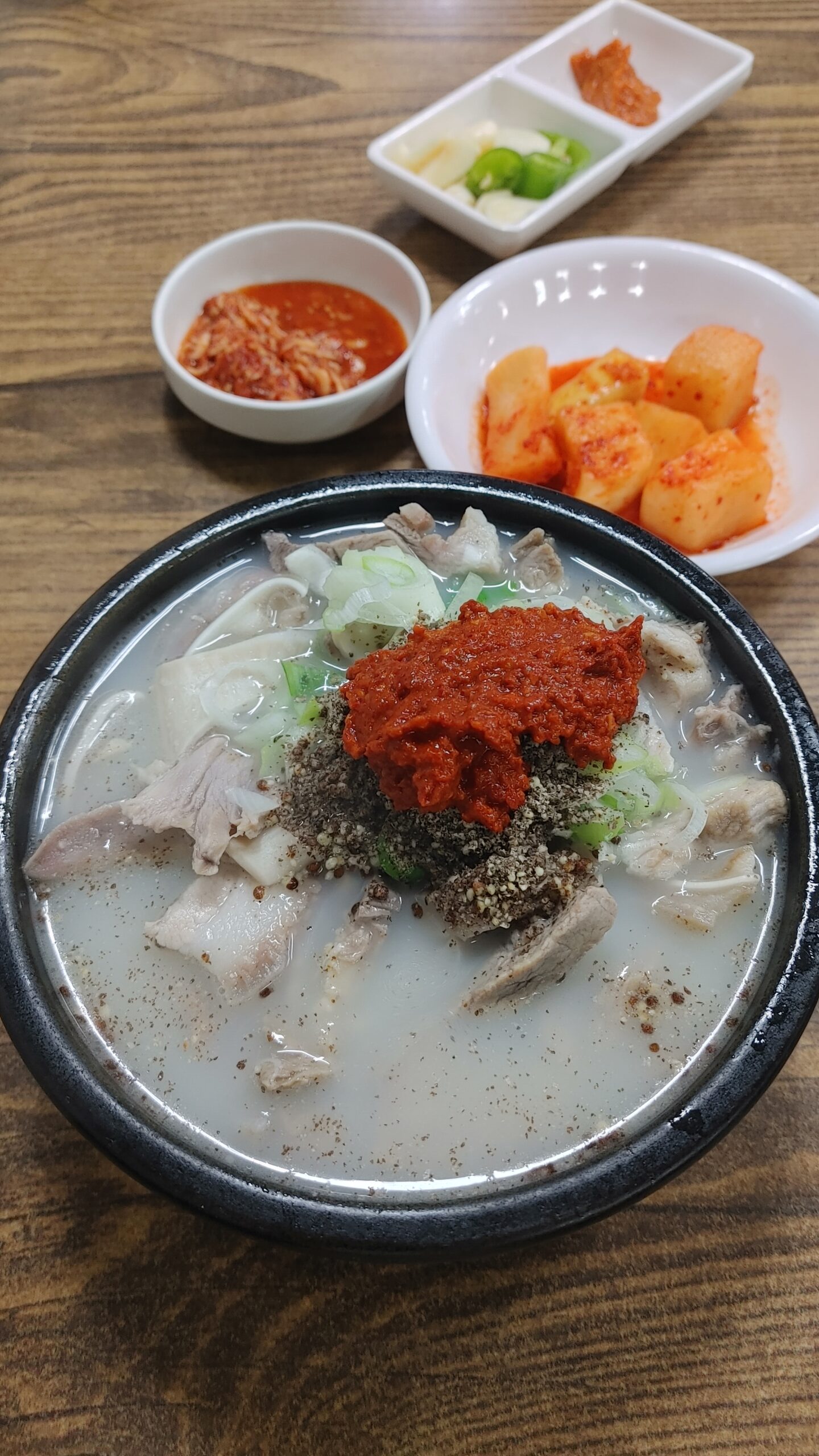
People remember places in different ways. Most of us build our memories of a space primarily through sight — which is why the first thing we do when we arrive somewhere new is pull out our phones and take photos. I used to be the same way. But my thinking has changed. When it comes to remembering a place, smell is just as powerful as sight.
Every Country Has Its Own Cuisine — and Korea Is No Exception
Every country in the world has its own unique foods. These dishes are shaped by a region’s distinct climate, the vegetables, produce, and meats that grow in that climate, and the cooking and preservation methods that climate demands.
As a native Korean, I don’t think of Korean ingredients as particularly extraordinary — they’re simply what I grew up with. But if I had to name a single element that defines the flavor of Korean food, it would be jang (장류): ganjang (soy sauce), gochujang (red pepper paste), and doenjang (fermented soybean paste).
Korea’s geography plays a major role too. Winters can drop to -15°C to -20°C, while summers climb above 30°C. Nearly half the country is covered by mountains and forests, and three sides of the peninsula border the sea. This landscape gave rise to a cuisine built on wild mountain greens used in namul (vegetable side dishes), and seasonings born from salt, meju (fermented soybean blocks), and the slow alchemy of fermentation — ganjang, doenjang, and gochujang.
The Taste of Jang: A Foundation Unlike Any Other
These days, most people buy their jang from supermarkets. But from my own memories growing up, ganjang, doenjang, and gochujang were the bedrock of every meal.
What many people don’t realize is that traditional jang is not sweet. Its sweetness sits far below that of refined sugar — which is why older Koreans so commonly say, “Food these days is too sweet.” Restaurant food has drifted that way, and in my experience, Seoul-style food tends to taste noticeably sweeter than the food from Gyeongsang Province where I’m from.
Korean Food and Its Closest Cousin
Among world cuisines, I find Japanese food to be the most similar to Korean. Dishes like katsu, udon, and various rice-based meals share a familiar rhythm — and indeed, Japanese katsu and udon are now commonplace in Korea as well.
Looking at what’s trending in Korea today under the label of “fusion,” the picture has shifted considerably. Traditional ingredients are increasingly being replaced or supplemented by cheese, imported vegetables (like cilantro), oyster sauce, and hot sauce. My reference point for “traditional Korean food” is rooted in what I ate growing up — a time before mayonnaise, oyster sauce, hot sauce, cheese, sausages, or imported spices were widely available or accessible.
What to Eat If You Want to Experience Real Korean Food
If you’re visiting Korea and want to experience its cuisine in its most authentic form, I recommend ordering jeongsik (정식) — a traditional Korean set meal.
The elements that make Korean food globally distinctive are, at their core: rice (in its many varieties), gochujang, doenjang, ganjang (aged), and jeotgal (salted fermented seafood). Add to that kimchi, sesame oil, and perilla oil, and you have the soul of Korean cooking. Each region adds its own layers, and seasonal ingredients grown on Korean soil bring a rotating variety of flavors throughout the year.
Even within a single category — say, gochujang — the taste and nutritional profile can vary enormously depending on how it’s made. Some gochujang uses wheat-based sweeteners; others don’t. The name is the same, but the flavor is a different world.
Rice as the Foundation
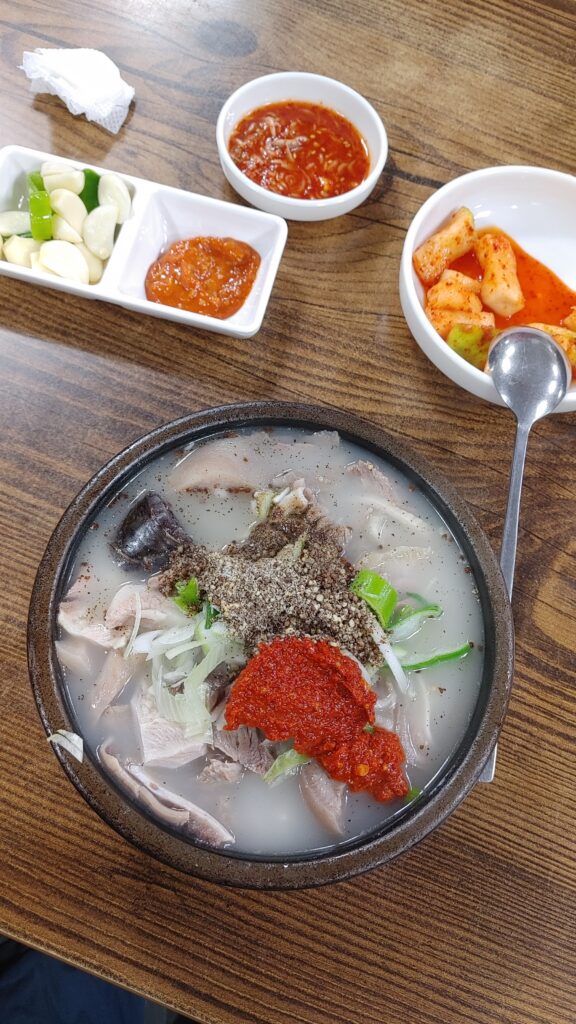
American staple meals center on bread. Japan and Korea both center on rice. If Korean food has a reputation for being healthy, it may be because it still uses fewer ultra-processed ingredients than many Western diets, and portion sizes — at least historically — have tended to be more modest. (That said, times have changed: my eldest son is nearly 190cm tall and close to 90kg. Maybe all that fried chicken when he was young had something to do with it — just kidding.)
The Real Secret: Fermentation and Microbes
The foundation of all Korean food is fermentation.
It wasn’t until I learned about microorganisms that I truly understood why I had always craved the deep, funky, complex flavors of Korean cuisine when I was away from home. The human body contains roughly 30 trillion human cells — but it also hosts about 100 trillion microorganisms, most of them living in the digestive tract. In purely numerical terms, the microbes outnumber us. They are, in a sense, the true residents of our bodies.
And yet, I had never really listened to them before.
The flavor that microorganisms create appeals not to the eyes, but to the nose and mouth — something primal, instinctive. And it’s not just taste; it’s the way your body responds after eating. Many cultures around the world intuitively reach for broths and fermented foods when they’re sick — vegetable soups, chicken broth — and Korean food has operated on this principle for centuries.
Korea’s four distinct seasons and rich biodiversity have given rise to a deeply developed fermentation culture. Each region has its own traditional foods, many of which — as Korea faces rapid aging and rural depopulation — are at risk of disappearing. Documenting where these foods come from and what they look like today matters more than ever.
The Scent That Tells the Story
Understanding the past and present of a cuisine opens up ideas for where it can go next.
What I find most compelling about Korean food is its distinctive aroma — the smell that comes from fermentation, from the microorganisms native to the Korean peninsula, from the land and sea that produce its ingredients, and from the accumulated wisdom of Korean mothers who have worked with these elements for generations. Follow that scent, and you’ll find the path Korean food is meant to travel.
The True Makers of Korean Cuisine
Ultimately, Korean food — like the traditional cuisines of any country — is the product of mothers cooking for their families, thinking about health, using what the land around them provides.
Korea, like the US and Japan, has its major food conglomerates: Samyang, CJ CheilJedang, Nongshim, Lotte Chilsung, Ottogi, Daesang, SPC Samlip. But even so, Korean shopping baskets still tend to lean more heavily toward vegetables than toward meat and fish compared to Western counterparts.
Regional Diversity: No Two Kitchens Are the Same
Korean food carries a strong national identity — but within that identity lives extraordinary regional diversity. Every region has its own way of making ganjang, doenjang, and gochujang, with recipes and flavors that differ from household to household. Think of how maple syrup varies from region to region in the United States, and you’ll get the idea.
KBS runs a long-running program called Koreans’ Dining Table (한국인의 밥상), which has aired over 745 episodes across more than a decade. What the show consistently reveals is that traditional Korean side dishes and regional foods don’t follow a fixed recipe — they follow a mother’s hand. The flavor depends on who is cooking.
And maybe that’s exactly what makes Korean food special: it belongs to a category called “food,” but no two versions of it taste exactly the same.
You Also like this
If U more know more korean food, refer our