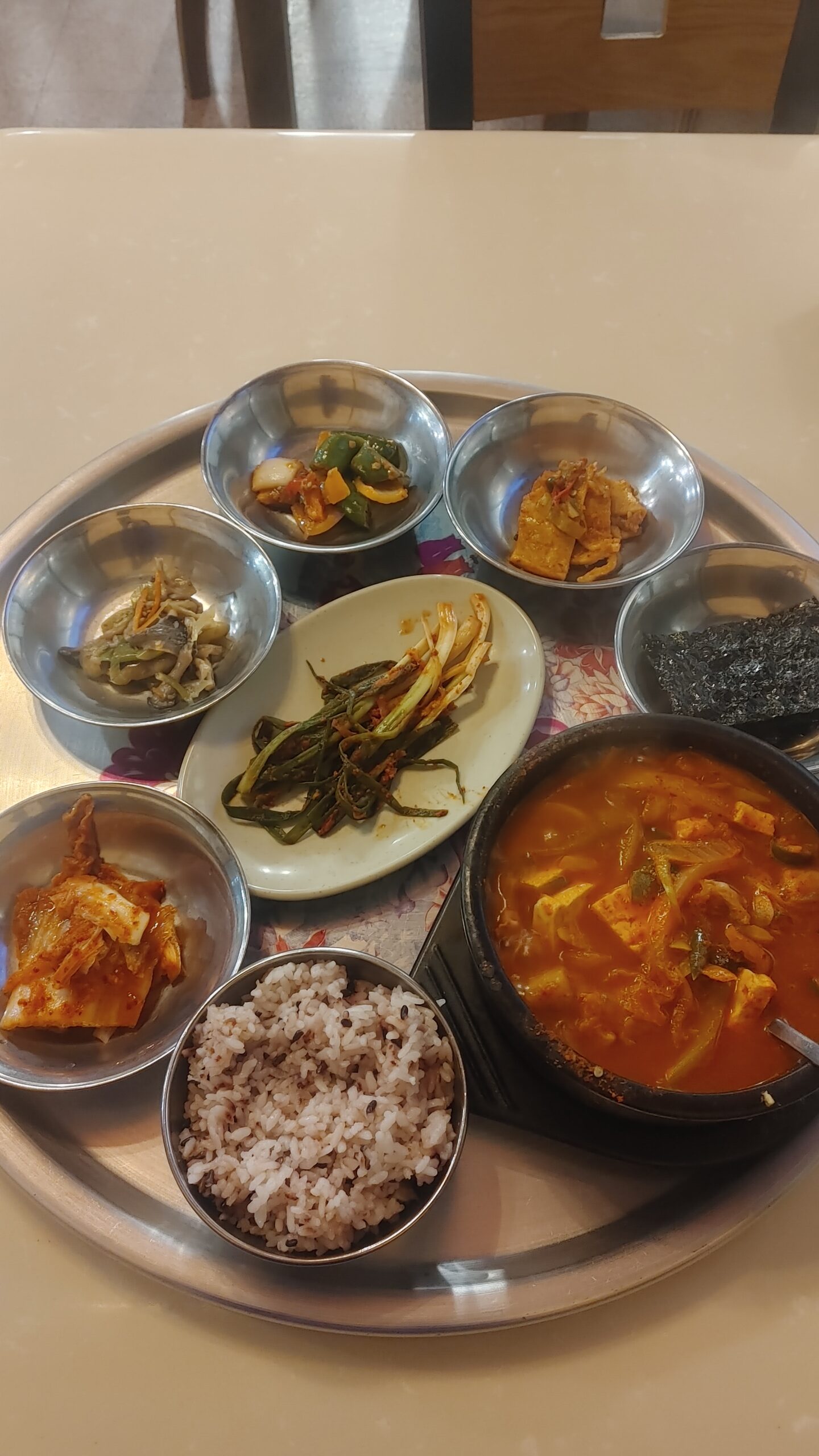
Rice isn’t just “food” in Korea
Rice isn’t just “food” in Korea—it has long functioned as the backbone of daily life, the economy, and even spiritual customs. In the Korean context, rice and cooked rice (bap) became more than a staple: they became a symbol of stability, prosperity, and the ability to live well.
Memory
During my mother’s time, barley rice was the staple food. Later, after I was born and went through elementary school, rice became the main meal.
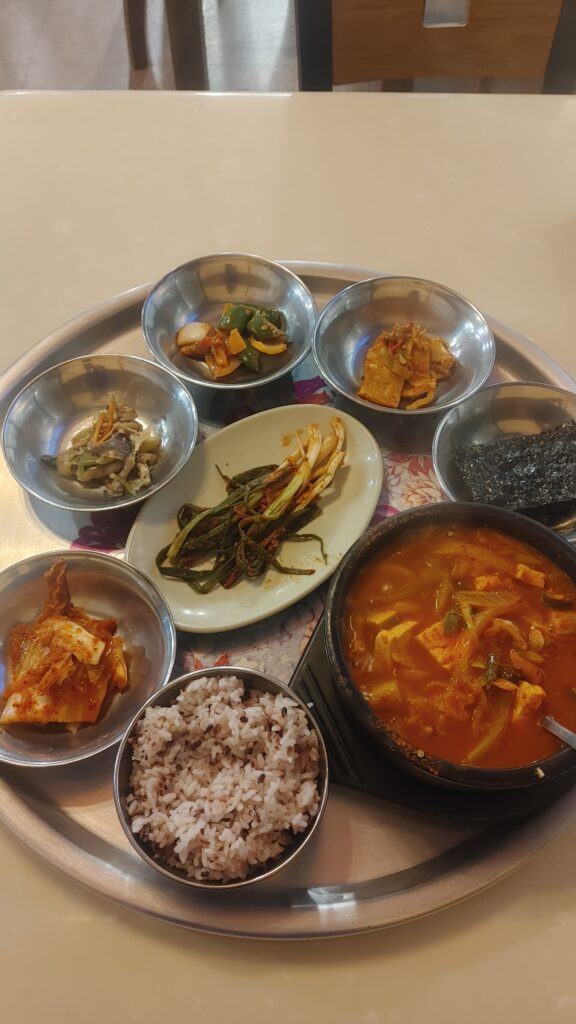
Back then, six families would sit around and eat rice, kimchi, and two or three other side dishes, with two or three side dishes.And during my time with my mother, everyone farmed rice. We either grew rice in the countryside or rented land and received rice in return once a year. We usually received about 180kg of rice.
Thus, rice became my staple food while I was growing up in Korea.
Rice as Korea’s Most Important Staple Food
Historically, Koreans did not always eat rice as their main staple. Early diets relied heavily on barley and other grains. Over time, however—especially after rice production expanded—rice became the core of the Korean table.
Even today, despite modern diets including more wheat-based foods, meat, and dairy, Koreans still commonly describe energy and vitality as “bap power” (밥심). This reflects how rice remains the default image of a real meal: a “proper meal” often means a bowl of rice with accompanying dishes.
Rice as a Measure of Wealth and Economic Value
One of the script’s strongest points is that rice historically worked like a currency and price standard. In traditional society, rice served as the practical benchmark for value: goods and services were often measured in how much rice they were worth.
This is why older expressions describe rice as the “king” of prices—because it wasn’t merely consumed; it was the standard unit of survival and economic activity. When a society treats a food as its clearest indicator of wealth, that food becomes deeply embedded in everyday life and social status.
The script also highlights a cultural “ideal life” image: glossy white rice, meat soup, warm housing, and proper clothing—an ideal that shows rice as the starting point of comfort and success.
Rice in Life-Cycle Rituals and Korean Spiritual Culture
Rice is present throughout a person’s life in Korea—symbolically and practically.
- Rice is tied to nourishment from the start, because even breastfeeding is connected to the mother’s ability to eat well.
- Rice appears at death rituals too: the script mentions practices meant to ensure the departed does not travel hungry.
- In ancestral rites, rice is central—offered as a core item on the ritual table.
These customs reinforce a strong cultural logic: rice is not just daily fuel; it becomes a sacred food representing life, continuity, and respect for ancestors. This is also why traditional farming communities treated newly harvested rice with great reverence—sometimes storing it carefully and offering it in ritual-like ways.
Why Rice Fit Korea’s Environment (Even If It Wasn’t Easy)
Rice’s origins are often associated with warmer, subtropical regions, so the Korean Peninsula was not the easiest place for rice farming to dominate. The key obstacle was always water.
Rice requires:
- stable irrigation,
- paddies that can hold water,
- and systems (reservoirs, canals, storage) that keep supply reliable.
That’s why rice becoming the main staple took time. It wasn’t simply a matter of preference; it depended on infrastructure and farming methods that could support large-scale paddy cultivation.
The Turning Point: Transplanting and Irrigation Systems
A major historical shift discussed in your script is the expansion of transplanting rice seedlings (모내기 / 이앙법).
Transplanting offered clear advantages:
- higher yields,
- less weeding and labor in some stages,
- and the possibility of more productive farming cycles.
But it also carried a major risk: transplanting requires reliable water at the exact right time. If rainfall or water supply failed, the crop could collapse. For a state managing taxes, storage, and stability, this “high risk, high return” method could be seen as dangerous.
The script’s key idea is that once irrigation and water-management systems improved—particularly during periods when these systems were expanded nationwide—transplanting could spread more safely. When that happened, rice production increased dramatically, and rice became more achievable as a nationwide staple.
Rice Abundance and Social Change
Once yields rose, the impact wasn’t only culinary—it reshaped society.
When food becomes more stable and abundant:
- communities can support more people,
- labor can diversify,
- and social energy increases (“people become generous when granaries are full”).
The script connects rice expansion to broader developments such as:
- stronger village cooperation (collective labor systems),
- stimulation of commerce and crafts,
- and an overall sense of renewed stability when harvests improved.
This helps explain why rice is central to Korean meals not only because it tastes good, but because it became the foundation of social organization and everyday security.
Modern Korea: From Rice Shortages to Self-Sufficiency
Your script also covers a modern turning point: yield increases through new varieties and agricultural policy, culminating in national rice self-sufficiency in the 1970s.
At the same time, modern Korea experienced a shift:
- from “more rice” to “better rice,”
- from survival to preference and quality.
This period also included policies encouraging mixed grains or flour-based meals to manage supply and demand—something many people still remember through school lunch and “mixed meal” campaigns.
Even as rice consumption later declined with Western-style diets and diversified staples, rice retained a unique national importance because it connects directly to food security.
Rice and Food Security: Why It Still Matters Today
The script emphasizes that rice cannot be treated like a normal commodity, because staples are strategically important. In times of global instability, staples behave differently in markets: a small drop in supply can cause massive price spikes.
That is why rice remains central in Korea even when people eat less of it:
- it is still a “last stronghold” crop for food security,
- it supports national resilience,
- and it carries cultural meaning beyond calories.
In Korean culture, rice is both a meal and a safeguard.
Folklore and Moral Meaning Around Rice
Finally, your script uses folklore (like stories of “rice rocks” that stop producing when greed appears) to show how rice became tied to values such as:
- restraint,
- gratitude,
- and respect for labor.
Unlike something imagined as a limitless gift, rice is portrayed as a product of repeated human effort—something earned through work and therefore something that should not be wasted. This moral framing further strengthens rice’s symbolic power in Korean meals.
Conclusion: Why Rice Defines Korean Meals
Rice became central to Korean meals because it sits at the intersection of:
- daily nourishment (a real meal = rice),
- economic value (rice as a standard of wealth),
- ritual life (ancestral rites and life-cycle customs),
- agricultural history (water systems and transplanting),
- and national security (a strategic staple crop).
In short, rice is central to Korean meals not only because Koreans eat it, but because rice helped shape the structure of Korean life itself.
You can find detailed information about the origin of Korean rice here. – KBS
Want to know the origins of Korean food, as told by Koreans?
Leave a Reply