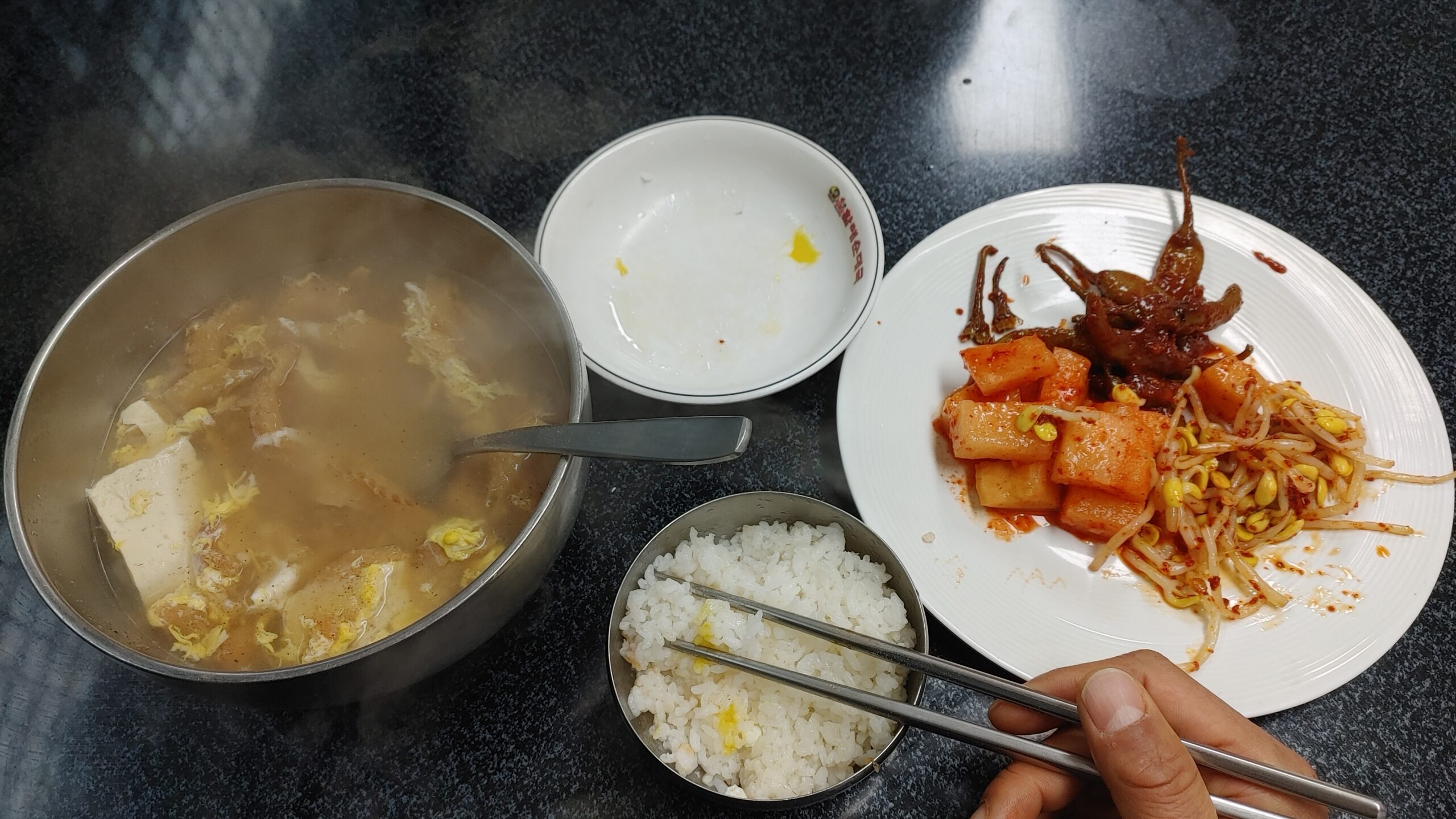
Korean meals almost always include soup, and many people wonder why Koreans eat soup with every meal.
Why Koreans Eat Soup with Every Meal
Many people wonder why Koreans eat soup with every meal, especially when they first experience Korean food culture.
There’s a saying in Korea that “you can only really have a meal if there’s soup.” It may sound a bit exaggerated, but for many Koreans, a meal without soup somehow feels incomplete.
Why is that?
First, Korean meals are centered around rice. Rice by itself is quite plain and dry, so eating it alone can feel a bit difficult. Soup helps moisten the rice and makes it easier to eat. Taking a spoonful of rice with some soup naturally creates a better balance in both texture and taste.
Also, soup plays a role in balancing the overall meal. Korean food often includes various side dishes, some of which can be salty or strongly flavored. Soup helps to soften those flavors and refresh the palate in between bites.
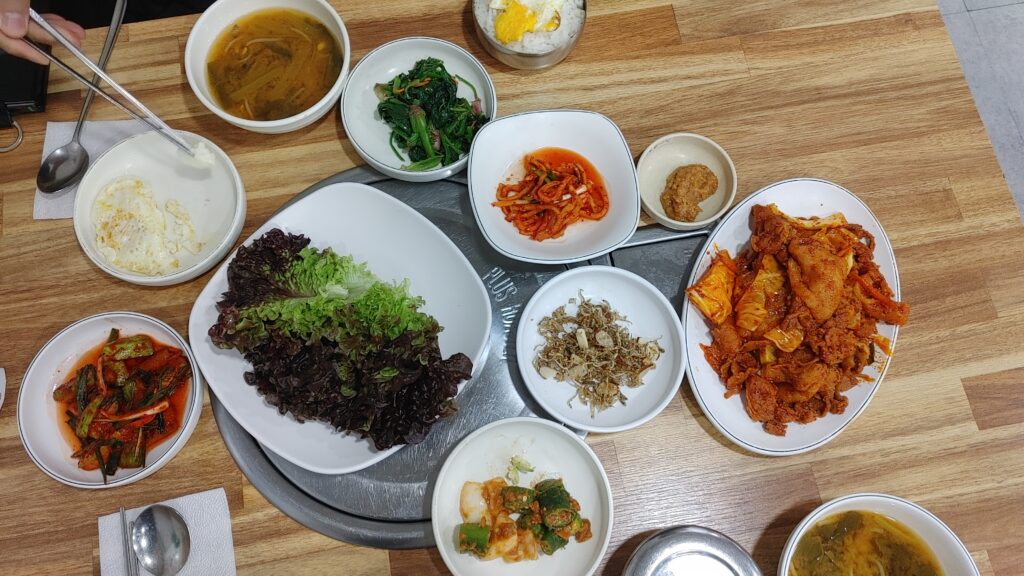
Another reason is habit formed over a long period of time. Traditionally, Korean meals have always consisted of rice, soup, and side dishes. This structure has been passed down for generations, becoming a standard way of eating. Because of this, many people feel that something is missing if soup is not present.
There is also a practical side. Soup can be made with a wide variety of ingredients—vegetables, tofu, meat, or seafood—making it a convenient way to add nutrition to a meal. A single pot of soup can provide warmth, hydration, and nourishment all at once.
For many Koreans, a meal simply doesn’t feel complete without soup.
In many cases, soup or stew is placed at the center of the table and shared. This naturally creates a sense of togetherness, as everyone eats from the same dish while having their own bowl of rice. Meals become not just about eating, but about sharing and connecting.
Because of all these reasons, soup is not just an optional side in Korean cuisine. It is an essential part of the meal, something that completes the experience of eating.
So when Koreans say, “You need soup to have a proper meal,” it’s not just a preference—it reflects a long-standing cultural habit.
In Korean cuisine, soup is not served as a starter, but as a main part of the meal alongside rice.
In Korean cuisine, soup is served as part of the main meal alongside rice.
What should I have for dinner tonight?
Even though I am Korean, I leave work habitually pondering: “What soup should I make?” and “Since I already have the usual side dishes, should I make one unique one?”
Since side dishes can be eaten multiple times, I do not prepare a new dish for every meal. Even when I make soup, it is not just eaten once and then finished; it is often eaten again at the next meal.
Korean food consists of soup, rice, and various seasonal side dishes. In a sense, you can think of Korean food as the raw ingredients grown in Korea throughout the four seasons.
“Want to learn more about Korean food culture?”
- What Is Banchan? Understanding Korean Side Dishes
→ Discover the variety of small dishes that complete a Korean meal. - Why Is Rice So Important in Korean Food?
→ Learn why rice is the foundation of almost every Korean meal. - How Korean Meals Are Structured (Hansik Explained)
→ A complete guide to how a traditional Korean table is set.
Leave a Reply