
Can You Bring Soy Sauce on a Plane?
Korean soy sauce (ganjang), gochujang, and doenjang are all classified as liquids, which means they cannot be carried in your cabin baggage. Only containers of 100ml or less are permitted, and they must all fit inside a single clear zip-lock bag (1L size). Standard commercial bottles (500ml, 1L, etc.) cannot be brought on board as carry-on items.
Why Healthy Sauces Matter
People all over the world want to eat healthier food. While budget constraints don’t always make that easy, most people still prefer healthy, wholesome sauces and foods when they can. Personally, I define healthy food as something grown without chemical fertilizers or pesticides — made as close to nature as possible, with minimal processing.
The Main Types of Korean Soy Sauce
There are essentially two major categories of Korean soy sauce: yangjo ganjang (brewed soy sauce) and jin ganjang (dark soy sauce). There is also a third type worth mentioning — guk ganjang (soup soy sauce).
Korea produces an enormous variety of soy sauces. Some products carry the name “ganjang” in name only, while others simply mimic the flavor of soy sauce. This comes down to production costs and pricing — if a product is too expensive, consumers hesitate to buy it, so manufacturers find a middle ground. Of course, the taste our parents cooked with when we were young also plays a decisive role in what we reach for at the store. If you love Korean food or want to bring authentic Korean flavor into your kitchen, this guide should help.
What Is Yangjo Ganjang (Brewed Soy Sauce)?
Yangjo ganjang is made by mixing soybeans or defatted soybeans with grains such as barley, rice, or wheat, adding koji mold, and then fermenting and aging the mixture in brine for six months to over a year. Unlike traditional Korean hansik ganjang, it is fermented with wheat, giving it a distinctively clean, mildly sweet taste and rich aroma. Most of the side dishes (banchan) you eat when visiting Korea are likely seasoned with yangjo ganjang.
The production process involves naturally fermenting soybeans and grains using microorganisms (koji mold). However, for mass production, the natural fermentation time is often shortened through mechanical processes. From a health perspective, the amino acids and sugars produced during fermentation create a beautifully balanced umami flavor and fragrance. Because heat can alter its taste and aroma, it is best suited for dishes eaten raw — such as dipping sauce for sashimi or jeon (Korean pancakes), oriental-style salad dressings, and seasoned vegetable dishes (namul).
What About Jin Ganjang (Dark Soy Sauce) and Mixed Soy Sauce?
Most commercially available jin ganjang is actually a mixed soy sauce (honhap ganjang) — a blend of yangjo ganjang and acid-hydrolyzed soy sauce produced through a chemical process. The key difference from naturally brewed soy sauce lies in the production method: the fermentation period is shorter, and the overall production time is significantly reduced compared to other types.
Mixed soy sauce is more heat-resistant than yangjo ganjang, making it the preferred choice for stir-fries and braised dishes. Compared to guk ganjang, it is darker in color and less intensely salty.
Guk Ganjang (Soup Soy Sauce / Joseon Ganjang)
Guk ganjang is a traditional Korean soy sauce made by fermenting meju (fermented soybean blocks) in salted water. It is primarily used to season soup-based dishes. Its color is lighter and its saltiness more pronounced, making it ideal for seasoning broth without darkening the color of the soup.
My mother made ganjang every year and tended to it with great care. We called it joseon ganjang at home — an old and beloved name. She would sometimes wipe the earthenware jars with a clean white cloth if even a speck of dust settled on them. To her, ganjang was something precious — almost like a family treasure, a labor of love for our health. It is no exaggeration to say that guk ganjang has walked alongside Korean history itself.
For reference, in Korea, joseon ganjang, guk ganjang, and hansik ganjang all refer to the same thing. Growing up, my mother always called it joseon ganjang.
How Is Traditional Korean Soy Sauce Made?
The core ingredients of authentic Korean soy sauce are simple: meju (fermented soybean blocks made from Korean-grown soybeans), Korean sea salt, and time.
Here is how meju is made: soybeans are boiled or steamed until fully cooked. Misshapen beans are removed. The cooked beans are then compressed into a block — in the old days, they were wrapped in cloth, laid on plastic sheeting, and stamped underfoot to crush the beans and shape them into a mold. Today, hands are used instead of feet, but the process is essentially the same. The reason beans are crushed is to make fermentation easier. Once shaped, the blocks are bound with rice straw. The straw is key — it carries beneficial bacteria that transfer to the beans, encouraging the growth of healthy, edible mold.
The meju blocks are then hung in a well-ventilated, shaded space. Over time, mold develops and the blocks become meju. They are then wrapped in blankets and kept in a warm place for 24 to 50 days for a second fermentation. To maintain a stable temperature, families used to place meju in the room where they slept, covering it with clean cloth and blankets. I still remember walking into the room and being hit by that powerful meju smell. I can no longer easily find that smell today — but I miss those days.
When that smell filled the room, it meant the time to make ganjang or doenjang was near. All of this followed Korea’s 24 traditional seasonal divisions (jeolgi), each step proceeding in its natural order. Worth noting: in Korea, ganjang and doenjang are never made in spring or summer.
Meju production begins after the soybean harvest in autumn — typically around the 10th or 11th month of the Korean lunar calendar.
Once the meju is ready, it is placed in an earthenware urn (jangdokdae), seasoned with salt and water. During the doenjang-making process, pieces of charcoal are also added — in Korean tradition, charcoal symbolizes purification and protection from bad energy. Over time, the meju inside the urn is broken apart, and with more time, what remains becomes the doenjang we eat. Of course, every family has its own slight variations, but the essence is the same — and every family’s ganjang and doenjang tastes a little different.
For a step-by-step visual guide, visit: https://blog.naver.com/pyoun0181/223835920969
Recommended Korean Soy Sauces Available at Stores
There are countless varieties of commercially available Korean soy sauce — every region has its own brands and styles. Among them, here are some products that closely follow traditional Korean production methods.
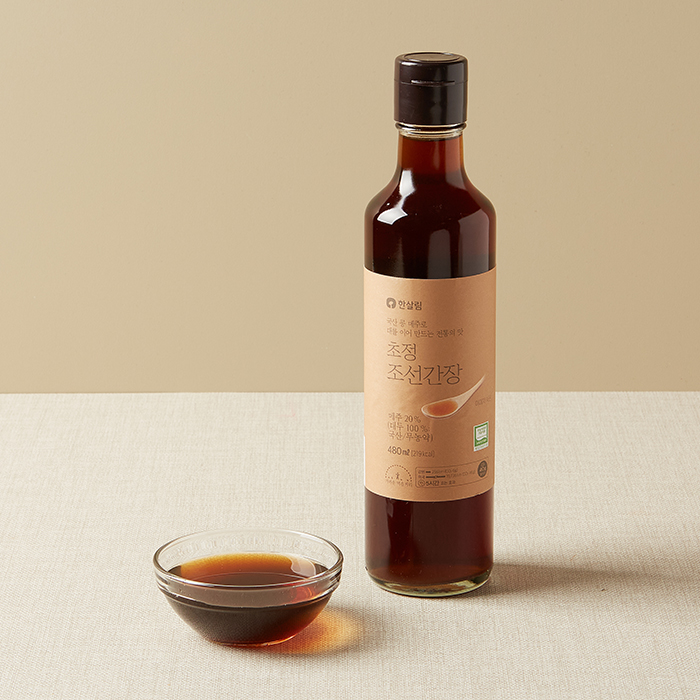
Hansalim Joseon Ganjang (Water 60% + Meju 20% + Salt 20%) Made with real meju. The only ingredients are meju, salt, and water — exactly how authentic Korean soy sauce should be. Classified as joseon ganjang / guk ganjang.
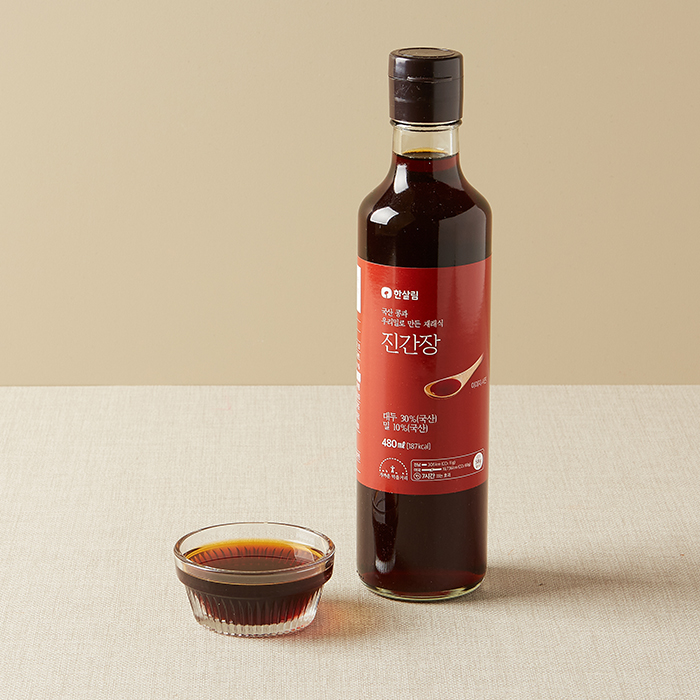
Hansalim Jin Ganjang (Soybeans + Sea salt + Wheat 10% + Koji) A genuine brewed soy sauce made entirely from domestic Korean ingredients, using traditionally fermented meju. Classified as jin ganjang / yangjo ganjang.
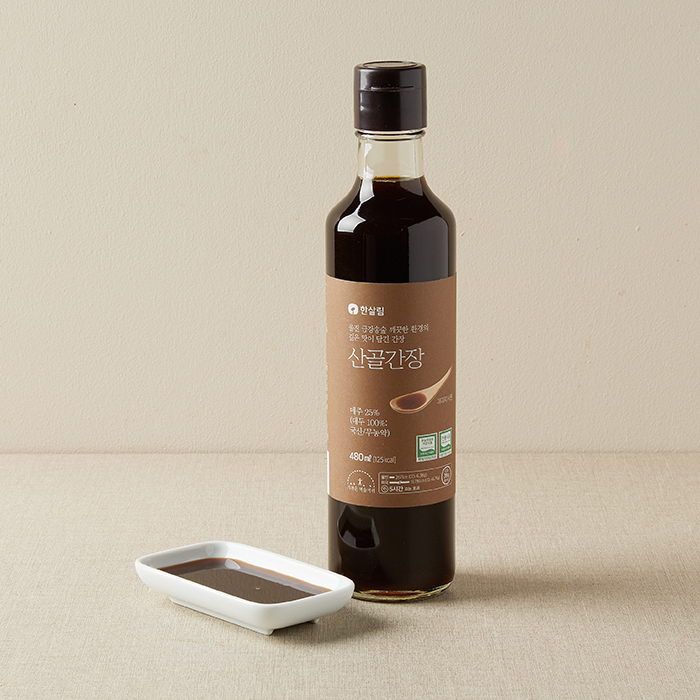
Hansalim Sangol Ganjang (Mountain Valley Soy Sauce) (Purified water 57% + Meju 20% + Solar sea salt 18% + Jujube) A hansik (Korean-style) soy sauce made entirely from domestic ingredients. You could call this the most original form of Korean soy sauce — jujube adds a subtle depth.
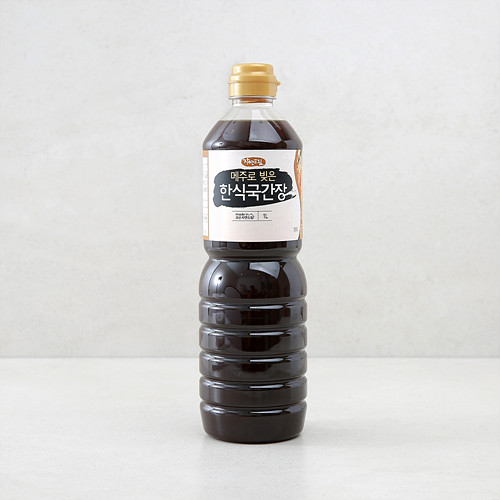
Jayeonderim Meju-Brewed Hansik Guk Ganjang Made from Korean soybeans and meju, purified water, alcohol, and koji. A traditionally-inspired guk ganjang for use in soups and broths.
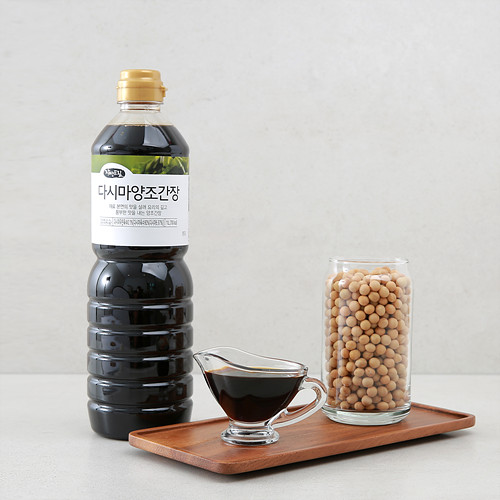
Jayeonderim Yangjo Ganjang (Brewed Soy Sauce) Ingredients include purified water, soybeans, wheat, sea salt, oligosaccharides, alcohol, organic raw cane sugar, licorice extract, kelp broth, yeast extract, and koji. Koji (종국) refers to pure cultured mold spores used as a fermentation starter in soy sauce, doenjang, and cheongju brewing. This one has noticeably richer flavor.
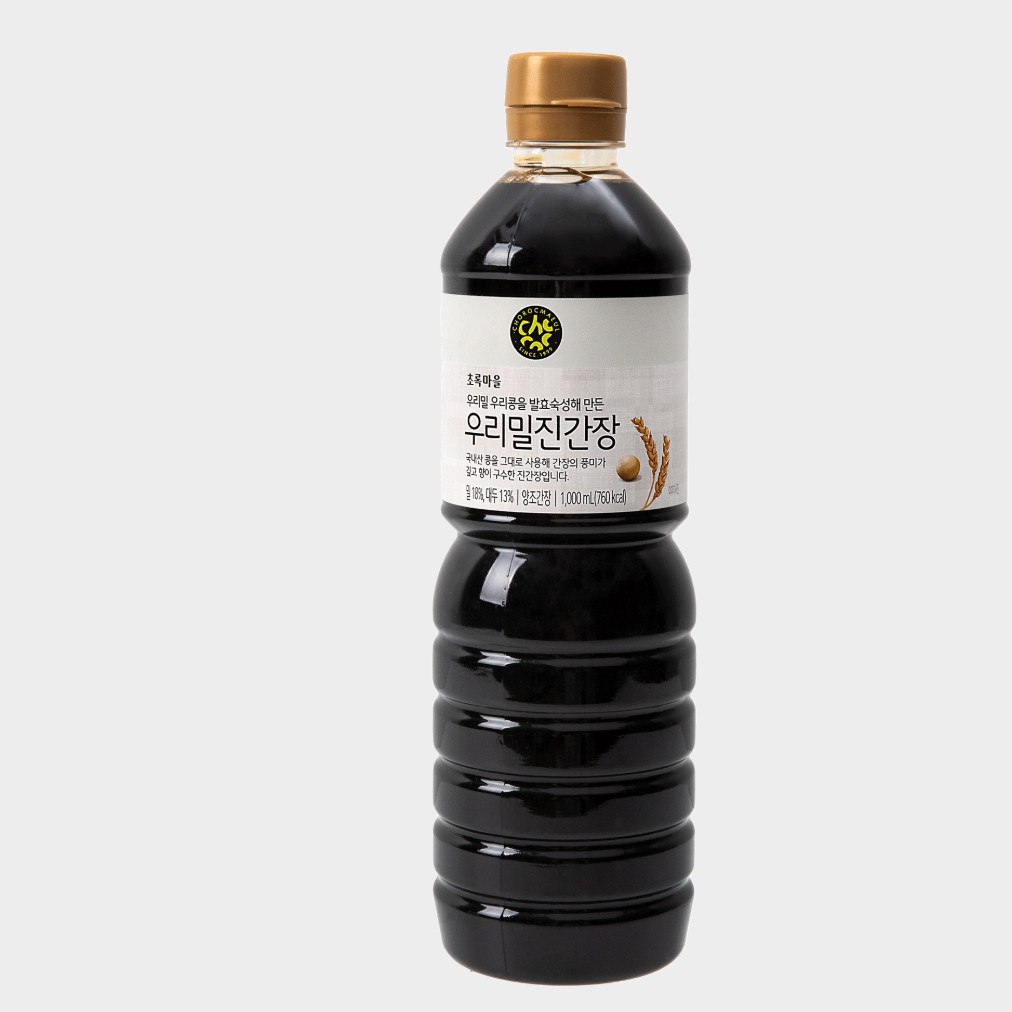
Chorong Maeul Our Bean Jin Ganjang (Purified water, domestic wheat, refined salt, soybeans, malt syrup (rice, malt), alcohol) A yangjo ganjang versatile enough for kimchi jjigae, doenjang jjigae, and as a dipping sauce for pan-fried dumplings (gun mandu).
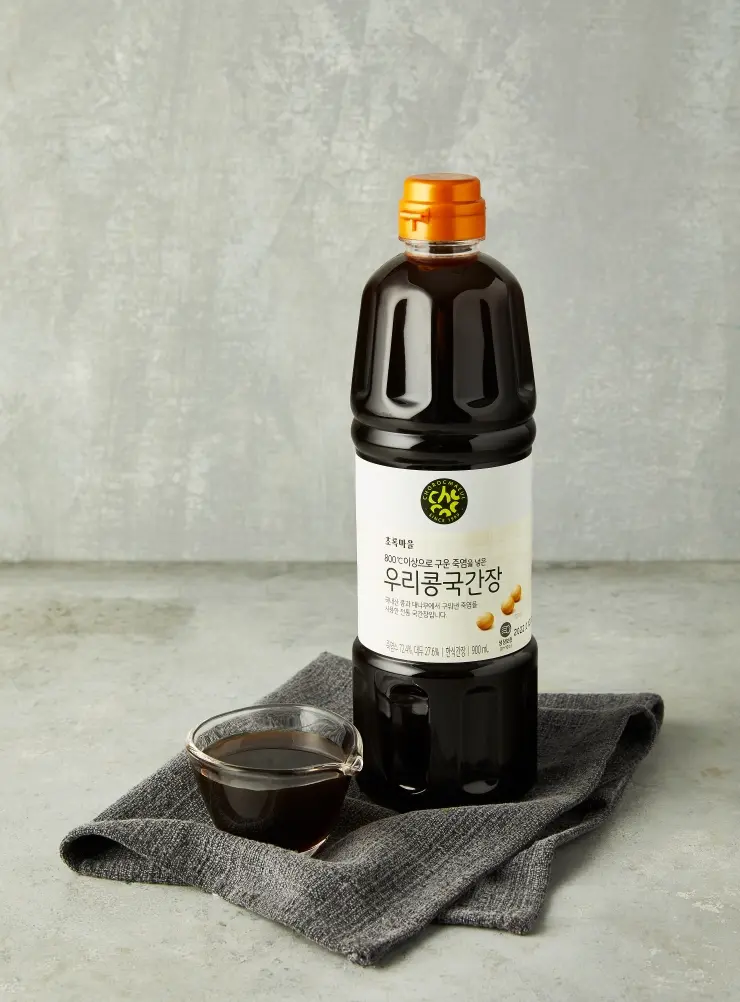
Chorong Maeul Our Bean Guk Ganjang (Bamboo salt water 72.4% + Domestic soybeans 27.6%) A hansik ganjang with a distinctly salty flavor profile, made through a traditional fermentation process.
Tips for Buying Korean Soy Sauce
- For kimchi jjigae, doenjang jjigae, stir-fries, and braised dishes → choose jin ganjang
- For clear, light soups and broths → choose joseon ganjang (hansik ganjang)
- If you just want one bottle that does it all, jin ganjang is the more versatile everyday option
One bottle lasts a long time thanks to a generous shelf life, so you can use it whenever you need it.
In simple terms, Korean soy sauce is somewhat similar to Chinese doubanjiang — but Korean ganjang comes in three distinct types, each with its own role. It also makes a wonderful gift.
A Note on Price
The soy sauces introduced here may cost roughly twice as much as budget alternatives — around $10 to $20 USD per bottle. That price reflects the quality of ingredients, the time invested in production, and the craftsmanship behind each bottle. They are available at major Korean supermarkets and specialty organic grocery stores.
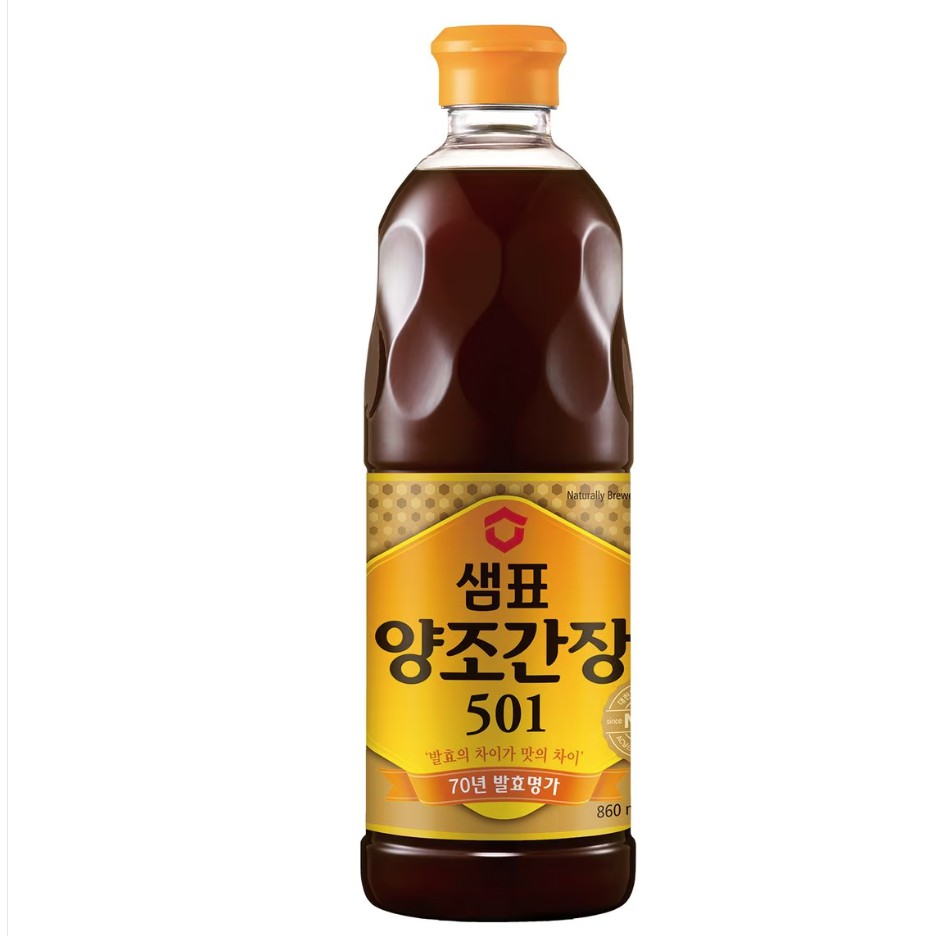
Sempio Yangjo Ganjang If you’re looking for a more accessible everyday option, Sempio Yangjo Ganjang is widely used by Korean households and offers excellent value for the price — also a solid gift choice.
If you are interested in bulk purchasing or sourcing Korean soy sauce outside of Korea, Kaliman, a K-food specialty distributor, handles global distribution.
One reason Korean soy sauce is rarely shipped internationally via parcel is that, relative to its price, it is a liquid — which significantly increases shipping costs.
every source is vegans. some product. In Korea, Certain products are sold via membership
FAQ — Korean Soy Sauce
Q1. What is the difference between yangjo ganjang, jin ganjang, and guk ganjang?
Korean soy sauce comes in three main types. Yangjo ganjang is naturally brewed with soybeans and grains, giving it a clean, mildly sweet flavor — best used raw or for dipping. Jin ganjang (often a mixed soy sauce) is more heat-resistant and suits stir-fries and braised dishes. Guk ganjang (also called joseon ganjang or hansik ganjang) is the most traditional, made only from meju and salt water — lighter in color but strongly salty, ideal for clear soups and
Q2. Which Korean soy sauce should I use for kimchi jjigae or doenjang jjigae?
For cooked dishes like kimchi jjigae, doenjang jjigae, stir-fries, and braised dishes, jin ganjang is the recommended choice. It holds up well to heat without losing its flavor.
Q3. What is meju, and why does it matter in Korean soy sauce?
Meju is a fermented soybean block — the foundation of authentic Korean soy sauce. Soybeans are cooked, shaped into blocks, bound with rice straw, and left to ferment naturally. The straw introduces beneficial bacteria that create healthy mold, which drives the fermentation process. Soy sauces made with real meju are considered the most traditional and health-conscious
Q4. Can I bring Korean soy sauce on a plane?
Not in your carry-on. Like all liquids, soy sauce is subject to the 100ml limit per container, and all containers must fit in a single 1L clear zip-lock bag. Standard bottles (500ml, 1L) cannot be brought as carry-on items — pack them in checked luggage instead.
Q5. Is Korean soy sauce healthy?
Traditional Korean soy sauces made through natural fermentation — especially those using real meju, Korean sea salt, and no artificial additives — are considered a wholesome condiment. The fermentation process produces amino acids that contribute to rich umami flavor. For the healthiest option, look for products with simple ingredient lists: meju, salt, and water.
Q6. What Korean soy sauce brands are recommended for quality?
For quality and traditional production methods, Hansalim Joseon Ganjang, Hansalim Sangol Ganjang, Jayeonderim Hansik Guk Ganjang, and Chorong Maeul Our Bean Ganjang are all solid choices. For an everyday, budget-friendly option, Sempio Yangjo Ganjang is widely used in Korean households.
Q7. How much does good Korean soy sauce cost?
Quality traditionally-made Korean soy sauces typically range from $10 to $20 USD per bottle — roughly twice the price of budget alternatives. The higher cost reflects premium domestic ingredients, longer fermentation time, and traditional craftsmanship.
Q8. Is Korean soy sauce good as a gift?
especially the premium organic varieties. They are unique, culturally meaningful, and useful in the kitchen. Just remember to pack them in checked luggage if you’re traveling by air, as liquid restrictions apply to carry-on bags.
Q9. Where can I buy authentic Korean soy sauce outside Korea?
Major Korean supermarkets and specialty organic grocery stores carry most of these brands. For bulk purchasing or international sourcing, Kaliman is a K-food specialty distributor that handles global distribution.
Q10. Is Korean soy sauce vegan-friendly?
the traditional Korean soy sauces featured in this article are all plant-based, made from soybeans, salt, water, and grains. No animal products are used in their production.
Leave a Reply