
If you visit Korea, this is something worth knowing.
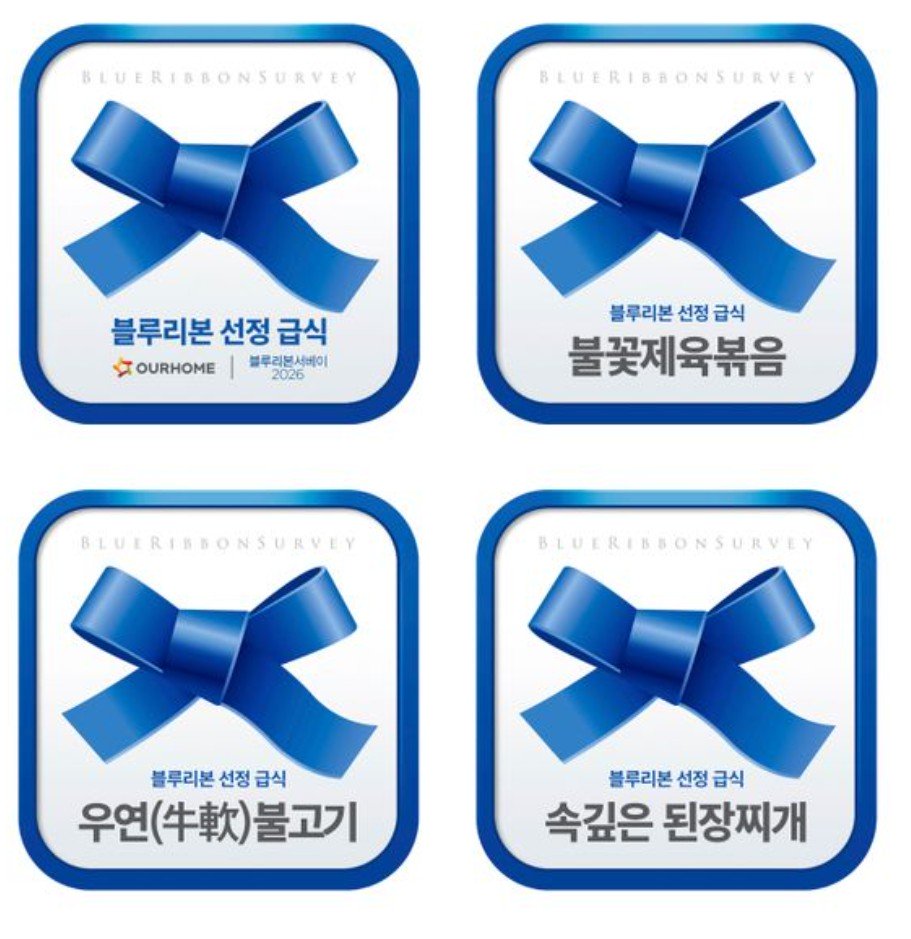
In Korea, there is a system that verifies which restaurants meet a certain level of quality. It’s called the Blue Ribbon, much like the Michelin Guide. If you see one displayed at a restaurant’s entrance or inside (attached as a sticker), you can take it as a sign that the place is good.
Korea’s first restaurant guide
The Blue Ribbon Survey (블루리본 서베이) is South Korea’s first restaurant guide, established in November 2005.
Korea has a long history and its own food culture, but its restaurant history is relatively short. Unlike other countries with restaurants hundreds of years old, Korea’s dining-out culture really began after the 1950s. When Blue Ribbon started in 2005, professional food criticism had little foundation and standards for judging taste were still vague. Since then, the guide has built objective restaurant evaluation standards for Korea based on accumulated reviews.
How it works
Blue Ribbon was the first in Korea to use a survey method that gathers the opinions of many people. Evaluations are collected through the guide’s own website (www.bluer.co.kr) with participation from the general public, and the results are shown as a number of ribbons rather than scores. Ordinary reviewers can award at most two ribbons, while three ribbons can only come from expert evaluators.
Reviews are collected on the website all year round, and based on that data, an updated Blue Ribbon Survey book is published once a year. For restaurants included in the book, the website shows the year they were listed. There is also a Blue Ribbon app.
For the 2026 Seoul edition, more than 70,000 readers took part, and 43 restaurants earned three ribbons. 301 restaurants received two ribbons and 663 received one.
What the ribbons mean
Every restaurant in the Blue Ribbon Survey is considered worth visiting. One ribbon means worth making time to visit again, two ribbons mean worth recommending to others, and three ribbons mean showing the most outstanding skill in its field.
Taste differs from person to person, and a restaurant may cook better on some days than others. Having more ribbons means a restaurant is less likely to be affected by these variables. A three-ribbon restaurant is more likely than a one-ribbon restaurant to be called delicious by many people, and to serve satisfying food whenever you visit.
Blue Ribbon certification stickers are distributed to restaurants included in the guide.
But taste comes from the kitchen
There was no such system in Korea in the past. It has already been 20 years since Blue Ribbon was introduced. But in the end, taste comes down to the owner’s own cooking touch (son-mat, 손맛), what dishes they make, what ingredients they use, and how carefully they prepare the side dishes (banchan).
To receive a Blue Ribbon, a restaurant must first be registered on the Blue Ribbon website, then go through reader evaluations and an internal evaluation, and meet a certain score.
Leave a Reply