
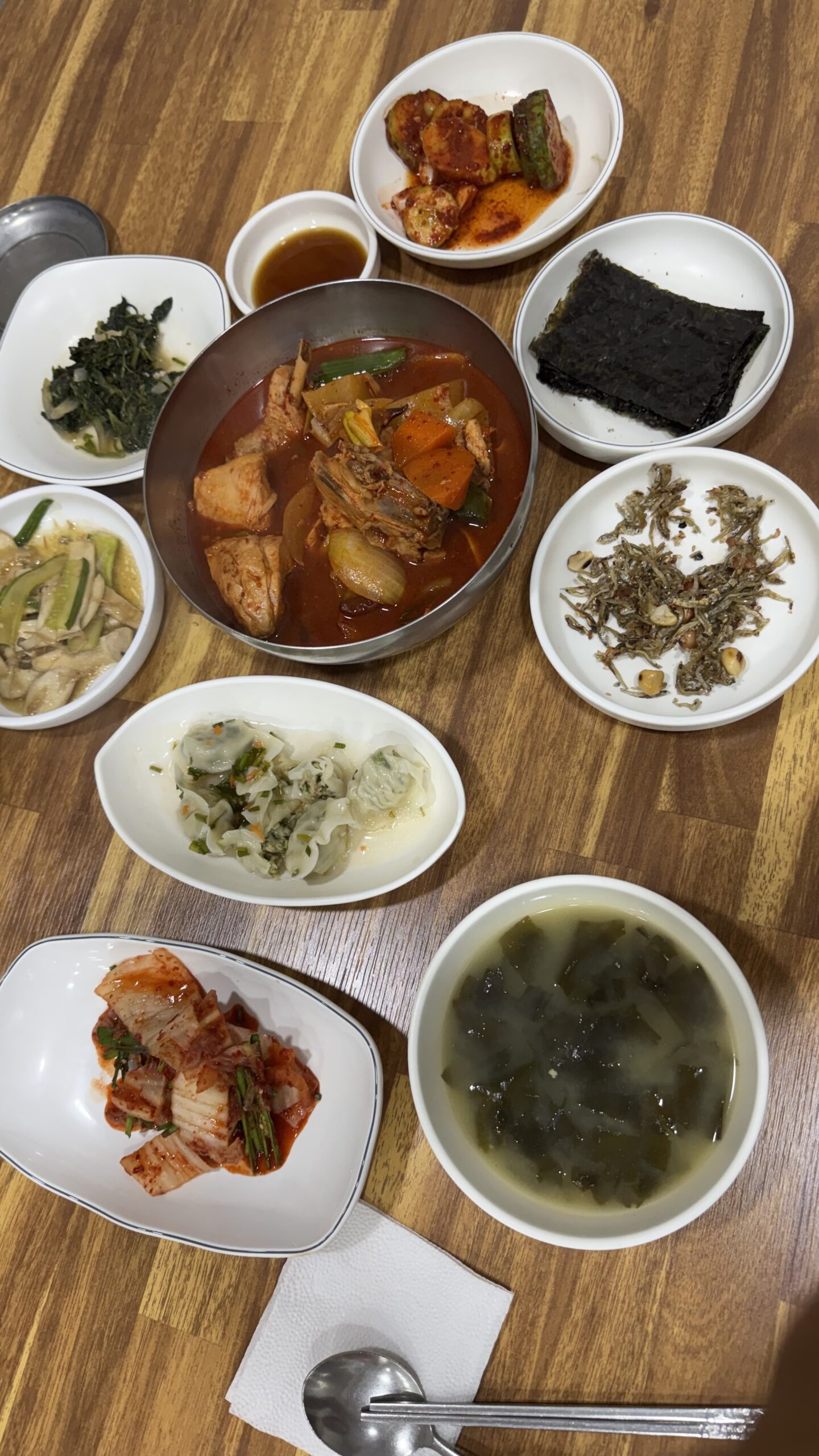
In short: I judge a Korean restaurant by the doenjang (fermented soybean paste) it serves with the side dishes. More than 90% of restaurants use store-bought doenjang, which is sweeter and often contains wheat. A place that makes its own is rare, and it usually cooks well. If you want to taste traditional doenjang in Korea, try a hanjeongsik (Korean full-course set meal) restaurant.
Now that I’ve turned 50 and I Live in Hongdae, there are more and more foods I avoid. As an office worker in my fifties, I often end up grabbing meals outside. Like most people around the world, I usually buy my lunch too.
In Korea, prices have risen so much that they’ve outpaced my salary increases, so my wallet is in an awkward spot.
Still, today I want to share my standard for recognizing a restaurant that does things properly. I think it can serve as a guide for most foreigners visiting Korea, too.
How I Judge a Korean Restaurant – My First Test: The Doenjang
The first thing I look at in a restaurant I like is the doenjang served with the side dishes. Why? Because it tells me whether the restaurant made the doenjang itself, or whether it’s serving store-bought doenjang as a side.
To be honest, more than 90% of restaurants serve store-bought doenjang as a side dish. And they make their doenjang-jjigae (soybean paste stew) with that same doenjang.
Once in a while, when I visit a restaurant on the outskirts of Seoul, I find one that uses doenjang it made in-house. When a place has doenjang like that, I personally give it my vote: this place really knows how to cook. It’s my own stubborn rule when choosing where to eat.
My late mother made doenjang every year. My mother-in-law, who is still with us, no longer makes it. At her age, I suppose she no longer has the strength for it. This kind of doenjang is made from nearly 100% soybeans. Of course, store-bought doenjang also uses soybeans, but the soybean content is low. That’s because making proper doenjang absolutely requires years of fermentation. Cheaper store-bought doenjang uses wheat flour and other ingredients besides soybeans to shorten the fermentation time. That’s why it’s cheaper.
Of course, if doenjang were too expensive, what we pay for our meals would go up too. Lately, I can barely remember the last time I tasted real doenjang.
The Doenjang You’ll Probably Eat in Korea
Most of the doenjang you’ll eat when you come to Korea is probably yangjo doenjang (brewed doenjang). It’s an improved, modern-style doenjang made by fermenting soybeans, or soybeans with starchy ingredients like wheat, using cultivated koji mold (such as Aspergillus oryzae). Its biggest characteristic is that it tastes sweeter than the doenjang I remember from the old days.
It’s been 10 years since I moved to Seoul from the provinces. Eating Seoul food, I often feel that it’s far too sweet. Over the past few decades, food has been made sweeter and saltier, mixing more of both to balance the dan-jjan (sweet and salty) taste. When someone says a dish is salty, my personal take is: ah, they must have put less sugar in this side dish or dish.
Where to Find Real Doenjang
If you really want to eat something made with original doenjang, I recommend going to a hanjeongsik restaurant with your family, even if it costs a bit more (around 30,000 won per person). After all, you and I share one goal: finding good, old-fashioned doenjang.
You can buy original doenjang in stores, too. It’s just several times more expensive than mass-produced doenjang. Even so, it’s around 20,000 won at most. And if you live overseas, most of the doenjang you buy will be sweeter and less salty. It’s generally sold under brands like CJ and Pulmuone.
I have so many regrets about doenjang… I really miss the handmade side dishes and jang (fermented sauces and pastes) our mothers made for us when we were young. And maybe it’s because we ate food like that that we were less overweight, healthier, and got sick less often.
Maybe because it’s already October, the weather is getting a bit chilly. I hope you stay warm.
When I have time, I’m going to look for a place in Hongdae that sells or serves original doenjang. When I find one, I’ll pass it along to all of you, my friends, so stay tuned.
You worked hard earning a living today too, my friends.
A Few Quick Questions
What is doenjang?
Korean fermented soybean paste. It’s served as a side dish and used in stews like doenjang-jjigae.
Why does most doenjang in Korean restaurants taste sweet?
Most restaurants use store-bought yangjo (brewed) doenjang, which often contains wheat and is fermented quickly with cultivated koji mold. That gives it a sweeter taste than traditional homemade doenjang.
Where can I try traditional doenjang in Korea?
Your best chance is a hanjeongsik restaurant, or a restaurant on the outskirts of Seoul that makes its own jang.
Can I buy traditional doenjang?
Yes. It costs several times more than mass-produced doenjang, up to about 20,000 won. Overseas, you’ll mostly find sweeter, milder brands like CJ and Pulmuone.
Leave a Reply